
Table of Contents
The trailhead board said four hours to the ridge. My friend and I had two litres of water between us, a paper map folded the wrong way, and a vague plan of being back before dark. We made it. But the last hour was walked by phone torch, and I’ve never forgotten how fast a straightforward day hike becomes something else entirely.
Wilderness safety isn’t a checklist you tick once. It’s a set of habits that quietly stack the odds in your favour, and most of them cost almost nothing: ten extra minutes of planning, an extra layer in the pack, a decision to turn around. Here’s what actually matters out there.
Start With a Plan Someone Else Can Read
Before you leave, someone at home needs four things: your route, your expected return time, the make and colour of your vehicle, and one clear instruction. Not “call someone if I’m late” but “if I’m not back by 21:00, call mountain rescue on this number.”
Write it down or text it. Spoken plans evaporate. If you’re travelling somewhere remote, save the local emergency number offline before you lose signal: 112 across Europe, 911 in North America and much of Latin America, 111 in New Zealand. In the EU, 112 works even from a phone with no SIM and no credit.

Route planning is where most people cut corners, and it’s where the biggest gains are. A decent itinerary accounts for daylight hours, escape routes, water sources and a turnaround time you’ll actually honour. If you want a repeatable process rather than guesswork, this guide to planning a trip like a pro adapts well to the backcountry.
Pack for the Failure, Not the Forecast
A sunny forecast is not a plan. Weather in the mountains can turn in twenty minutes, and the items that save lives are the ones you hope never to use. The ten essentials still hold up, decades after the list was first written:
- Headlamp with spare batteries (your phone torch is a hazard, not a light source)
- Extra water, plus a filter or purification tablets
- Extra food, roughly 500–1,000 kcal more than you think you need
- Insulating layer that stays dry in a stuff sack
- Emergency shelter, ideally a bivvy bag or a 60-gram foil blanket
- Fire starter in a waterproof bag, plus matches as backup
- Whistle, because six blasts carried further than any voice
- First aid kit with dressings, painkillers and any personal medication
- Knife or multi-tool
- Map, compass and a charged power bank
That whole kit weighs under two kilos. A foil blanket has saved more lives per gram than anything else in most rucksacks, and it costs about the same as a coffee.
Layers Are Safety Equipment
Getting wet is the most common route to trouble in temperate climates. Cotton is the enemy here: it holds water against your skin and pulls heat out of you roughly 25 times faster than dry fabric. Merino or synthetic base layer, fleece or down mid-layer, waterproof shell. Three layers, adjusted before you start sweating.
Two habits make the difference between uncomfortable and dangerous. First, change out of a wet base layer the moment you stop moving, even if it’s cold and unpleasant for thirty seconds. Second, eat and drink while you’re still feeling fine. Hunger and thirst arrive late; the weakness arrives first.
Cold-weather travel has its own rhythm, and it’s worth studying how people manage in genuinely harsh places. There’s a lot to borrow from exploring the outdoors of Northern Norway, where locals dress for wind rather than temperature and treat a thermos as mandatory equipment.
Navigation Is a Skill, Not an App
Your phone will die. Cold drains lithium batteries dramatically, and at -10°C you can lose half your charge in an hour. It will also lose signal exactly where you need it, and the offline map you downloaded three trips ago may not cover where you are now.
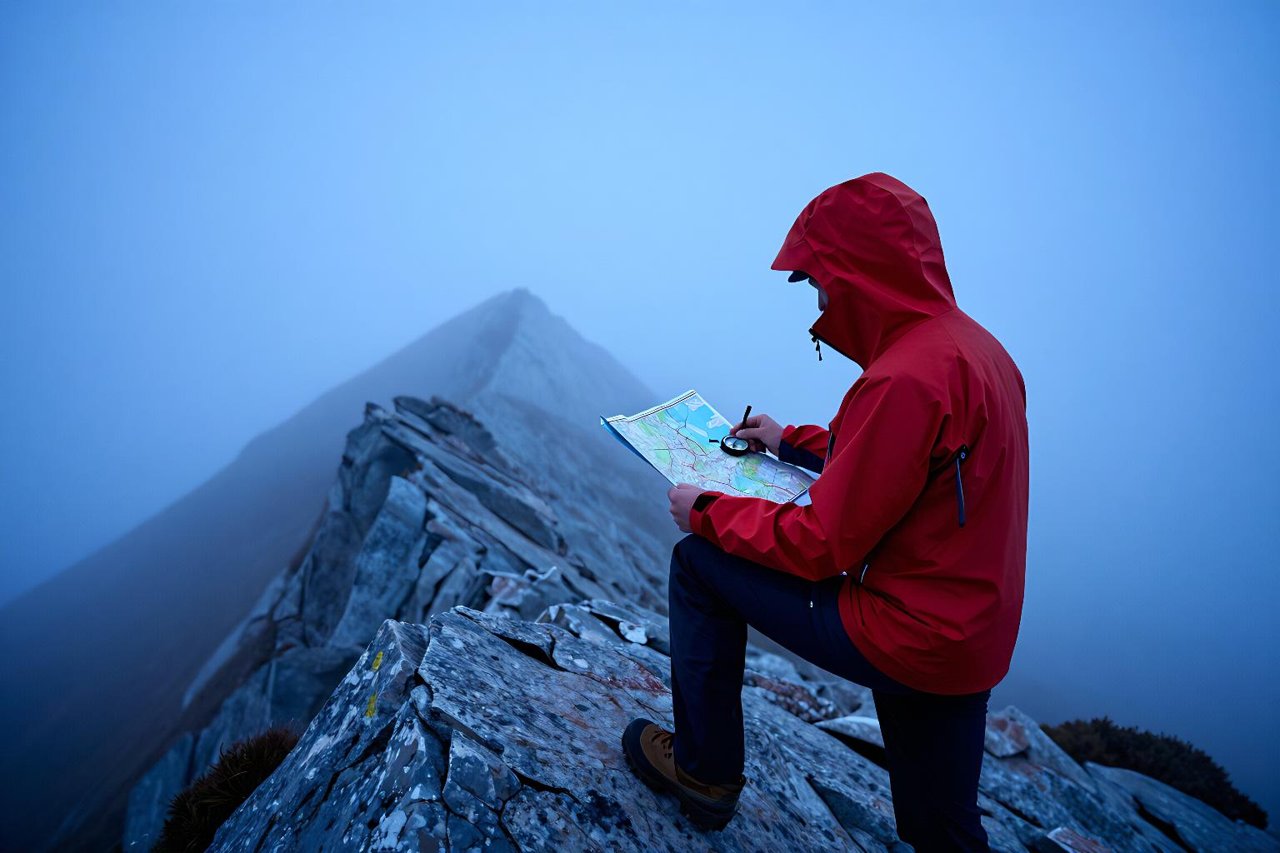
Learn to read a paper map with a compass. The two skills that matter most are taking a bearing and following it, and identifying terrain features against the map. Practise on a familiar trail first, in good weather, so the learning curve doesn’t happen at dusk in fog.
Keep the phone as a backup, in an inside pocket close to your body, and carry a small power bank. Check your position every hour or so rather than waiting until you’re unsure. The moment you think “I might be lost” is already later than ideal.
Read the Terrain Before You Commit to It
Most wilderness accidents happen on ground that looked manageable from a distance. A few rules worth memorising:
River crossings. Unclip your pack’s waist belt so you can shed it if you go under. Cross at the widest, shallowest point, usually a straight stretch rather than a bend. Shuffle sideways to keep your body facing upstream, and maintain three points of contact. Anything above knee height on an adult is a serious proposition.
Scree and loose rock. Move deliberately and keep your weight over your feet. If you’re used to graded routes and technical movement, treat the outdoors the way you’d treat choosing a climbing crag: match the difficulty to the weakest person in the group, not the strongest.
Cornices and ridgelines. Snow overhangs break metres back from the visible edge. Stay well away, especially in warm afternoon conditions.
Give Wildlife Room
Almost every animal conflict comes down to distance and food. In bear country, cook and store food at least 100 metres downwind of your tent, use a bear canister or hang food 4 metres up and 2 metres out from the trunk, and make noise on blind corners so you don’t surprise anything.
Bison, moose and elk injure more people than bears do in North America, largely because visitors underestimate how fast they move. Keep 25 metres from large herbivores, 100 metres from predators. If an animal changes its behaviour because of you, you’re already too close.
Ticks deserve their own mention. In many regions they carry Lyme disease, and a tick needs to be attached for 24–36 hours to transmit it reliably. Check yourself properly at the end of the day, including scalp, armpits and behind the knees, and remove any hitchhikers with fine tweezers.
The First Hour of Trouble Decides Most Outcomes
Hypothermia doesn’t announce itself. Watch for uncontrollable shivering, clumsiness, stumbling and slurred speech. If you see those signs, get the person out of the wind, into dry layers and a sleeping bag, and give them warm, sweet drinks. Don’t rub their limbs, don’t give alcohol, and don’t let them walk it off.
Heat is the opposite problem and just as serious. Cramps and nausea come first, then confusion, then collapse. Move to shade, cool the neck and armpits with wet cloth, and drink water with electrolytes rather than plain water alone.
When It Goes Wrong, Stop Moving
The instinct to keep walking is strong and usually wrong. Use the STOP sequence: Stop, Think, Observe, Plan. Sitting still for ten minutes costs you nothing and prevents the panic decisions that turn a navigational error into a rescue.
Then work in order. Shelter first, because a person losing heat will not survive a cold night regardless of how well they signal. Signal second: three of anything is the international distress signal, so six whistle blasts, a pause, and six more. Bright clothing on open ground. A fire if it’s safe to build one.
Stay put once you’ve made a plan. Search teams find a stationary target far faster than they find someone who has walked three kilometres in the wrong direction. Professional expeditions build in this thinking from the start, which is why a serious Antarctic expedition plans for weather worse than forecast and treats retreat as a legitimate outcome.
Leave the Place in Better Shape Than You Found It
Safety and stewardship overlap more than people expect. Camp at least 60 metres from lakes and streams, bury human waste 15–20 centimetres deep and well away from water, and pack out everything you brought, including apple cores and orange peel. Food scraps condition animals to approach people, and a habituated animal usually ends up dead.
Stick to established trails where they exist. Widening a path by cutting a switchback causes erosion that lasts decades. If you’re building a trip around low-impact travel, the sustainable travel itinerary through Rheinland-Pfalz shows how wine country, rivers and wild forest can be enjoyed without leaving a mark.
The best wilderness days end with a quiet inventory on the drive home: what went well, what you’d change, what you left behind. Add one small thing to your pack each trip. Learn one new skill each season. That’s how the people who look effortlessly competent out there got that way, and it’s a far better strategy than hoping nothing goes wrong.


