
Table of Contents
Ask five dog owners what “kennels for dogs” means and you’ll get five different answers. For some, it’s a wire crate in the living room. For others, it’s a heavy-duty run bolted to the side of the shed. And plenty of people use the word to describe the boarding facility where their dog stays when they travel. The truth is that all of them are kennels, but they solve completely different problems.
Choosing the wrong one usually means wasted money, a frustrated dog, or both. So before you buy anything, it pays to compare the main options side by side. Here’s how the most common setups stack up, including the trade-offs that rarely show up in product descriptions.
Indoor crate kennels: the everyday workhorse
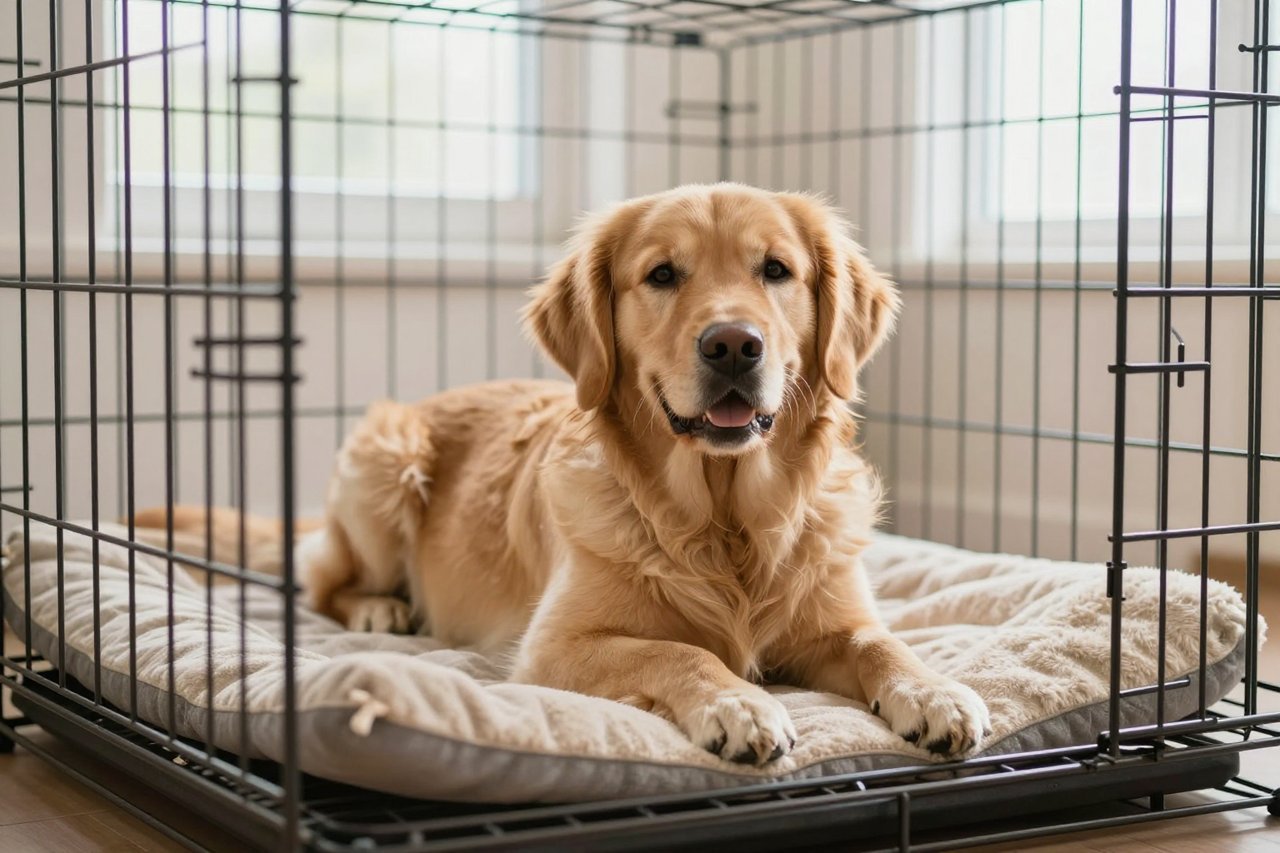
The classic wire crate or plastic airline-style kennel is what most people picture when they hear “crate training.” It’s the most popular option for indoor use, and for good reason. It gives your dog a den-like space, keeps them safe when you’re not watching, and makes house-training far easier.
Pros of indoor crates
- Security and safety: A properly sized crate prevents destructive chewing, keeps puppies away from electrical cords, and gives a nervous dog a quiet retreat.
- Portability: Most fold flat for car trips or a move across town.
- House-training: Dogs naturally avoid soiling their sleeping area, so a crate speeds up the process.
- Lower cost: A solid wire crate costs anywhere from £40 to £150, far less than an outdoor run.
Cons of indoor crates
- Limited space: A crate is not a place to live for hours on end. Most adult dogs should not be crated for more than four to six hours at a stretch.
- No relief from heat: Wire crates have little insulation, so they get stuffy in warm rooms.
- Visual exposure: Some dogs find wire crates too open and feel exposed, especially if the crate sits in a high-traffic area.
If you decide an indoor crate is right for your dog, the way you set it up matters more than the price tag. Our step-by-step setup guide covers bedding, positioning, and how to introduce the crate without turning it into a battle.

Outdoor kennel runs: space and fresh air
Outdoor kennels are panels of chain-link or welded wire that form a pen, usually with a concrete, gravel, or grass floor. They range from small 4×6 foot pens to massive enclosures for working dogs. If you have a high-energy breed that loves the outdoors, a run can be a lifesaver.
Pros of outdoor kennel runs
- More room to move: A 6×10 foot run gives a dog far more space than any indoor crate.
- Fresh air and sun: Dogs that love sniffing and watching the world benefit from being outside.
- Durability: Properly installed metal panels can last decades.
- Easier cleanup: A hose and a shovel are all you need for most messes.
Cons of outdoor kennel runs
- Exposure to weather: Rain, wind, and extreme temperatures are a real problem. The kennel needs a solid shelter, not just a plastic igloo.
- Isolation: A dog alone in an outdoor run for hours can become territorial or barky. They miss out on household interaction.
- Installation effort: Panels need anchoring, ground preparation, and often a permit. It’s a weekend project, not an afternoon one.
- Security risks: Dogs have been known to dig under or climb over poorly secured runs, so you need skirt wiring and a locked gate.
Outdoor runs are a brilliant choice for a dog that spends time outside while you’re home, but they shouldn’t replace indoor companionship. Many owners use a run as a supplement to an indoor crate, not a replacement. If you’re weighing the two, our practical owner’s guide goes into detail on how to match the setup to your lifestyle.
Portable and soft-sided kennels: convenience over security
Soft-sided kennels are made of fabric stretched over a collapsible metal frame. They’re popular for camping, travel, and dog shows. They weigh a fraction of a wire crate and pack down into a small bag.
Pros of portable kennels
- Travel-friendly: You can throw one in the boot and set it up in seconds.
- Comfort: Many dogs curl up happily in a padded, cave-like fabric space.
- Lightweight: Great for owners who fly or frequently visit family.
Cons of portable kennels
- Chewable: A determined dog can rip through the mesh in minutes. They’re not for destructive chewers.
- Not secure: Most have zippers that a smart dog can figure out, and the whole thing can tip over.
- Temperature swings: Fabric offers little insulation against heat or cold.
Use these only for short periods and under supervision. If you need a kennel for air travel, check the airline’s specific requirements; many demand a hard-sided IATA-approved crate. For road trips, a soft kennel works well once your dog is already comfortable with being confined.
Boarding kennels: when your house isn’t an option
The term “kennels for dogs” also refers to commercial boarding facilities. These are purpose-built buildings with individual indoor/outdoor runs, staff who feed and exercise the dogs, and often a vet on call. Boarding kennels are the right call when you’re going on holiday or need long-term care.
Pros of boarding kennels
- Professional supervision: Trained staff spot signs of illness or stress that you might miss.
- Socialisation opportunities: Many facilities offer group play sessions with other dogs (though not all do).
- No house mess: You don’t come home to scratched doors or accidents on the carpet.
Cons of boarding kennels
- Cost: Boarding a dog costs £20–£40 per night, which adds up fast.
- Stress: Some dogs find the noise and unfamiliar smells terrifying, so they barely eat for the first two days.
- Disease risk: Kennel cough and other infections spread quickly in facilities, even with vaccination checks.
- Inconsistent care: No matter what the brochure says, your dog is one of many. Individual attention is limited.
Before booking a boarding kennel, read the reviews, visit without your dog, and ask about their exercise routine. You also need to decide whether a boarding kennel, in-home boarding, or a sitter is a better fit for your dog’s temperament. Our comparison of boarding options breaks down the trade-offs and can help you avoid a miserable stay.
Making the right choice for your dog
There’s no universal “best” kennel, but you can get close by matching the setup to three things: your dog’s size, temperament, and how long they’ll be in it.
For example, a puppy that needs frequent bathroom breaks and constant supervision will do well in a mid-sized wire crate in the kitchen. A senior dog that loves being outside all day might prefer an outdoor run with a thick, padded bed. A rescue dog with separation anxiety, on the other hand, often needs a darker, more enclosed space like a plastic crate, covered with a blanket to feel hidden.
Size matters more than most people realise. A dog should be able to stand up, turn around, and lie down flat in their kennel. If they can’t, they’ll develop joint problems or start refusing to go in. For outdoor runs, experts recommend at least five times the dog’s length in total floor space.
Comfort inside the kennel is just as important as the kennel itself. A hard plastic floor or bare concrete is miserable for any dog. A washable, supportive bed makes the space inviting. If your dog has joint issues or you’re kennelling them via a boarding facility, an orthopedic dog bed can make a massive difference to their quality of sleep.
Setting up for success
Once you’ve chosen a kennel type, the work doesn’t end. A kennel isn’t a punishment or a storage box. It’s a safe space that your dog should associate with good things. That means slow introductions, feeding meals inside, and never dragging a dog in or out by the collar.
If you’re new to this, follow a proper schedule. Start with short five-minute sessions while you’re home and your dog is calm, then gradually increase the time. Pair each session with a high-value treat or a stuffed Kong. Within a week or two, most dogs will trot into their kennel on their own.
For boarding facilities, a similar principle applies. Don’t wait until the morning of your flight to introduce your dog to the kennel. Do a trial day or overnight stay a month before your trip. That gives both you and the facility time to see how your dog reacts, and it lets your dog build some familiarity. A gradual plan like the one in our step-by-step boarding plan can prevent a lot of anxiety for everyone involved.
Also, give your dog something familiar to sleep on. A piece of clothing that smells like you can soothe a nervous dog in a boarding kennel, and it’s even more crucial if they’re in an unfamiliar facility. Some boarding kennels allow you to bring your dog’s own bed, but always check their rules first.
Weighing the long-term costs
Buying a crate is a one-time expense. Boarding, on the other hand, is a recurring cost that can take you by surprise if you travel often. Let’s put numbers on it: a quality wire crate costs £80 and lasts 10 years. A boarding kennel at £30 per night, used for two weeks a year, costs £420 annually. Over a decade, that’s over £4,000. In-home boarding or a sitter might cost more per night but can be less stressful for your dog, which makes it worth the difference.
On the opposite end, outdoor kennel runs have a higher upfront cost and installation effort, but they’re cheap to maintain and can increase your property’s functionality if you have working dogs. The trade-off is that they don’t suit a dog that’s never left alone outside. Many people end up owning both an indoor crate and an outdoor run, using each for different times of day.
Whatever you choose, remember that a kennel is a tool, not a lifestyle. It should never replace daily exercise, playtime, or affection. The best kennel is the one that keeps your dog calm, safe, and comfortable, while also making your life easier. If you’re still unsure where to start, take a look at our broader guide to a happy, safe stay for more practical pointers. Test one option for a few weeks, watch your dog’s body language, and adjust from there.


