
Table of Contents
Why most weekly meal plans fall apart by Wednesday
The plan is rarely the problem. The failure point is usually Thursday at 6:40pm, when you’re hungry, the fridge holds three unmatched vegetables and a jar of olives, and the plan says something like “miso-glazed salmon with soba noodles.” That kind of plan assumes a week where nothing goes sideways. Real weeks include a late meeting, a child with a temperature, and a friend who suggests dinner out on a Tuesday.
A plan that survives those weeks is built differently. Fewer recipes, more repeatable parts, and enough slack to shuffle things around. Below is the exact system I’d hand to someone who wants to plan healthy meals for the entire week without spending all of Sunday in the kitchen.
Step one: list the meals you already cook without a recipe
Before you open a recipe app, write down everything you can make without thinking hard. The dishes where you know the ingredients, the timing, and roughly how they’ll taste. Most people have eight to twelve of these. Roast chicken thighs with whatever’s in the vegetable drawer. Lentil soup. A stir-fry with rice. Eggs on toast at 9pm, honestly.
That list becomes your foundation. A week of healthy meals built from food you already like is a week you’ll actually follow. Anything fancier is a bonus, not a requirement. If your current list feels thin on vegetables, that’s the gap to work on first — this guide to healthy eating without the hype is useful for exactly that, because it skips the overhaul and starts with one or two realistic swaps.

Step two: design slots, not a seven-day menu
A menu locks you into specific dishes on specific days. Slots give you flexibility. I use three types, and they cover all seven dinners.
Anchor meals (two per week)
These are the ones worth a real recipe and a proper shop: a tray bake, a curry, a big pot of something. Cook enough for leftovers, because anchor number one quietly supplies Tuesday’s lunch.
Fast meals (three per week)
Anything on the table in 20 minutes: omelettes, beans on toast with a side salad, pasta with frozen peas and tuna, quesadillas with black beans. Keep a written list of five of these on your phone so you don’t have to invent one at 7pm.
Free slots (two per week)
One night is deliberately leftovers or “fend for yourself” — cereal, toast, whatever’s in the fridge. The other is your out-of-house night, or a buffer in case the week shifts. This is the part most plans skip, and it’s why they break.
If weight loss is part of your goal, it helps to think about portions and protein at this stage rather than later. This flexible meal plan framework for weight loss overlaps heavily with the slot system above and is worth reading alongside it.
Step three: build one shopping list you reuse
Here’s the shortcut that saves the most time: don’t write a new list from scratch each week. Keep a master list organised by section — produce, dairy, protein, pantry, frozen — and cross off what you already have. Aim for ingredients that do double duty across meals.
- Two proteins that stretch, like chicken thighs and a bag of lentils or a carton of eggs
- Three vegetables that roast well: sweet potato, red onion, broccoli, courgette, peppers
- One grain in bulk plus one alternative — rice and couscous, or pasta and potatoes
- Frozen backup: peas, spinach, berries, and a bag of prawns or fish fillets
- Flavour base: garlic, ginger, lemons, tinned tomatoes, olive oil, a spice or two you actually use
That combination covers roughly 80% of the meals on your list, and the frozen items are your insurance policy for the night everything falls apart.
Step four: prep in three short sessions, not one marathon
Batch cooking everything in one go sounds efficient and usually ends with a fridge full of containers you don’t want to eat by Friday. Three shorter sessions work better, mostly because food prepped closer to when you eat it tastes better.
Sunday, 45 minutes
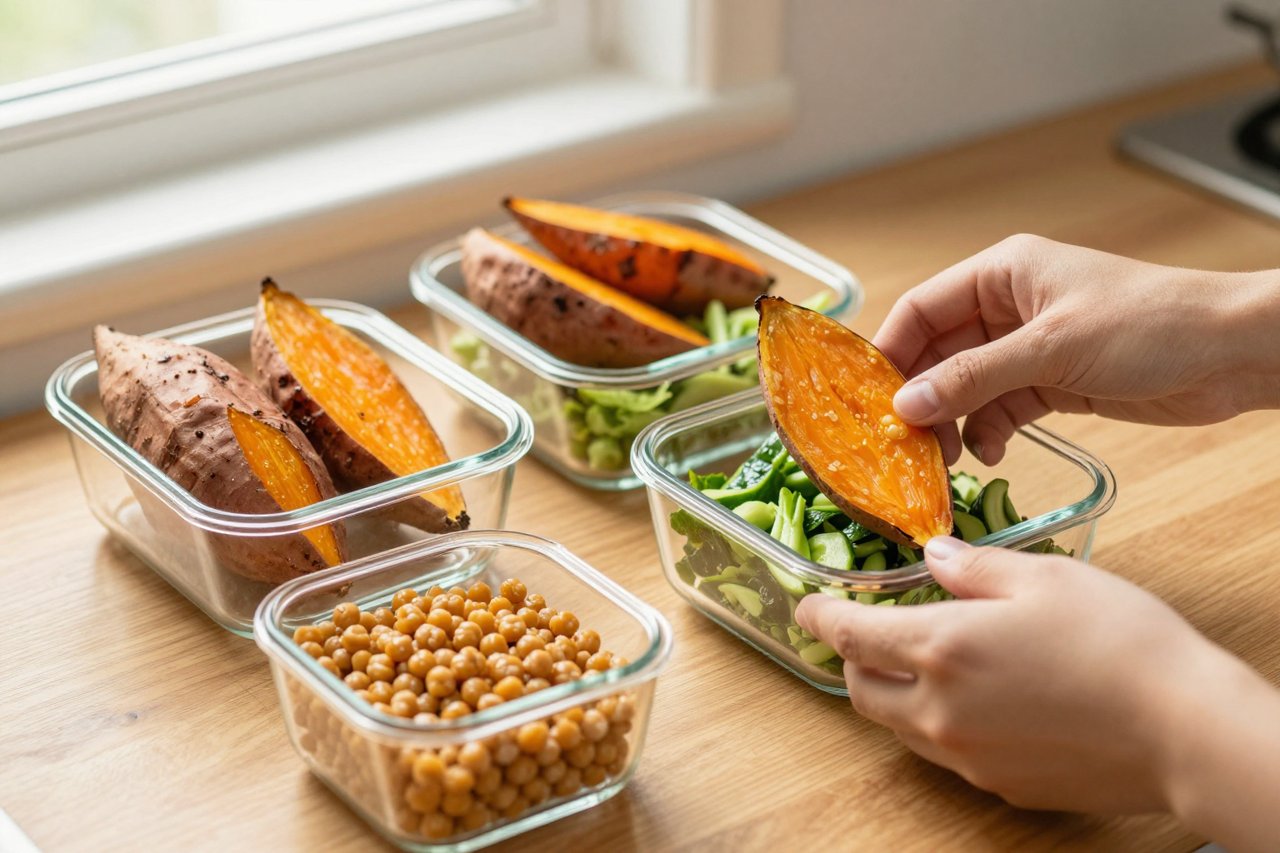
Roast two trays: one of vegetables, one of protein. Cook a pot of grains. Make one sauce or dressing in a jar. That’s it — no assembling full meals, just components you can recombine.
Wednesday, 15 minutes
Chop a second round of vegetables, wash salad leaves, and check what needs eating first. This mid-week reset prevents the sad-fridge situation on Thursday.
Whenever you cook an anchor meal
Cook one extra portion deliberately. It costs almost nothing in effort and buys you a lunch or a buffer dinner.
Step five: leave a written escape hatch
Under your plan, write three sentences: what you’ll eat if you get home after 8pm, what you’ll eat if you’ve got nothing defrosted, and what you’ll eat if you’re ill. Mine are scrambled eggs, tinned soup with frozen spinach stirred in, and toast with peanut butter. Naming them in advance means a bad night doesn’t become a takeaway ordering spiral, and you stop treating one off-plan meal as a failure. The habits that keep this going long-term are covered well in these real-life habits that actually work, and most of them are far less dramatic than a full diet reset.
Make the plan fit the people you cook for
If you’re feeding children, older relatives, or a partner with different tastes, don’t write separate meals — write one meal with moving parts. Roast chicken, grains and vegetables served separately lets everyone build their own plate. Soup plus bread plus a bowl of grated cheese does the same job. Cooking for a parent or grandparent often means more soft textures, smaller portions and extra attention to protein and vitamin D, which is why this step-by-step plan for healthy habits in later life pairs well with a weekly meal structure.
The 20-minute Sunday that keeps it going
Once you’ve done the full version two or three times, you don’t need to repeat it. Most weeks, you can plan healthy meals for the entire week in about 20 minutes: pick two anchors and three fast meals from your existing list, check the fridge, rewrite the same shopping list, and note which night is the free one. No new recipes, no spreadsheet.
Then, deliberately, plan nothing for a week. Watch what happens. You’ll learn more about which meals you genuinely want to eat, and which ones were always aspirational, than any app can tell you. The plan that sticks is the one that’s slightly boring, largely repeatable, and forgiving of a Thursday that goes wrong.


