
Table of Contents
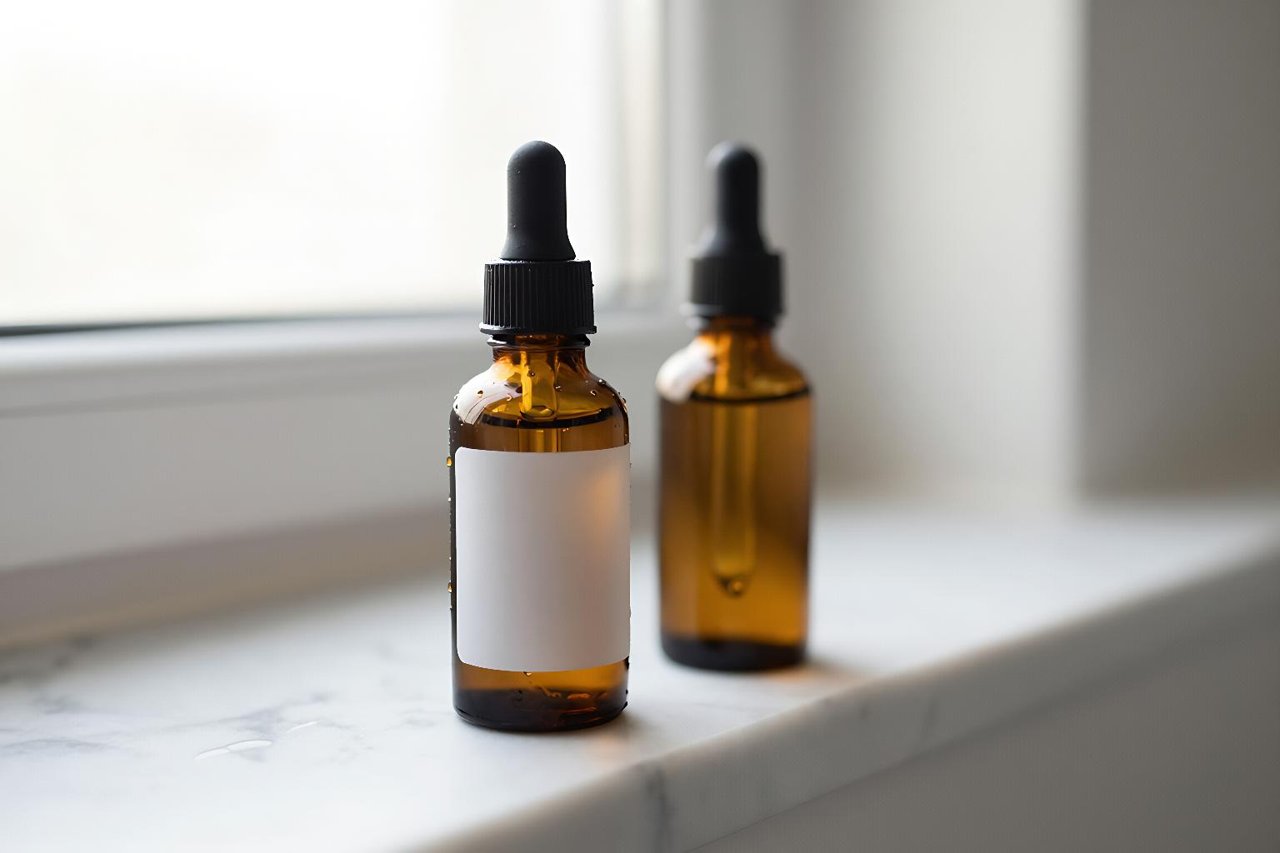
Two bottles sit side by side on a bathroom shelf. One reads retinol 0.5%. The other reads retinal 0.05%. The second costs about twice as much, the label looks like a typo, and both are marketed as the gold standard for ageing skin.
Here’s the short version: retinol and retinal are close relatives in the same vitamin A family, and they do broadly the same job. They speed up cell turnover, soften fine lines, unclog pores and gradually fade pigmentation. What separates them is how much work your skin has to do before either ingredient becomes active. That one detail drives the strength, the speed of results, the irritation risk, and even the kind of bottle the product has to be sold in.
The Whole Difference Comes Down to One Conversion Step
Skin can’t use retinol directly. What skin cells actually respond to is retinoic acid, the form of vitamin A that binds to receptors and switches on new collagen production. Everything else is a precursor that has to be converted.
Retinol takes the long route: retinol becomes retinaldehyde, and retinaldehyde becomes retinoic acid. Two conversions, each with some loss along the way. Retinal takes the shortcut: it converts straight to retinoic acid in a single step.

That’s the entire distinction. Same destination, different number of stops.
Why the shortcut matters in real life
Every conversion is inefficient. Enzymes in the skin only convert a fraction of what you apply, so a 0.5% retinol cream doesn’t deliver 0.5% worth of retinoic acid to your cells. It delivers less. With retinal, you skip one of those bottlenecks, which is why a 0.05% retinal product can perform like a considerably higher percentage of retinol.
Prescription tretinoin, by the way, is retinoic acid itself. No conversion required at all. That’s why it’s still the benchmark everything else gets measured against, and why it comes with the most peeling.
So Is Retinal Just a Stronger Retinol?
Roughly, yes, but the percentages on the labels are not interchangeable, and no official conversion chart exists. Formulators tend to treat retinal as several times more potent than retinol by weight, which is why you’ll see retinal sold at 0.05% or 0.1% while retinol sits at 0.2% to 1%.
Strength isn’t the only variable. There’s some evidence that retinaldehyde has antimicrobial activity against Cutibacterium acnes, the bacteria involved in acne, which gives it a small secondary benefit for congested, breakout-prone skin.
There’s also a decent clinical comparison on record: a small trial comparing 0.05% retinaldehyde with 0.05% tretinoin over 12 weeks found similar improvement in photoaged skin, with retinal tolerated better. Treat that as encouraging rather than definitive. It was a small study, and retinoid research has a habit of being funded by the people selling the ingredient.
What Each One Feels Like Over the First Three Months
Timelines are individual, but the pattern is fairly consistent.
With retinol, expect the first two weeks to feel like nothing is happening. Some mild tightness or flaking around week two or three, then a slow creep of improvement. Most people see a real difference in texture and tone somewhere around the 12 to 16 week mark, and collagen changes are a genuinely long game: think six months to a year of consistent use.
With retinal, the same sequence runs on a shorter clock. Dryness can show up within days rather than weeks if you start too fast, and the glow tends to arrive earlier, often by week eight. Purging, that unwelcome breakout phase where existing congestion surfaces all at once, hits harder and faster for acne-prone skin. If you have oily skin and you’re impatient, that trade-off may be worth it. If your skin flushes at the sight of a new active, it won’t be.
Stability Is Where Retinal Gets Tricky
Retinaldehyde is a fussy molecule. It degrades with exposure to light and oxygen, which is why good retinal products arrive in opaque, airless pump bottles rather than jars. A jar of retinal is a chemistry experiment you’re paying for.
Retinol is more forgiving, and many formulas encapsulate it in tiny spheres that protect it and release it slowly into the skin. That encapsulation is one reason retinol serums can feel gentler than their percentage suggests.
Practical rule: buy retinal from brands that clearly care about packaging, and use it within six months of opening. If it has turned from pale yellow to deep orange, it’s oxidising.
How to Choose Between Them
- New to vitamin A, or sensitive: start with retinol at 0.2% to 0.3%. There’s no prize for beginning at the top.
- Already used retinol for a year and plateaued: retinal 0.05% is the logical next rung. It’s a smaller jump than going straight to prescription tretinoin.
- Oily or acne-prone: retinal edges ahead, thanks to that antibacterial activity and faster turnover.
- Working to a budget: retinol. A well-formulated cheap retinol beats an expensive retinal you use twice a month because it stings.
- Pregnant, breastfeeding, or planning a pregnancy: neither. Skip retinoids entirely and ask your doctor about alternatives such as bakuchiol.
Apply It Like This, Whichever You Pick
Pea-sized amount for the whole face. Not a grape, not a smear. More product doesn’t equal more results; it equals more peeling.
Start with two nights a week and add a third only when your skin is comfortable. Apply to clean, completely dry skin, because damp skin increases penetration and irritation. Follow with moisturiser. If you’re struggling, put moisturiser on first and the retinoid on top; it dilutes the effect slightly but keeps you consistent, and consistency is what actually produces results.
Don’t layer it the same night as glycolic acid, salicylic acid or benzoyl peroxide. Benzoyl peroxide in particular can oxidise the retinoid and deactivate it. And wear sunscreen every single morning. Retinoids thin the outer layer of skin and make it more photosensitive; skipping SPF while using them is like mopping the floor with the tap running.
One more thing worth knowing: in the EU, retinol in face products is capped at 0.3% retinol equivalent and retinal at 0.05%, following a 2024 regulation. Higher percentages still circulate in other markets, but the evidence doesn’t suggest they’re dramatically more effective. There’s a ceiling, and it sits somewhere around the point where irritation outweighs benefit.
Give It Twelve Weeks and Change One Variable at a Time
Whichever you choose, the trial period is the same: twelve weeks, applied consistently, with nothing else new added to your routine in that window. Don’t start retinal in the same week you introduce an exfoliating acid or a new vitamin C, because you’ll have no idea what caused the redness.
Photograph your face in the same light on day one and day eighty-four. Retinoid results are gradual enough that the mirror in your bathroom will lie to you, and a side-by-side is the only honest measure of whether 0.05% retinal is genuinely outperforming the 0.3% retinol you used last year.
If after three months your skin looks the same and feels fine, move up one step. If it looks better but your barrier is constantly sulking, drop back. The best retinoid isn’t the strongest one on the shelf. It’s the one your skin will tolerate four nights a week for the next five years.


