
Table of Contents
“Green tea benefits” gets talked about as if there is one drink sitting behind the phrase. There isn’t. A gram of ceremonial matcha, a supermarket teabag and a chilled bottle from the corner shop share a colour and a name, then part ways on nearly everything that matters: how much EGCG you actually swallow, how much caffeine comes with it, how much sugar, and whether you’ll still be drinking the stuff in six months.
The evidence for green tea is real but narrower than the headlines suggest. If you want the unglamorous version of what’s been shown in human trials and what hasn’t, this look at what the research on green tea really supports is the honest starting point. What follows is a practical comparison of the main options, including the bits nobody mentions on the packaging.
Three numbers that change everything
Almost every green tea claim traces back to catechins, the polyphenols that include EGCG. Caffeine and L-theanine do the rest of the work, mostly on how alert you feel rather than anything long-term.
Here’s roughly what a 250ml cup delivers, depending on how it was made:

- A standard steeped green tea (teabag or loose leaf): around 50–100mg catechins and 30–50mg caffeine.
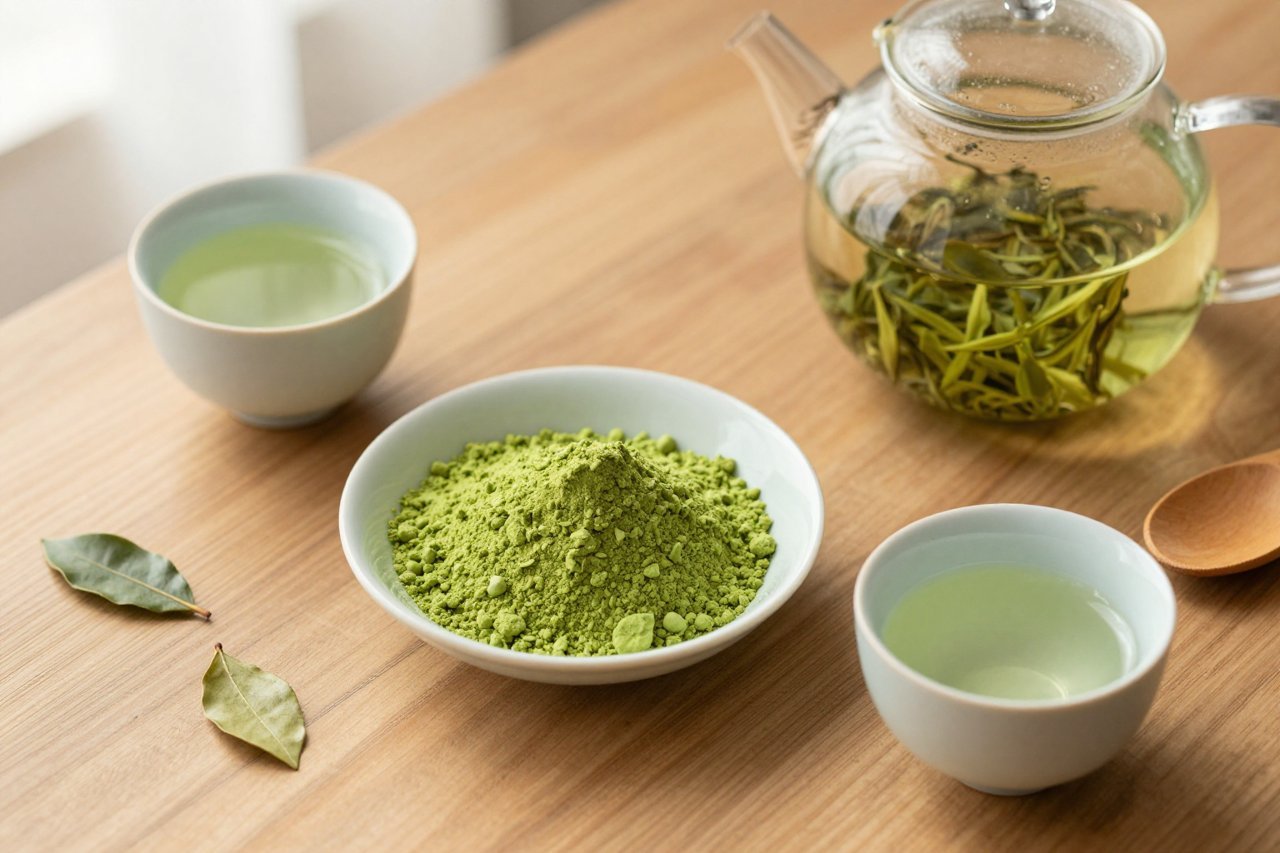
- Matcha: usually 100–150mg catechins and 60–70mg caffeine per gram, because you drink the whole leaf rather than infusing it.
- Bottled green tea: often under 30mg catechins, and anywhere from 0 to 40g of sugar.
That last line is where most people’s “green tea habit” quietly becomes a soft drink habit. Everything else is a trade-off you get to choose.
Matcha: the strongest dose with the least forgiving flavour
What you gain
Matcha wins on concentration. One widely cited analysis put the EGCG in matcha at up to 137 times that of a typical steeped green tea, since you’re consuming ground leaf rather than a water extract of it. You also get a slower, steadier caffeine lift, likely because the L-theanine comes along for the ride.
What it costs you
Money, first of all. Good matcha runs £20–£40 for 30g, and that’s about two weeks of daily drinking. It’s also fussy: water above about 80°C turns it aggressively bitter, and clumps form if you don’t sift the powder. The labels don’t help either. “Ceremonial” and “culinary” have no legal definition, so you can pay premium prices for a tin that’s really cooking grade.
Matcha suits people who want maximum catechins per sip and don’t mind a whisk and a bit of ceremony. If you mainly want an easy daily cup, it’s an expensive way to get there.
Loose leaf: the quiet default most people should probably pick
Whole leaves need room to unfurl, which is exactly what a teabag denies them. Loose leaf gives you better flavour, better control and a lower cost per cup than matcha — typically 10–15p per serving at decent quality.
Getting it right takes about thirty seconds of learning
Use 2–3g per 250ml, water at 70–80°C rather than boiling, and steep for two to three minutes. Green tea that tastes like lawn clippings was usually scalded or left too long. Second and third steeps are normal with whole leaf; with dust-filled bags, they’re pointless.
The downside is friction. You need a strainer or a small pot, and you need to be somewhere with a kettle and two spare minutes. That friction is why loose leaf is the best option in theory and the abandoned option in practice for a lot of people. The same logic applies across the board — it’s why comparing fresh ginger against powder and capsules comes down to almost identical questions about convenience versus potency.
Teabags: a convenience tax worth paying more often than purists admit
Most bags are filled with fannings or dust — the fine leftovers from processing whole leaves. They infuse in 60 seconds, which is genuinely convenient and also why they go bitter if you forget them.
What you lose is subtlety and a bit of catechin content. What you gain is a cup you’ll actually make on a rushed Tuesday, three times a day. Three decent bags daily still lands you in the 150–300mg catechin range, which is where most of the research sits. If habit is your bottleneck rather than quality, a workable step-by-step plan for building the green tea habit will do more for you than upgrading your leaves.
One practical note: choose unbleached bags, and avoid anything with added flavourings if you’re drinking it for the catechins rather than the taste.
Bottled and canned green tea is usually a soft drink
Catechins degrade over shelf life, particularly when exposed to light and warmth, so a bottle that sat in a warehouse for eight months is not the drink the label implies. Add sugar — a 500ml sweetened bottle can carry 30–45g, more than a can of cola — and you’ve bought dessert with a green tint.
There’s a decent exception: unsweetened brewed green tea in cans, which is increasingly common in Japan and now in UK supermarkets. Check the ingredients list. If it’s tea and water and nothing else, fine. If it lists sugar, honey, or “fruit juice concentrate”, treat it as confectionery.
Capsules and extracts: the dose without the ritual
EGCG supplements solve the taste problem entirely and give you a consistent dose. They also carry a risk the other options don’t. High-dose EGCG extracts have been linked to liver injury, and the pattern in reported cases tends to be doses above roughly 700mg taken on an empty stomach. Most regulators advise keeping extract doses below about 300mg and taking them with food.
There’s also something slightly self-defeating about it. Swallowing a pill removes the cup, the pause, the warmth — which for many people is a large part of why the habit sticks. Capsules make sense if you genuinely can’t stand the taste and want a specific, measured dose. They don’t make sense as a shortcut around a problem you don’t have.
Green tea measured against the alternatives
- Coffee: about 95mg caffeine per cup, no catechins, no L-theanine. More of a jolt, less of a curve.
- Black tea: similar caffeine to green, meaningfully fewer catechins because the leaves are oxidised.
- Oolong: sits between black and green, with partial oxidation. A reasonable compromise if green tea tastes too grassy.
- Herbal infusions: no caffeine, no catechins. Pleasant, but it isn’t green tea and doesn’t do the same job.
Green tea’s real advantage over coffee isn’t the antioxidants so much as the delivery: a gentler caffeine curve that most people can drink at 4pm without wrecking their sleep. That’s worth more than any single polyphenol claim. If fatigue is your actual problem, though, a cup of tea is a small lever — persistent tiredness is often about sleep, iron or magnesium status rather than a missing catechin.
Choosing your version in under a minute
If you want maximum catechins and enjoy the ritual, buy matcha and keep it in the fridge. If you want the best balance of taste, cost and control, buy loose leaf sencha or dragon well and learn your water temperature. If your problem is consistency rather than quality, buy unbleached teabags and stop overthinking it. If you want convenience without the sugar, buy unsweetened brewed cans. And if you’re taking an extract, take it with food and keep the dose sensible.
The version that works is the one you’ll drink tomorrow, and the day after. That’s a duller answer than a list of diseases green tea prevents, but it’s the one that actually shows up in your bloodwork.


