
Table of Contents
Walk into any pharmacy and you’ll find a dozen bottles promising calm, clear, hydrated skin from one spiky green plant. Aloe vera has been used on skin for thousands of years, and it’s one of the few natural ingredients dermatologists don’t roll their eyes at. The gap between the marketing and what happens when you actually smear it on your face is where most beginners get stuck.
So here’s the ground floor. No twelve-step routine, no expensive serums. Just what’s inside the leaf, what it can realistically do, and the handful of things people get wrong in their first week.
What Aloe Vera Actually Is
A few seconds of botany saves a lot of confusion later. Aloe vera is a succulent, and the species grown for skincare is Aloe barbadensis Miller. If you spot that name on a label, it’s the real plant.
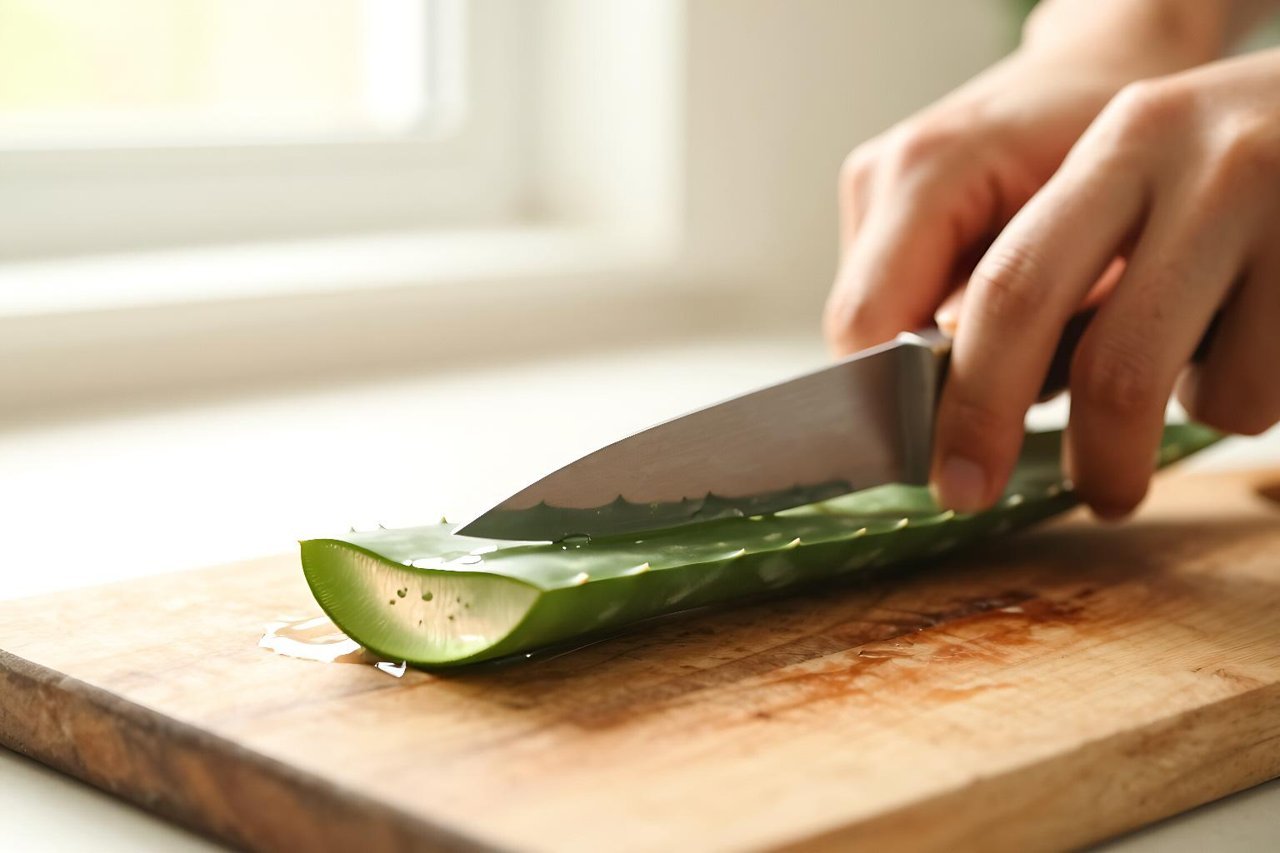
The useful part sits inside the leaf. Slice one open and you’ll find a clear, springy jelly filling the centre. Just under the green rind, sandwiched between the gel and the outer skin, is a thin layer of bitter yellow sap called latex, sometimes referred to as aloin after the compound that gives it its bite.

That distinction is the single most practical thing a beginner can learn. The gel soothes. The latex irritates. Most people who sting or break out after using a fresh leaf have simply failed to rinse the yellow sap away.
Why the plant makes both
Aloe stores water in its leaves to survive drought, which is why a gel that’s roughly 98 to 99 percent water still feels thick and slippery. The latex is a defence mechanism, laxative and unpleasant-tasting, designed to stop animals eating the plant. Great for the aloe. Not what you want on your face.
What’s Actually in the Gel
Take out the water and you’re left with a small but genuinely interesting mix: polysaccharides, most notably acemannan, plus vitamins C and E, a little B12, minerals like zinc and magnesium, amino acids and enzymes. Acemannan is the molecule researchers keep coming back to, and it appears to sit behind aloe’s soothing, moisture-binding reputation.
None of that makes aloe a miracle worker. What it does make it is a low-risk ingredient for calming skin that’s already annoyed, whether the cause was sun, wind, a shaving rash or too many nights of harsh actives.
What Aloe Can and Can’t Do
The honest version:
- Can do: cool sunburn, ease the itch of mild irritation, add light hydration, and support healing on minor surface damage like a graze or small kitchen burn.
- Probably does: dial down visible redness when skin is reactive. The evidence is reasonable, not overwhelming.
- Won’t do: fade scars, replace sunscreen, clear hormonal acne or act as an anti-ageing ingredient. Anyone promising those results is selling a story.
If you want the longer version, backed by what studies actually show, there’s a solid breakdown of what aloe vera really does for skin and how to use it that goes deeper than this primer needs to.
Three Formats, Three Very Different Products
Fresh leaves give you the most active gel, but you have to fillet the leaf, rinse the latex off, and use it within a few days before it oxidises. Bottled gels are convenient and stable, though many are mostly water and thickeners with a splash of aloe. Infused creams sit somewhere in between and are the easiest to layer with the rest of your routine.
The format you choose changes how well aloe works far more than the brand does. If you’re weighing up the options, this guide to choosing between a fresh leaf, bottled gel or infused cream is worth ten minutes before you spend any money.
Your First Two Weeks With Aloe
Patch test first, properly
Apply a small amount to the inner forearm and leave it for 24 hours, longer if your skin is sensitive. Aloe allergy is uncommon but real, and it’s usually the latex or an added preservative causing trouble. If you’re testing a fresh leaf, patch test the rinsed gel, never the yellow sap.
Where it sits in a routine
Cleanse, then aloe, then moisturiser, then sunscreen in the morning. Aloe is watery and light so it goes on before anything oily. It won’t hold water in on its own, so a moisturiser or a few drops of face oil on top seals everything in place.
How much and how often
A pea-sized amount covers the whole face. Once or twice a day is plenty for the first week, and there’s no benefit in applying it six times. If you want a worked example with real timings, this step-by-step aloe vera routine walks through a full day from cleanse to bedtime.
Beginner Mistakes That Waste a Good Bottle
Most disappointment with aloe traces back to a few avoidable habits:
- Leaving the yellow latex on a fresh leaf instead of rinsing it.
- Buying a gel where aloe appears eighth on the ingredient list.
- Applying it to dry skin and expecting it to seal moisture in alone.
- Leaving a cut leaf uncovered in the fridge until it turns brown.
- Using it on deep, infected or oozing wounds.
- Stacking it under strong acids without changing anything else in the routine.
There’s a fuller walk-through of the most common aloe vera mistakes that make it useless if you’d rather check your own habits against the list.
Reading a Label Without Getting Fooled
Ingredients are listed by weight, biggest first, so where aloe appears tells you almost everything. “Aloe Barbadensis Leaf Juice” in the first two slots means you’re getting a real amount. “Aloe Barbadensis Leaf Extract” sitting near the bottom means a token sprinkle for the label. Powdered concentrate reconstituted with water is legitimate, just diluted by definition.
Then scan for the things that cause most irritation: alcohol denat high up the list, added fragrance, and colourants. Real aloe gel is clear to slightly cloudy, not neon green. A claim of “100% aloe” usually means every drop of aloe used was aloe, not that the tube is pure gel.
If you’re layering aloe over a spot treatment, check that the treatment itself isn’t the problem. These tea tree oil mistakes that quietly wreck skin are a common source of dryness that then gets blamed on everything else.
When to Stop Using It
Wash it off with cool water if you get stinging that lasts more than a minute or two, spreading redness, clusters of tiny itchy bumps, or swelling. That’s contact irritation or a mild allergy, and repeating the application won’t toughen your skin up.
Aloe also isn’t for deep wounds, infected skin, or anything weeping. And don’t take the latex internally as a laxative. It’s a stimulant with real risks, which is why it was removed from over-the-counter laxatives in many countries years ago.
For everything else, aloe is one of the friendlier things you can add to a routine. Start with one product, one change at a time, give it a fortnight, and judge it on how your skin feels rather than what the bottle promised.


