
Table of Contents
Ask ten people how to eat for inflammation and you’ll get ten different menus. One swears by olive oil and sardines, another hasn’t touched a grain in a year, a third lives on lentil stew, and someone else is three weeks into an elimination diet eating little more than lamb and squash.
They are all describing anti-inflammatory eating. They are not all describing the right version for you.
Anti-inflammatory foods aren’t really a shopping list. They’re a pattern, and the popular patterns disagree with each other on some fairly big questions: grains or no grains, meat or no meat, coffee or no coffee. So instead of another round-up of salmon and blueberries, it’s worth comparing the main approaches head to head, including what each one gets wrong.
Four Routes to the Same Destination
Almost every credible anti-inflammatory protocol sits somewhere on a spectrum between two ideas. The first is add more protective foods: fatty fish, leafy greens, berries, beans, olive oil, nuts, fermented dairy. The second is remove suspected triggers: refined sugar, seed oils, alcohol, gluten, nightshades, ultra-processed anything.

Mediterranean eating leans hard into the first idea. Keto and the autoimmune protocol lean into the second. Plant-based sits in the middle and argues about the details. Each has real evidence behind it and real costs, and the costs are what usually decide whether it works.
Mediterranean: The Option With the Most Receipts
This is the pattern with the deepest research base, and it’s also the least dramatic. The PREDIMED trial famously found roughly a 30% drop in major cardiovascular events among people eating a Mediterranean-style diet supplemented with olive oil or nuts, compared with a low-fat control group. Follow-up work has linked the same pattern to lower CRP and IL-6, two of the standard inflammation markers.
What it does well
- No food groups are banned, which makes it survivable at restaurants, family dinners and holidays.
- It’s naturally high in fiber (most people land somewhere between 25 and 35 grams a day) and polyphenols, both of which feed gut bacteria that help regulate inflammation.
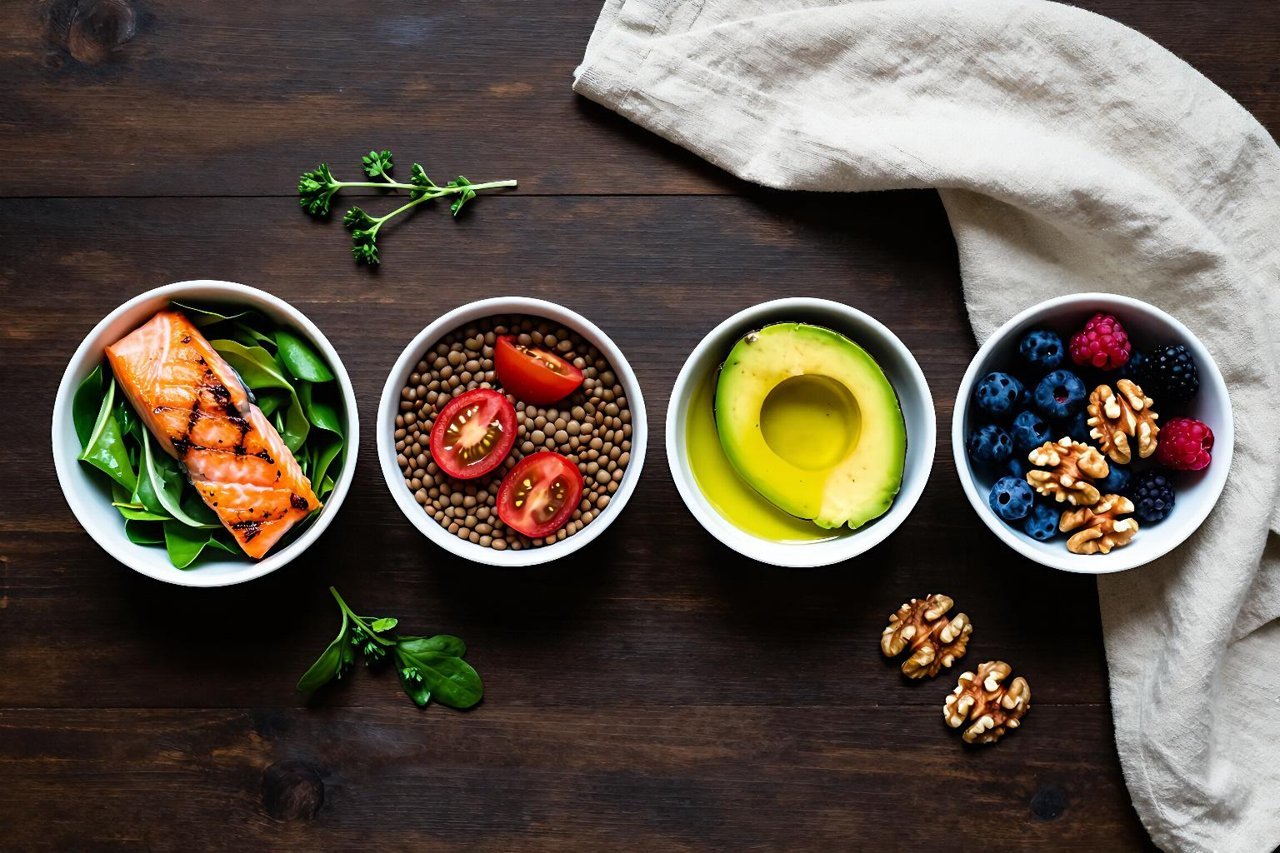
- You can hit the recommended two servings of fatty fish a week without taking a single capsule.
- It stacks well with almost any other goal, whether that’s heart health, blood sugar or longevity.
Where it falls short
Progress is slow. If you’re dealing with joint pain or skin flares, you may not notice much in three weeks, and that’s exactly when most people quit. The other catch is that “Mediterranean” has been stretched to mean anything with a drizzle of olive oil. A white pasta dish with a side of feta is not the same as a whole-food anti-inflammatory diet built around vegetables, legumes and fish, no matter what the label on the menu says.
Low-Carb and Keto: Cutting Carbs Isn’t Automatically Cutting Inflammation
There’s a genuinely good case here for some people. If you carry a lot of visceral fat or have insulin resistance, dropping refined carbohydrates and sugar can lower inflammation markers quickly, often within eight to twelve weeks. Ketone bodies, particularly beta-hydroxybutyrate, appear to dampen the NLRP3 inflammasome, one of the key inflammatory switches in the body.
Then the trade-offs arrive. Fiber intake usually collapses, and with it a lot of the gut bacteria that produce anti-inflammatory short-chain fatty acids. Some people see LDL cholesterol climb sharply, which matters if heart disease already runs in your family. And a lot of “keto” eating in practice is bacon, cheese, processed sausage and cream, which is a very different diet from salmon, avocado, olive oil and non-starchy vegetables.
The honest verdict: low-carb can be a useful tool for a specific metabolic problem. It’s a poor default for someone whose main complaint is inflammatory joint disease and who eats plenty of plants already.
Plant-Based and Vegan: Fiber Up Front, Processing in the Shadows
Well-constructed vegan eating does several things right. Fiber climbs, saturated fat drops, and polyphenol intake usually goes up, which is the same lever behind much of the thinking in this practical guide to eating for long-term health. Several trials have shown modest reductions in CRP on plant-heavy diets.
The problem is what often replaces the meat. Vegan chicken nuggets, coconut-oil-based cheese, white-flour pastries and sweetened oat milk are all technically plant-based and none of them are anti-inflammatory. Two other gaps need managing: omega-3 intake, since there’s no fish on the plate, and nutrients like B12, iron, zinc and iodine, which require either fortified foods or supplements.
Vegetarian is usually the easier landing spot. You keep dairy and eggs, which makes protein and B12 simpler, while still pushing plants to the centre of the plate.
Elimination Diets (AIP, Low-FODMAP): A Test, Not a Lifestyle
The autoimmune protocol strips out gluten, grains, legumes, dairy, eggs, nightshades, nuts, seeds, alcohol and added sugar, then reintroduces them one at a time. Low-FODMAP does something similar for fermentable carbohydrates. For someone with confirmed IBS or an inflammatory bowel condition, a structured trial under supervision can be genuinely life-changing.
For everyone else, the maths is less kind. AIP is nutritionally thin if you stay on it for months, it destroys most social eating, and there’s little evidence it helps people who don’t have a specific trigger. Treated as a four-to-eight-week experiment with careful reintroduction, it can answer a real question. Treated as an identity, it mostly produces anxiety and a very boring dinner table.
Whole Foods or Supplements? A Reality Check on Fish Oil
Not every option is a diet. Plenty of people skip the menu decisions entirely and buy capsules instead. Omega-3 is the big one, and it’s worth knowing that the evidence is messier than the shelves suggest. Some research has actually linked omega-3 supplementation to higher inflammation markers in certain groups, which is a useful reminder that isolating one compound from a food doesn’t reliably reproduce the food’s effect.
Curcumin is the other popular pick, and it has a well-known absorption problem that only gets partly solved by pairing it with black pepper or a lipid carrier. Supplements make sense for filling a specific gap: B12 on a vegan diet, vitamin D in winter, omega-3 if you genuinely never eat fish. They’re a poor substitute for fixing the pattern. The handful of foods with the strongest evidence behind them will outperform a shelf of bottles almost every time.
Fresh, Frozen, or Canned? The Trade-Off Nobody Mentions
Fresh isn’t automatically superior. Frozen spinach and berries are picked and frozen at peak ripeness, and their vitamin and polyphenol content often matches or beats produce that spent a week in transit. Canned sardines and tomatoes are among the most affordable anti-inflammatory foods you can buy, and canned fish comes with soft bones that add calcium.
The costs are modest but real. Canned goods can carry a lot of sodium, and some linings contain BPA, so it’s worth rinsing beans and choosing brands that state BPA-free cans. Fresh wins on texture and taste, which matters more than most nutrition advice admits, because a diet you enjoy is the only one you’ll still be eating in March.
How to Choose in Under Five Minutes
Ignore the arguments and ask three questions.
- Do you have a diagnosed gut condition? Start with a supervised elimination trial, then move to Mediterranean-style maintenance.
- Do you have insulin resistance, prediabetes or a large waistline? A lower-carb Mediterranean pattern, still heavy on vegetables and olive oil, tends to work better than either extreme.
- Is your main goal general health and longevity? Mediterranean or mostly-plant with fish is the safest bet, because you can keep it going for decades.
Then stop optimising the diet and start fixing the parts of the day that sit outside it. Six hours of sleep and a daily walk will shift your inflammatory markers more than swapping one vegetable for another. So will cutting back on alcohol, which raises inflammation in a dose-dependent way and does real damage on a heavy night. If you do overdo it, this guide to what to eat after a big night out covers the recovery side.
The last thing worth saying is that all of these approaches overlap far more than their advocates admit. Fish, vegetables, olive oil, beans, nuts, herbs and berries show up on nearly every list. Pick whichever framework you’ll actually follow for six months rather than six days, and if you want a structure for building the habit, this five-step method for eating more anti-inflammatory foods turns the theory into something you can do on a Tuesday night with whatever is already in the fridge.


