
Table of Contents
There’s a pot of aloe on a lot of kitchen windowsills, and a lot of disappointed people next to it. Someone cuts a leaf, smears the gel on a burn or a breakout, and then either nothing happens or their skin stings and goes pink. The plant gets blamed. Almost every time, the plant is fine and the method is not.
So this isn’t another piece explaining what aloe contains. It’s a list of the things people get wrong, roughly in the order they tend to go wrong, plus what to do instead.
1. Trusting the word “aloe” on a bottle
Independent lab testing of off-the-shelf aloe products has repeatedly turned up the same result: a large share of them contain little or no detectable aloe. That includes big-name after-sun gels and store-brand moisturisers with a green leaf on the front.
The label tells you more than the front of the bottle. Flip it over and read the ingredient list top to bottom:

- “Aloe barbadensis leaf juice” sitting in the first three or four ingredients means there’s a meaningful amount in the formula.
- “Aloe vera extract” appearing at number 14, below fragrance and three preservatives, means it’s decoration. A 0.1% extract exists to make the claim legal, not to do anything for your skin.
- Alcohol denat high on the list will give you that fast cooling feel and then leave tight, dry skin ten minutes later.
If you’d rather not play detective with labels, the trade-offs between a fresh leaf, bottled gel, or an infused cream are worth understanding properly before you spend anything, and they behave very differently on reactive skin.
2. Using the yellow sap and calling it gel
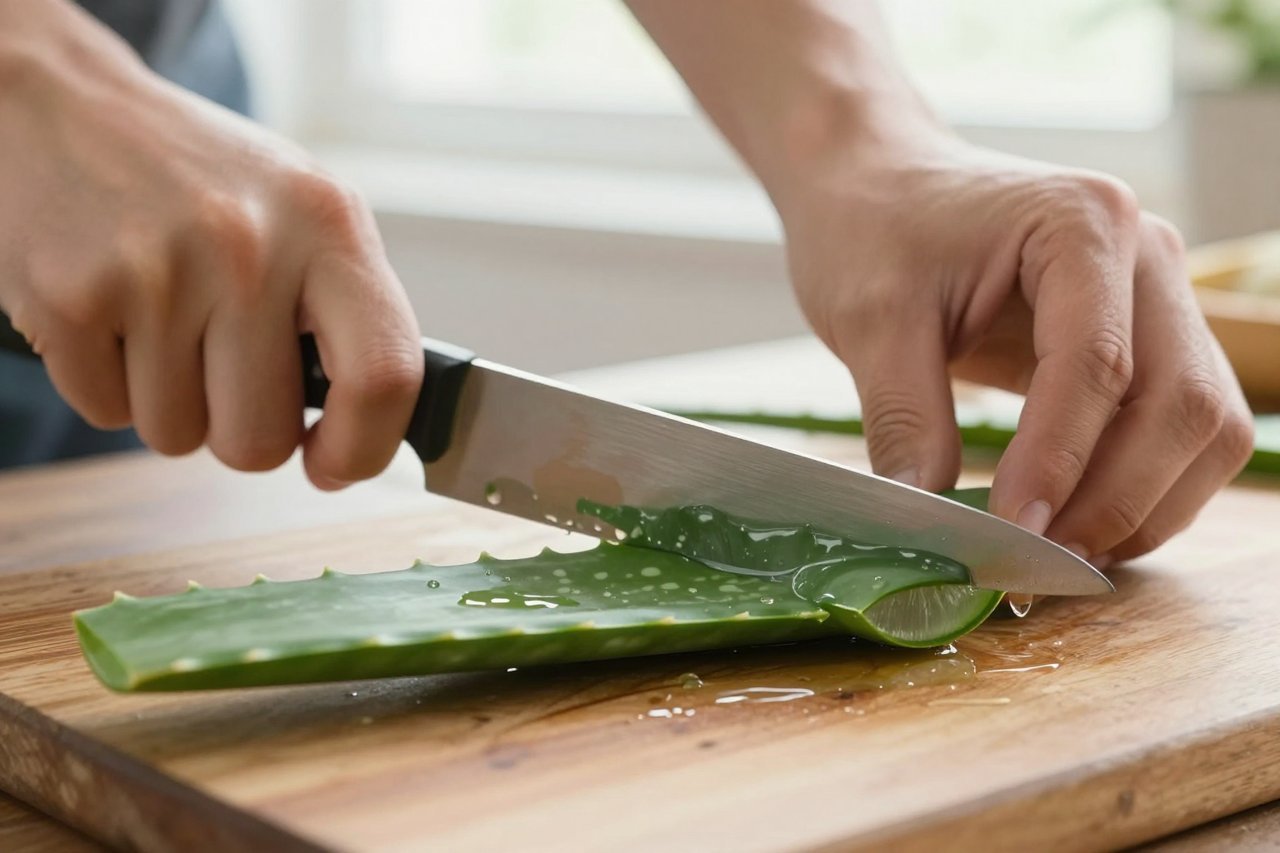
Cut a leaf and lay it cut-side up for ten minutes. A yellow-brown liquid beads out of it. That’s aloin, part of the latex, and it’s the single most common reason homemade aloe burns.
Aloin is an anthraquinone. It’s a laxative when ingested, an irritant when left on skin, and a genuine contact allergen for some people. The clear gel underneath is the part you want. To get it: rinse the leaf, stand it cut-side down in a glass for 10 to 15 minutes so the latex drains, rinse again, then fillet off the spiky edges and scrape out the inner gel with a spoon. If your finished gel tastes bitter, you’ve carried the latex along with it.
This is also why homemade aloe often stings when a good bottled gel doesn’t. Commercial processing filters the aloin out. Your kitchen knife doesn’t.
3. Skipping the patch test because “it’s natural”
Plants are some of the most common sources of contact allergy, and aloe is no exception. People with sensitivities to garlic, onion, or tulips sometimes react to it too, because the proteins overlap. “Natural” describes where something came from, not how your immune system will treat it.
Put a pea-sized amount on the inside of your forearm and leave it for 48 hours. No washing it off after five minutes to “see how it feels” in the first hour and calling it done. A brief tingle that fades is one thing. Redness, itching, or bumps that are still there the next morning mean stop. The same logic applies to anything you’re about to put on your face for the first time, which is why a proper patch-test method is worth borrowing from whatever else you’re trialling.
4. Using it as your only moisturiser
Aloe gel is about 99% water. It’s a humectant, meaning it pulls water toward the surface of your skin. That sounds great until you remember that humectants are not sealants. In dry air, a humectant with nothing on top of it can pull moisture out of your skin rather than hold it in.
If you’ve ever applied pure aloe on a cold January morning and felt your face tighten twenty minutes later, that’s what happened. The fix takes ten seconds: apply aloe to slightly damp skin, let it absorb for a minute, then follow with a moisturiser that actually holds water in. A cream with ceramides, squalane, or shea butter on top turns aloe from a nice cooling step into a genuinely hydrating one.
5. The myths that refuse to die
“Aloe heals sunburn overnight”
It reduces heat and takes the edge off the pain, and that’s a real benefit. It does not repair UV damage, and a burn that’s still angry on day four would have been angry anyway. Expect three to seven days, not one. Aloe makes those days more comfortable.
“It’s a natural sunscreen”
There is no meaningful SPF in aloe gel. Studies put it somewhere near zero, nowhere close to the SPF 30 you need. Use it after sun exposure, and apply sunscreen first if you’re layering both, rather than mixing them in your palm and hoping.
“If it stings, it’s working”
Stinging is irritation, not efficacy. Rinse it off, dilute next time, or switch to a filtered gel.
“It fades scars”
Keeping a healing area calm and hydrated is genuinely useful. Evidence that aloe flattens or fades scars is thin. For new scars, silicone and daily sunscreen do more heavy lifting than any gel.
6. Putting it on skin that needs a doctor
Aloe is soothing. It isn’t sterile, and it isn’t a treatment for infection. Skip it and get medical advice for blisters larger than a coin, burns that are white or leathery, cuts that are hot and weeping, eczema that’s cracked and oozing, or a rash that keeps spreading. Smearing gel on an infected wound and waiting a week is how small problems get bigger.
7. Keeping the same bottle for a year
Water-based products need preservatives, and preservatives get used up. Fresh homemade gel lasts three to five days in the fridge. A sealed commercial gel is usually good for six to twelve months after opening, which you’ll find as a small open-jar symbol on the pack.
Tell-tale signs it’s finished: the colour has gone from clear to amber, the texture is stringy, it smells sour or fermented, or the liquid has separated and won’t recombine. Write the date you opened it on the bottle with a marker. It sounds fussy and it saves you from applying a petri dish to your face.
8. Applying it at the wrong point in your routine
Order matters more than brand. Cleanse, then aloe on skin that’s still slightly damp, then moisturiser to seal, then sunscreen in the morning. Give each layer a minute or so. Aloe applied over a heavy cream just sits on top; aloe applied under makeup that goes on 20 seconds later will pill into little white rolls.
If you’re using strong acids or a prescription retinoid, don’t stack aloe on top in the same session while your skin is adjusting. It’s soothing, not a buffer. If you want the full sequence written out with realistic timings, this step-by-step routine with real examples is a good template to copy.
9. Quitting too early, or pushing on too long
Set expectations by what you’re actually asking aloe to do. Cooling and comfort show up within minutes. Hydration and plumpness show up the same day. Calming redness takes one to two weeks of consistent use. Anything to do with breakouts or uneven tone takes four to eight weeks, and only if the rest of your routine is doing its job.
The flip side is people who keep going for six months because it’s cheap and they’ve read that aloe is good for skin. If nothing has changed in eight weeks, it isn’t the product for that particular problem. Understanding what aloe vera actually does for skin, and where its limits sit, stops you from waiting for results it was never going to deliver.
Five checks before your next purchase or leaf
- Read the INCI list, not the front label. Aloe barbadensis leaf juice in the first few ingredients, or leave it on the shelf.
- Watch for alcohol denat and fragrance high up the list if your skin is reactive.
- Choose packaging you don’t dip fingers into. A pump or tube beats a wide-mouth jar.
- For fresh leaf, use outer leaves from a plant at least two to three years old, drain the yellow latex fully, and refrigerate what you don’t use.
- Patch test on your jaw for 48 hours before a full-face application, every time you try a new source.
None of this is complicated, and none of it requires a different plant. Filter the latex, check what’s in the bottle, seal it with a cream, and give it a realistic amount of time to work. Get those four things right and the aloe on your windowsill quietly starts doing what the label has been promising all along.


