
Table of Contents
Almost every packaged food on the shelf comes with a nutrition facts panel. Yet most people walk past them, flip the package over, and put it back in frustration. The numbers seem either deliberately confusing or wholly irrelevant to how you actually eat. But once you learn to break down that little white rectangle, it becomes one of the most honest things in the grocery store. It doesn’t negotiate, exaggerate, or try to sell you anything. The label just tells you what’s inside, if you know how to look.
The Serving Size Trap: Why It’s Not a Recommendation
The very first thing you see on a nutrition facts label is the serving size. This is also where most people get tripped up. The serving size isn’t a recommendation, a goal, or a limit. It’s simply the amount of food that the manufacturer uses to calculate all the numbers below it. Think of it as a unit of measurement, not a dietary guideline.
Take a small bag of chips that says “150 calories per serving.” That sounds reasonable. But look a little closer and the bag contains 2.5 servings. If you eat the whole bag, you’re actually consuming 375 calories and nearly double the sodium. This isn’t a trick designed to deceive you, though it often feels like one. Serving sizes reflect what people typically eat at one time, but that typical amount isn’t necessarily healthy. A container of ice cream might list a half-cup serving, but how often do you stop at half a cup?
A handful of simple checks helps. Look at the number of servings per container. Compare that to how much you actually eat. Then scale the numbers accordingly. It’s basic math, but it saves you from accidentally eating three meals in a single snack.

Calories and Where They Come From
Below the serving size, you’ll find the calorie count. Calories measure how much energy you get from a serving of food. But the number alone doesn’t tell the whole story. Where those calories come from matters just as much.
Carbohydrates and protein each provide 4 calories per gram, while fat provides 9 calories per gram. Alcohol, if it’s in the product, clocks in at 7 calories per gram. This is why a handful of nuts can be as calorie-dense as a slice of cake, even though the nutritional quality is wildly different. A calorie is a measurement of energy, not a verdict on the quality of the food.
Instead of fixating only on the calorie total, look at the balance of nutrients. A 200-calorie protein bar with 10 grams of fiber and 15 grams of protein will keep you full for an hour. A 200-calorie candy bar might leave you hungry twenty minutes later. The label gives you this information if you read past the calorie count.
The Big Three: Carbs, Fat, and Protein
These three macronutrients are the heavy hitters on any nutrition facts panel. Understanding what each one represents helps you decode an entire label in seconds.
Carbs: Not Just Sugar
Total carbohydrates include dietary fiber, total sugars, and added sugars. This is an important distinction. A food can be high in carbohydrates but also high in fiber, which slows digestion and keeps you full. On the other hand, a food with lots of added sugar may spike your blood sugar and leave you crashing later.
When you look at the carbohydrate line, focus on the fiber and added sugars. A decent rule of thumb: you want at least 3 grams of fiber per slice of bread, and you want the added sugar number to be as low as possible. The American Heart Association recommends no more than 25 grams of added sugar per day for women and 36 grams for men, so a single soda can blow through that limit.
Fats: The Good, The Bad, and The Misunderstood
Fat got a bad reputation for decades, but the nutrition facts panel shows you why blanket judgment is a mistake. Total fat includes saturated fat, trans fat, and the remaining healthy unsaturated fats. Saturated fat and trans fat are the ones to watch. Trans fats are so unhealthy that they’ve been largely banned in the United States, though it’s still worth checking the ingredients list for partially hydrogenated oils. Unsaturated fats, found in avocados, nuts, olive oil, and fish, are essential for brain health and hormone production.
So don’t automatically reach for the low-fat version of something. Often, low-fat items compensate with extra sugar and refined carbs to improve taste, leaving you worse off. Read the label and make your decision based on the type of fat, not just the total.
Protein: The Building Blocks
Protein is listed in grams. Unlike carbs and fat, most nutrition labels don’t give you a daily percentage because the recommendation depends heavily on your weight, activity level, and goals. But protein deserves attention. It supports muscle maintenance, keeps you satiated, and often indicates how a food was processed.
You don’t need to eat like a bodybuilder, but adding more high-quality protein to your day is one of the simplest nutritional upgrades. If you’re curious about practical swaps and real numbers, a guide to foods high in protein gives you concrete examples without the bro-science.
Micronutrients: Percent Daily Values and What They Actually Mean
Below the macronutrients, you’ll see a list of vitamins and minerals with percentages next to them. These percentages represent the Percent Daily Value (%DV), which tells you how much one serving contributes to a daily diet based on a 2,000-calorie reference. For most people, that reference is close enough, even if your calorie needs are slightly higher or lower.
The key is knowing how to interpret the numbers. A %DV of 5% or less is considered low for a nutrient, while 20% or more is considered high. This distinction is especially useful when you’re shopping for a specific purpose. If you’re trying to increase your calcium intake, look for dairy products or fortified plant milks with a %DV of 30% or more. If you’re watching sodium, you want a %DV of 5% or less.
Iron, calcium, potassium, and vitamin D are the nutrients that most American diets tend to lack, so they’re required on every label. It’s worth scanning these four lines before you buy something. A food that provides a solid chunk of your daily potassium or vitamin D is doing real work for you.
Going Beyond the Label: Whole Food Nutrition
The nutrition facts panel is a brilliant tool for packaged foods, but whole foods don’t have labels. That doesn’t mean they aren’t worth understanding. In fact, whole foods are where most of your nutrition should come from anyway.
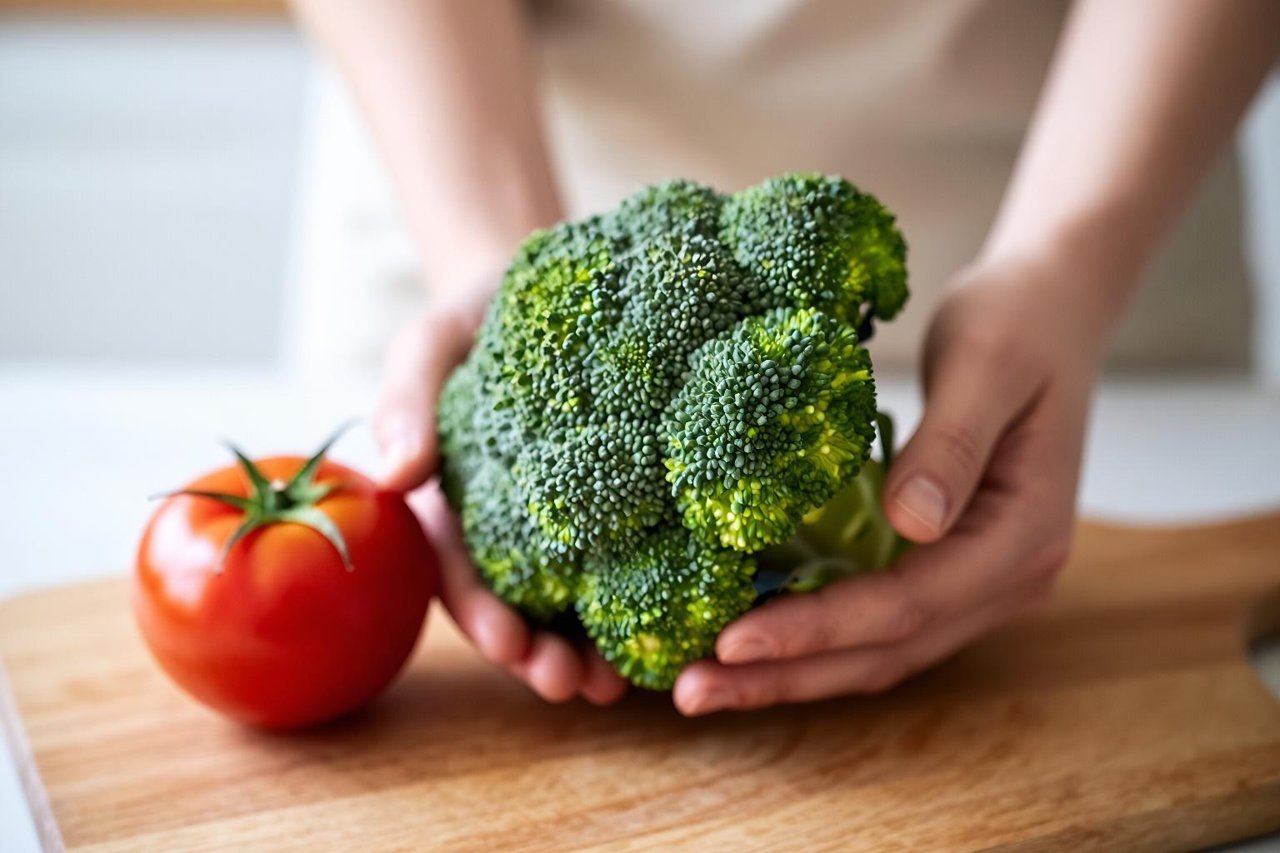
Take broccoli, for example. It’s low in calories but packed with vitamin C, vitamin K, and fiber. A cup of chopped broccoli has about 31 calories, 2.4 grams of fiber, and more vitamin C than an orange. That’s a nutrition fact you won’t find on a package because the vegetable doesn’t need one.
Some whole foods are surprisingly calorie-dense. Durian, the famous Southeast Asian fruit, is one of them. A single cup of durian packs around 357 calories, mostly from carbohydrates and healthy fats, making it far richer than most fruits. Its creamy texture and intense flavor do a great job of masking how energy-dense it really is.
And then there’s the humble tomato. It’s mostly water, but it’s also a major source of lycopene, an antioxidant linked to heart health and reduced inflammation. Unlike many nutrients that degrade with cooking, lycopene becomes more available when tomatoes are processed into sauces or pastes. So cooked tomatoes deliver more of that antioxidant than raw ones.
Wild rice is another whole food whose nutrition facts are worth memorizing. Unlike refined grains, wild rice health benefits come from its high fiber, protein, and mineral content. A cup of cooked wild rice contains around 166 calories, 6.5 grams of protein, and 3 grams of fiber, which is a solid deal for a grain.
Ingredients List: The Other Half of the Story
The nutrition facts panel tells you how much of a nutrient is in a food, but it doesn’t tell you what the food actually is. That’s where the ingredients list comes in. It’s the second most useful tool on any package, and it’s often ignored because it sits at the bottom and looks dense.
Ingredients are listed in descending order by weight. The first ingredient is the most abundant, and the last is the least. If sugar appears in the first three ingredients, you know that product is mostly sweetener, no matter what the big phrases on the front say.
One of the craftiest moves in the food industry is calling sugar by many names. Manufacturers spread different kinds of sweeteners throughout an ingredient list so that no single one appears in the top slot. If you eat a food with a clean label, you’ll often see just a few simple ingredients. If it looks like a chemistry lab inventory, the quality is probably similar.
Here’s a quick list of common added sugars to scan for:
- High fructose corn syrup
- Maltodextrin
- Malt syrup
- Evaporated cane juice
- Agave nectar
- Rice syrup
- Invert sugar
- Molasses
They all behave similarly in the body, and your pancreas can’t tell the difference between organic cane sugar and the plain stuff. It’s all just sugar.
When you read an ingredient list, ask yourself one question: Would I find these ingredients in my own kitchen? If the answer is no, you know you’re holding a processed product, and your nutrition facts reading should be extra cautious.
So the next time you reach for something in a package, take twenty seconds to read the label. Check the serving size first, and adjust for how much you’re actually eating. Look at the protein and fiber numbers rather than just the calories. Scan the %DV for the nutrients that matter to you, and don’t forget to flip the package over and read the ingredients list. The more you practice, the faster the numbers start to make sense. And once they do, you’ll find that making better choices takes less effort than ever before.


