
Table of Contents
Kelly Slater paddles into a lineup at 52. Jaromír Jágr takes shifts in the Czech Extraliga in his early 50s. Ni Xia Lian played Olympic table tennis at 61. None of these are ceremonial cameos. The oldest athletes still competing are training, recovering, and solving the same problems the rest of us face, only under a brighter spotlight. Their stories are a useful correction to the idea that athletic decline is a straight line. Age changes the terms. It does not always end the contest.
The oldest athletes still competing are not one kind of athlete
Some are skill athletes: surfers, sailors, shooters, equestrians. Some are endurance athletes: marathoners, Ironman finishers, ultra runners. A few are collision athletes, which is why Mike Tyson’s sanctioned fight at 58 drew so much attention. The common thread is not a single magic training plan. It is a long history of adaptation: fewer junk miles, more targeted work, better sleep, smarter scheduling. Slater at 52 is still reading waves better than most of the field. Jágr at 52 is still using his frame and hands. Experience buys time.
Pro sports: the oldest athletes still competing at the top
Surfing and sailing reward skill
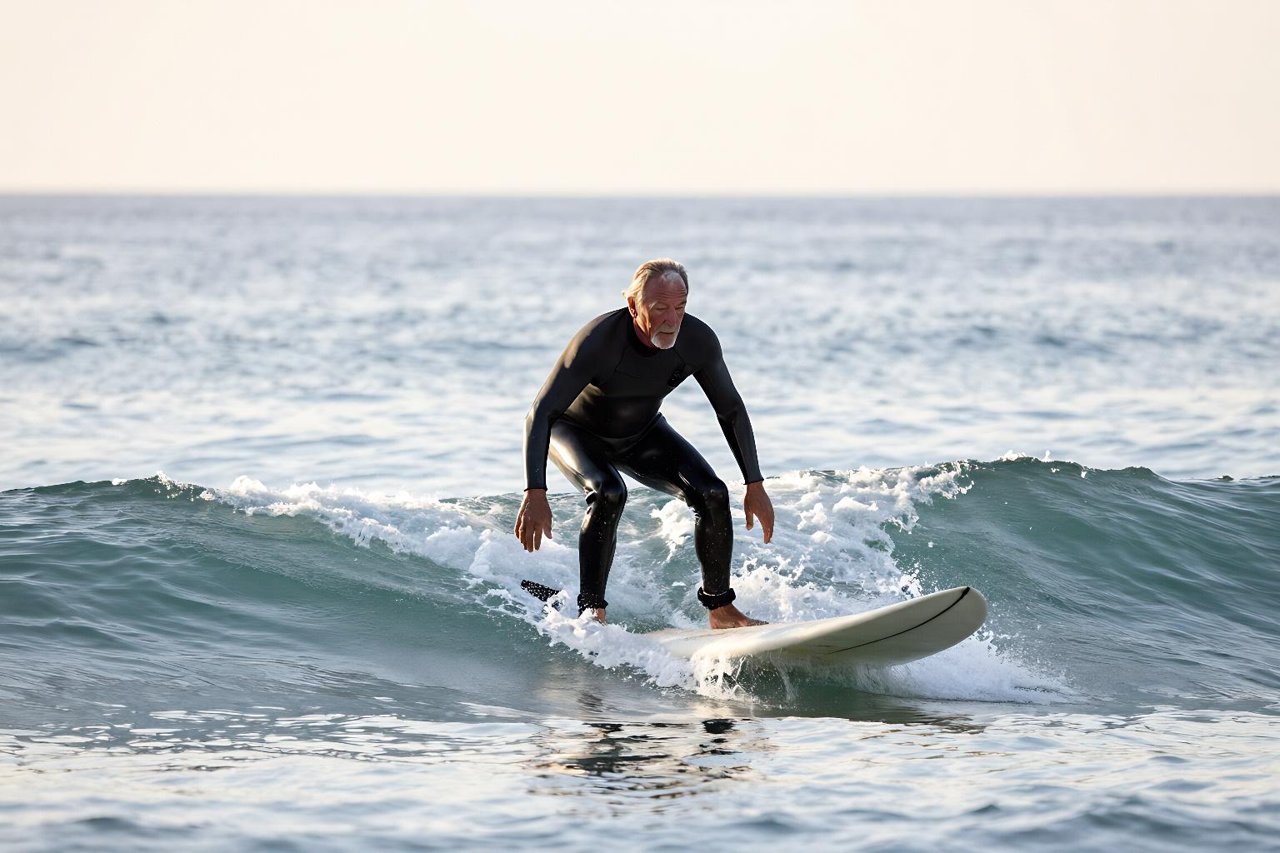
Kelly Slater, born in 1972, has spent more than three decades on the Championship Tour. He won his first world title in 1992 and his 11th in 2011. In his early 50s he was still entering WSL events, not as an exhibition act but as a seed who could win heats. Sailing offers a similar lesson. Santiago Lange won Olympic gold in the Nacra 17 at 54 in Rio 2016, then competed at Tokyo 2020 at 59. In both sports, water sense and decision-making can offset a fraction of a second lost in reaction time.
Hockey and combat sports test the body
Jaromír Jágr was still playing professionally for Kladno in the Czech Extraliga in his early 50s. Gordie Howe played in the NHL at 52. Chris Chelios played at 48. In combat sports, Bernard Hopkins fought at 51, and Mike Tyson stepped into a sanctioned professional bout at 58 in 2024. These are outliers, but they show how much of aging is sport-specific. A boxer can lose foot speed and still time a counter. A hockey player can lose a step and still read the play.

Olympic records keep moving
Oscar Swahn won Olympic medals in shooting at 72, a record that still stands. Hiroshi Hoketsu competed in dressage at London 2012 at 71. Ni Xia Lian competed in table tennis at Paris 2024 at 61. Nino Salukvadze has competed at every Olympics since 1988, including Paris at 55. Equestrian and shooting are not loopholes. They demand precision, fitness, and hours of practice. They simply punish explosive decline less than sprinting does.
Masters sport: where the oldest athletes still competing set records
Outside the pro spotlight, masters sport is full of people doing things that would be headline news if they were 30 years younger. Fauja Singh ran the Toronto Waterfront Marathon in 8:11:05 at 100. Ed Whitlock ran 3:56:38 at 85, and he had run 2:54:48 at 73. Jeannie Rice set a 75–79 marathon record of 3:33:27 at Berlin in 2023. Olga Kotelko set dozens of masters track records into her 90s. Ida Keeling ran the 100 meters in 1:17.33 at 100.
The patterns are consistent:
- They keep a hard session in the week. Whitlock did not just jog. Masters sprinters still do short, fast reps. The intensity changes, but it rarely disappears.
- They lift or do resistance work. Muscle and tendon strength protect joints, stride, and posture. A 70-year-old who squats twice a week is not trying to get huge. They are trying to stay in the game.
- They race in age groups. Age-group competition gives a 65-year-old a fair scoreboard and a reason to show up. It also makes the field deeper than most people realize.
- They protect recovery. Sleep, easy days, and off-seasons are not luxuries. They are the part of training that lets the next hard day happen.
- They stay in the sport for identity and community. The oldest competitors often have decades of friendships tied to training partners, clubs, and race mornings.
The women over 50 are rewriting the same story
The image of the aging competitor is still too often male. In endurance sport, women are closing that gap fast. The women over 50 redefining athletic aging are running fast marathons, finishing Ironman courses, and resetting age-group records that were treated as permanent a decade ago. Their training looks familiar: track intervals, strength work, careful fueling. The difference is visibility. The more we see a 55-year-old woman split a fast 5K, the less strange it becomes.
What the rest of us can borrow
You do not need to chase a world record to use the same principles. The oldest athletes still competing are usually ruthless about the basics. A 60-year-old runner who can no longer handle 70-mile weeks can often handle two quality sessions and three easy days. A former team-sport player can trade old contact drills for sprint mechanics and strength work. The goal is not to pretend age does not exist. It is to find the version of your sport that still works.
Start with what you can repeat. Consistency beats a heroic weekend. Add strength before you add volume. Keep one session that asks for real effort, whether that is a set of hills, a short time trial, or a heavy set of squats. Then give the body enough easy days to absorb it. That is not a secret formula. It is the same boring math the best older athletes have been doing for years.
Where to watch the oldest athletes still competing
World Masters Athletics publishes entry lists and results for track and field. U.S. Masters Swimming has meet calendars. National Senior Games and regional senior games run sports from pickleball to track. The WSL and Czech Extraliga put pro events on streaming. The Olympics still produce the most visible outliers. If you want to see what 60, 70, or 80 looks like in motion, look past the highlight reels. The entry lists are public, the results are searchable, and the next record is probably being trained for now.


