
[ad_1]
Key Points
- Poland is testing seven acoustic drone-detection systems and previously tested eight electronic warfare solutions at the Ustka range under the Tarcza Wschód program.
- The Polish Ministry of Defense’s innovation program has received over 715 technology submissions and tested 36 solutions in near-combat conditions since early 2025.
Poland is running operational tests of acoustic reconnaissance systems and electronic warfare equipment at the Central Air Force Proving Ground in Ustka, as the country’s Ministry of National Defense accelerates technology evaluation under its Tarcza Wschód — Shield East — border defense program.
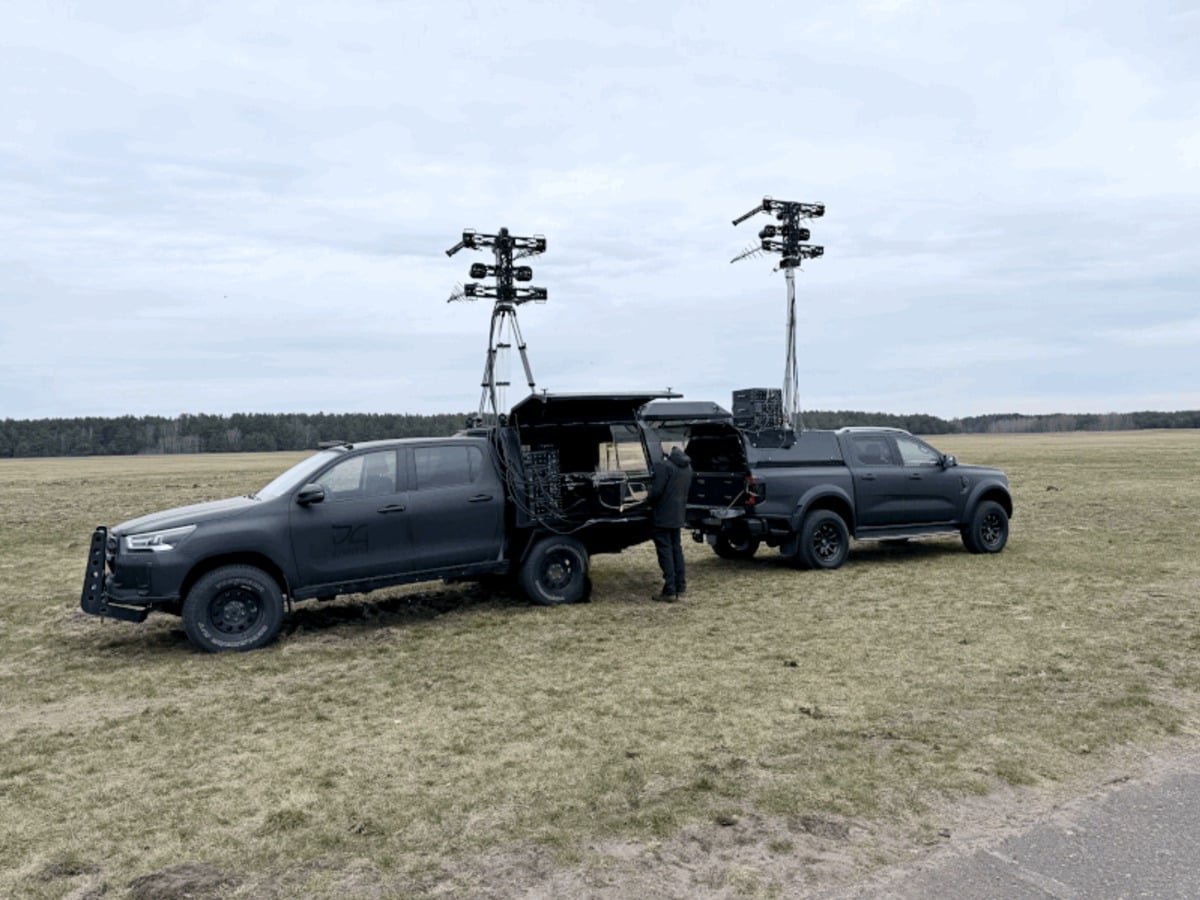
Seven acoustic reconnaissance solutions are currently undergoing testing at the Ustka range. The systems are designed to locate sound sources, detect incoming drones, determine their direction of approach, and track and classify aerial objects. Manufacturers of the systems under evaluation have declared the use of artificial intelligence tools and confirmed readiness to integrate with Polish military command systems. The acoustic testing follows a separate round of electronic warfare trials conducted at the same Ustka range from April 13 to 17, during which eight electronic warfare solutions were tested for their ability to detect and jam signals.
The tests are organized and overseen by the Polish Ministry of National Defense’s Department of Innovation, which initiated the broader technology evaluation program at the start of 2025. Since that launch, the department has received more than 715 submissions of innovative solutions spanning multiple technology domains — sensors, autonomous systems, military engineering and logistics, communications, and cybersecurity. Submissions have come from universities, large defense companies, startups, and foreign entities. Working groups staffed by military specialists review submissions systematically, evaluating their potential for operational testing and eventual integration into the Polish Armed Forces.
– ADVERTISEMENT – CONTINUE READING BELOW –
To date, 36 solutions have been tested under conditions approximating real combat operations. Last year’s exercises of the 18th Mechanized Division, conducted under the exercise name Żelazna Brama 25 — Iron Gate 25 — provided the framework for testing 21 of those technologies. The systems evaluated during those exercises included unmanned aerial and ground systems, fortification components, camouflage systems, communications equipment, and optical reconnaissance systems. Following the conclusion of the current Ustka tests, the Department of Innovation will prepare a detailed report for the Minister of National Defense, including military expert recommendations on each technology’s potential and feasibility for adoption.
The next major evaluation milestone is already scheduled. Invitations have been issued to 17 companies to participate in tests during exercises of the 16th Mechanized Division as part of the Amber Defender 26 exercise federation, planned for June 2026.
Acoustic reconnaissance systems occupy a specific and increasingly important niche in modern air defense. Radar and optical sensors — the traditional pillars of air surveillance — can be jammed, degraded by weather, or defeated by low-observable platforms flying at low altitude. Acoustic detection offers a passive, difficult-to-jam complement to those active systems. For drone detection specifically, the acoustic signature of small unmanned aircraft — the distinctive buzz of electric motors and rotors — provides a detectable signal that passive microphone arrays can pick up, localize, and classify without emitting any signal that could reveal the sensor’s position to an adversary. Adding AI-based classification to those arrays allows the system to distinguish between different drone types, separate drone signatures from background noise, and feed that targeting data into a command system in near real time.
Electronic warfare capabilities tested in the April 13–17 round at Ustka address the same threat from a different angle. Drone operations depend on radio frequency links — for control, navigation, and in some cases video downlink. Electronic warfare systems that can detect those signals locate the drone’s operational signature even before acoustic or visual detection, and jamming systems that can disrupt those links can degrade or terminate the drone’s mission without kinetic engagement. The combination of acoustic detection and electronic warfare jamming represents a layered approach to counter-drone defense, addressing both the physical presence and the electronic dependency of unmanned aerial systems.
Poland’s Tarcza Wschód program frames these technology tests within a national defense strategy that encompasses infrastructure development, military capability enhancement, and civilian resilience. The program’s stated objectives are deterrence of potential threats, protection of soldiers and civilians, and development of Polish defense capabilities in cooperation with allies. Its geographic orientation — Shield East — reflects the strategic reality of Poland’s position as a NATO front-line state bordering both Belarus and the Kaliningrad exclave of Russia, with Ukraine to the south fighting the largest land war in Europe since World War II.
More than 715 submissions. Thirty-six solutions already tested in near-combat conditions. Seventeen companies invited to the next round in June. The volume and pace of Poland’s defense innovation evaluation program reflects a country that has concluded, from watching the war in Ukraine at close range, that the gap between laboratory capability and battlefield deployment needs to close — and fast.
[ad_2]
Source link


