
Table of Contents
Your brain is the hungriest organ in your body. It makes up only about 2% of your weight, yet it burns roughly 20% of your daily calories. So it’s not exactly a shock that what you eat profoundly influences how you think, remember, and cope with stress. But the modern food environment makes it easy to feed your brain the wrong stuff. Energy crashes, brain fog, and that frustrating tip-of-your-tongue feeling all have dietary roots.
The good news? You can take control with a handful of well-studied foods. This guide breaks down the strongest evidence for the best foods for brain health, and exactly how to put them on your plate.
What Makes a Food Good for Your Brain?
Before we get to the shopping list, it helps to understand the basics. Certain nutrients do the heavy lifting when it comes to cognitive function. Omega-3 fatty acids, especially DHA, form a large part of your brain’s cell membranes. Antioxidants like flavonoids protect brain cells from oxidative stress. B vitamins, vitamin E, and certain minerals such as zinc and magnesium also play distinct roles. And because your brain runs on glucose, steady energy delivery matters just as much as the raw materials. This is why many of the same foods that keep your blood sugar level are the ones that keep your mind clear. If you often hit an afternoon slump, it’s not just food for thought—you might benefit from a review of foods for energy that help you stay charged without the crash.
Here are the key nutrients to look for in brain foods:

- Omega-3 fatty acids (DHA and EPA) for cell structure and neuron communication
- Antioxidants like flavonoids, vitamin C, and vitamin E to fight oxidative stress
- B vitamins, especially B6, B12, and folate, which help regulate homocysteine and produce neurotransmitters
- Choline for memory and learning
- Magnesium and zinc for synaptic plasticity
- Fiber and protein to keep blood glucose steady
The Best Foods for Brain Health, One by One
Fatty Fish: Your Brain’s Best Friend
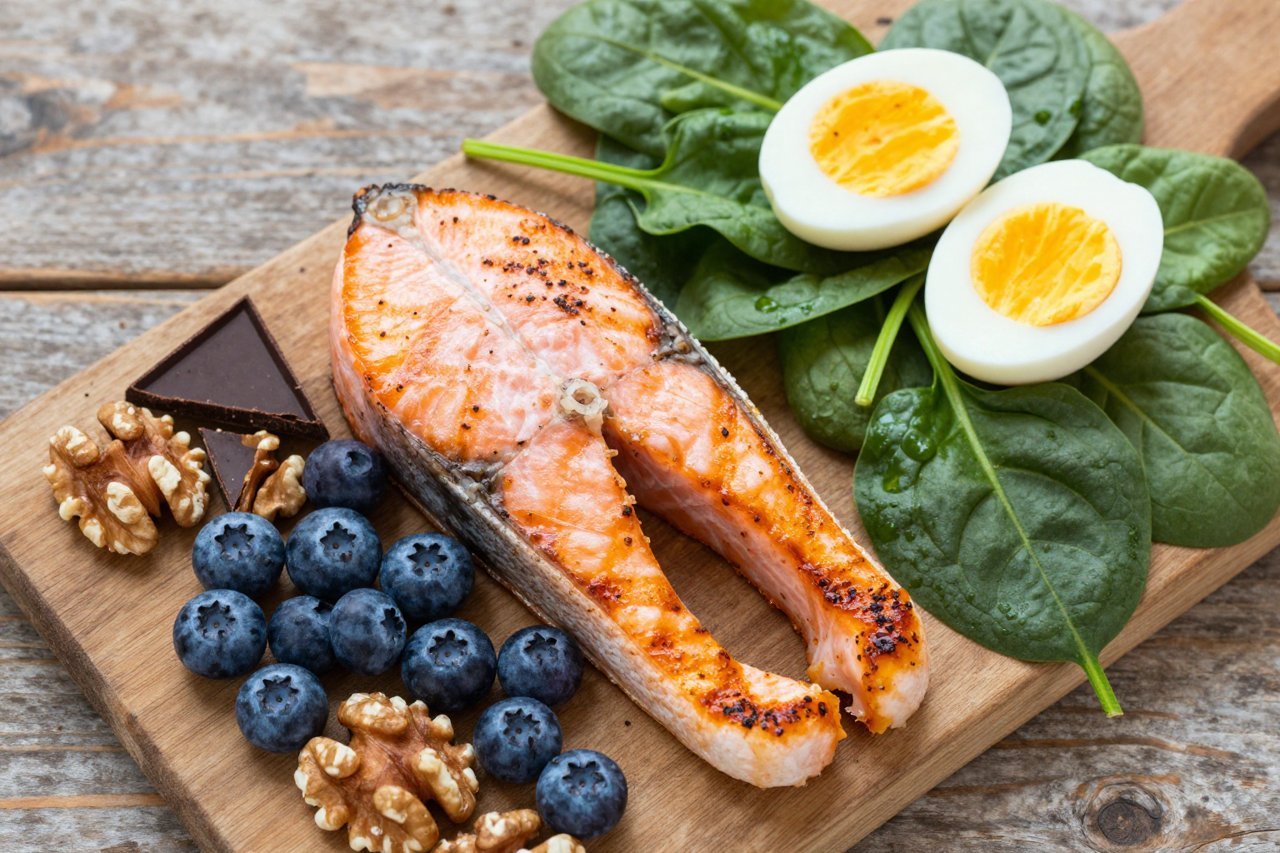
Salmon, mackerel, sardines, herring, and anchovies are rich in docosahexaenoic acid (DHA) and eicosapentaenoic acid (EPA). DHA is the most abundant omega-3 in your brain, and low levels have been linked to memory problems. The research is compelling: older adults who eat fatty fish at least twice a week show slower cognitive decline, and some studies suggest a lower risk of Alzheimer’s. Aim for two 100-gram servings a week. Canned sardines and smoked mackerel are budget-friendly options that don’t require any kitchen heroics.
Berries: The Antioxidant Firefighters
Blueberries, strawberries, blackberries, and raspberries are packed with flavonoids called anthocyanins, which cross the blood-brain barrier and neutralize harmful free radicals. A landmark study from the Harvard Nurses’ Health Study found that women who ate blueberries and strawberries weekly delayed cognitive aging by up to 2.5 years. Frozen berries work just as well as fresh—they’re picked at peak ripeness and often cost half the price. Throw a handful into yogurt, oatmeal, or simply eat them straight from the freezer on a hot day.
Leafy Greens: The Meal That Pays Dividends
Kale, spinach, collard greens, and Swiss chard are loaded with vitamin K, lutein, folate, and beta-carotene. The MIND diet, a hybrid of the Mediterranean and DASH diets, puts leafy greens at the center, and researchers found that people who stuck to it had the cognitive equivalent of being 7.5 years younger than their actual age. One study from Rush University showed that eating just one serving of leafy greens a day was enough to slow age-related decline. Not sure how to squeeze them in? Green smoothies, sautéed spinach over eggs, or a simple kale salad with lemon and olive oil all work. For a broader lineup of vegetables that deserve a spot in your cart, these 15 healthiest vegetables are worth checking out.
Eggs: The Affordable No-Fuss Brain Fuel
Eggs are a cheap, versatile source of choline, a nutrient your brain needs to produce acetylcholine, a neurotransmitter involved in memory and mood. Many people don’t get enough choline, and eggs are one of the best sources outside of organ meats. One large egg gives you about 147 mg of choline, which covers roughly a third of the daily recommendation. The controversy about cholesterol is overblown for most people; eating eggs doesn’t raise your LDL cholesterol significantly unless you’re diabetic or ultra-sensitive. And the protein in eggs helps steady your blood sugar, which keeps your focus sharp. If you’re looking to pack more protein into your day, learn from our detailed breakdown of foods high in protein with real numbers.
Nuts and Seeds: The Portable Brain Boosters
Walnuts are practically a poster child for brain food, and not just because they look like a brain. They’re packed with alpha-linolenic acid (ALA), an omega-3 that your body converts to DHA, albeit inefficiently. But the variety matters too. Almonds give you vitamin E, which is linked to less cognitive decline. Pumpkin seeds are one of the best sources of zinc and magnesium, both important for nerve signaling. A handful of mixed nuts (about 30 grams) is a perfect snack that keeps blood sugar stable between meals. And because they’re rich in protein and fiber, they also help you feel full for longer. Need ideas for filling snacks that don’t blow your calorie budget? Our guide to low-calorie foods that fill you up covers options beyond nuts as well.
Dark Chocolate: The Delicious Flavonoid Rich Food
Cacao is loaded with flavonoids that boost blood flow to the brain. A 2018 study published in Frontiers in Nutrition found that participants who consumed dark chocolate had better performance on memory and processing speed tests. But not all chocolate is created equal. Aim for at least 70% cocoa, and keep portion sizes small—a square or two is enough to reap benefits. The fat and sugar in commercial milk chocolate can blunt the positive effects, so don’t treat it as a free pass. Choose quality over quantity.
Turmeric and Other Herbs: Surprising Brain Boosts
Turmeric’s active compound, curcumin, is one of the few compounds that can cross the blood-brain barrier. It’s a powerful anti-inflammatory and antioxidant, and studies in older adults suggest it may improve memory and attention over time. The catch? Curcumin is poorly absorbed on its own. Pair it with black pepper, which contains piperine and can boost absorption by 2,000%. Adding a teaspoon of turmeric to soups, scrambled eggs, or a warming golden milk drink is an easy habit.
How to Turn These Brain Foods into Real Meals
Knowing the ingredients is only half the battle. The real benefit comes from making them a regular part of your diet. Here are some practical, no-nonsense strategies to get more brain-healthy foods into your week:
- Start your day with a fried egg on top of sautéed spinach and a slice of whole-grain toast. That’s choline, folate, B vitamins, and fiber in one meal.
- Keep a jar of mixed nuts and a bag of frozen blueberries at your desk or in your bag. When a craving hits, you’ll reach for something that serves your brain, not sabotages it.
- Swap one meat-heavy dinner a week for a fatty fish like grilled salmon or roasted mackerel. Join a sustainable seafood box if freshness is an issue.
- Make a batch of turmeric lentils or curry midweek. The curry powder typically contains other beneficial spices, and adding black pepper is delicious and biologically smart.
- Plan your snacks like you plan your meals. Choose snacks that contain both protein and fiber, like apple slices with almond butter, or Greek yogurt with berries. This isn’t just about brain health; it also helps with weight management, because overeating and insulin resistance are increasingly linked to cognitive decline. If you want to understand how food choices can help with weight loss and satiety without deprivation, you’ll find useful information in our detailed guide to weight loss foods.
No single food will turn you into a genius overnight. But the combined evidence is clear: a diet rich in omega-3 fats, whole vegetables, berries, nuts, and a little dark chocolate can help protect your brain as you age, improve your focus today, and lift your mood. The trick is consistency. Your brain is rebuilding itself every day, and what you eat at every meal is the raw material for that process. Start with one change—maybe swapping your afternoon biscuit for a handful of walnuts—and build from there. Your future self, sitting at a dinner table with a clear head and all the right words on the tip of their tongue, will thank you.


