
Table of Contents
Kayaks reach the parts of a coastline that boats skip and hikers never see: the gap in a limestone cliff that opens into a hidden lagoon, a mangrove tunnel too low for a motor, a glacier face you can hear cracking from 200 metres away. But pretty water alone doesn’t make a great trip. The paddles that stick with people usually share three things: shelter from wind and swell, something worth looking at within a half-day’s effort, and working infrastructure — rentals, shuttles, a guide who actually reads the tides.
Every destination below delivers on those counts. Some are cheap and forgiving. A couple will test your roll.
Bacuit Bay, Palawan, Philippines
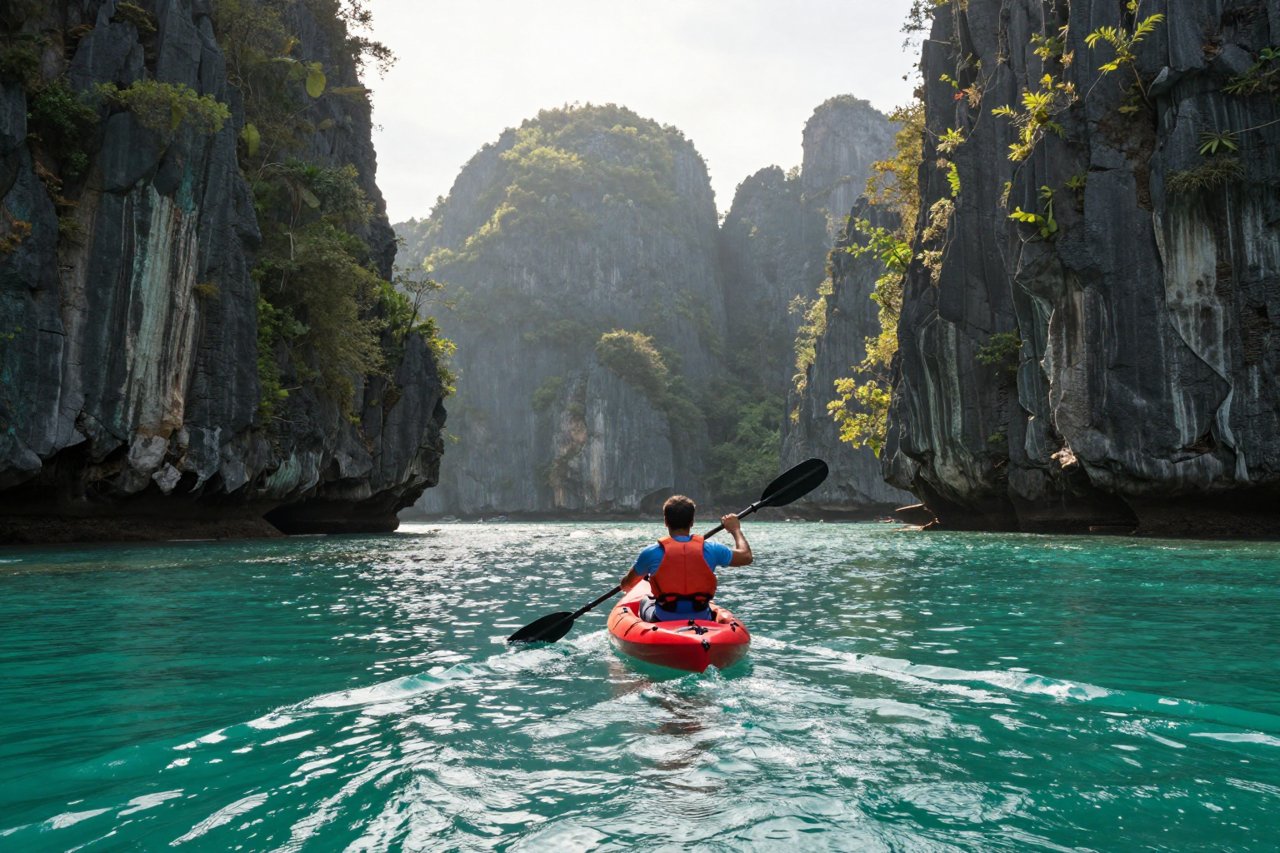
El Nido’s Bacuit Bay is a maze of limestone karsts and hidden beaches spread across roughly 45 islands and islets. The showpiece is the Small Lagoon, a blue-green pool you enter through a gap barely wide enough for two kayaks side by side. No tour boat fits; paddlers get it to themselves.
Rentals along Corong Corong and Marimegmeg beach run about 500 to 800 Philippine pesos a day. Launch by 6:30am and you’ll clear the day-tripper traffic, which arrives around eight. Water holds at a bath-like 28°C, so a rash vest beats a wetsuit. Go January to May. From June the southwest monsoon rolls in. If you’re building a longer trip around the paddling, this guide to beach paradises and cultural gems covers the rest of the region well.

Abel Tasman National Park, New Zealand
New Zealand’s smallest national park has the most kayak-friendly coastline in the country. The 60km stretch between Marahau and Totaranui is mostly reachable only on foot or by water, and the water-taxi network is built around paddlers: kayak one day, walk the next, get collected at Anchorage, Bark Bay or Awaroa.
Expect granite outcrops, golden sand, and fur seals in the Tonga Island Marine Reserve that will happily circle your boat. Guided day trips cost NZ$150 to 200; a three-day guided trip with camping runs closer to NZ$1,000. Summer water sits around 17°C. November is the sweet spot — warm enough to swim, quiet enough to have Anchorages to yourself. If you like planning around shoulder seasons, this piece on where to go in November is a useful companion.
Sea of Cortez, Baja California, Mexico
Jacques Cousteau called the Gulf of California “the world’s aquarium,” and the numbers back him: roughly 900 fish species and a third of the world’s whale and dolphin species pass through. La Paz is the launch point, with Isla Espíritu Santo sitting about 20km offshore.
The draw here is wildlife density. Sea lion pups at Los Islotes will nibble your paddle blade. Whale sharks cruise the bay from October to February. Guided three- to five-day trips with beach camping run US$800 to 1,400, and camping on the island needs a permit because it’s a UNESCO biosphere reserve. Watch the nortes — afternoon northerly winds that can turn calm water into a washing machine by 2pm. Paddle mornings.
Kenai Fjords, Alaska
This is the cold-water benchmark. From Seward, outfitters run day trips into Aialik Bay, where you paddle between icebergs calved off the Northwestern and Holgate glaciers. Water sits between 4°C and 8°C, so a drysuit isn’t optional and outfitters will insist on one.
You’ll share the water with humpbacks, sea otters, puffins and harbour seals hauled out on floating ice. Day trips run around US$300 for six hours; multi-day camping trips go deeper into the fjords. June to August is the window, and weather can scrub boat shuttles with a day’s notice, so build slack into your itinerary. It’s genuinely remote wilderness — the same appetite for isolation that fuels these remote backpacking destinations applies here, just on water instead of trail.
Stockholm Archipelago, Sweden
Around 30,000 islands and islets fan out east of Stockholm, and allemansrätten — the right to roam — means you can land and wild camp on most of them for a night. Ferries from the city reach Vaxholm in under an hour; kayak rentals there and in Dalarö run SEK 450 to 650 a day, with multi-day packages including a waterproof map and a trolley.
June delivers more than 18 hours of usable daylight, which is a strange and wonderful thing when you’re still paddling at 10pm. Water warms to 18–20°C by July. Late June to mid-August is the season; outside it, the archipelago empties out and the wind gets serious.
West coast of Scotland
The Sound of Arisaig hands you white shell-sand beaches, skerries and Atlantic views without the crowds of the Mediterranean. Loch Sween offers sheltered paddling through oak woodland, and the Gulf of Corryvreckan is there for anyone who wants a tide race with a reputation.
Wildlife is the hook: basking sharks from May to September, plus otters, porpoise and grey seals. Scottish weather is the constraint rather than the temperature, so book a week and stay flexible. Even a shorter escape can be stitched onto a city break, much like the logic behind these day trips from Liverpool by train, bus and car — a couple of hours of travel, a completely different landscape.
Ten Thousand Islands, Florida
South of Naples, the Ten Thousand Islands National Wildlife Refuge protects a lattice of mangrove islands, oyster bars and shallow bays. The 99-mile Wilderness Waterway threads through it, and paddlers can camp on raised wooden platforms called chickees for around US$20 to 25 a night through Recreation.gov.
Manatees, bottlenose dolphins and roseate spoonbills are all realistic sightings. Rentals in Everglades City cost roughly US$50 a day. November to April is the dry season; summer brings heat, storms and mosquitoes that could carry off a small dog. Tides matter enormously here — a 1.5m swing can turn your shortcut into a mudflat, so learn to read a tide chart before you go.
How to pick between them
- Match the water to your level. Protected lagoons and mangrove creeks (Palawan, Florida) suit confident beginners. Tide races, glacier lakes and open crossings (Corryvreckan, Aialik Bay) demand rescue skills and cold-water experience.
- Read the wind, not just the forecast icon. Baja’s nortes, the Mediterranean’s meltemi and afternoon sea breezes in the tropics all show up like clockwork. Plan long crossings for the morning.
- Check the tide range, not just the tide time. A 0.3m range barely matters in the Baltic. A 9m range in Alaska changes everything about where you can land.
- Budget for permits and shuttles. Camping on Espíritu Santo, the Florida chickees and Alaskan boat drops all need booking weeks ahead in peak season.
- Look at shoulder months. Late September in Croatia or early November in New Zealand means empty water and rental discounts of 20 to 30 percent.
What to ask an outfitter before you book
The quality of a guided trip usually comes down to ratios and rescue gear, not the brochure photography. Ask how many paddlers per guide — one to six is good, one to twelve is a herd. Ask whether the guide holds a recognised sea-kayak award and carries a towline, VHF radio and spare paddle on the water rather than in a dry bag at camp. Ask what happens if the wind picks up at midday, and listen for whether they describe a plan or just reassurance.
For rentals, the tell is the deck lines and hatch covers. Frayed perimeter lines, missing bungees and a hatch that doesn’t seal tell you the fleet gets used hard and maintained cheaply. A good shop will ask about your experience before handing over a boat, and will refuse to send a beginner out into a tide race. That refusal is worth more than any discount.


