
Table of Contents
The skin around your eyes is the first place to show stress, late nights, and, well, age. It’s thinner than the rest of your face, has fewer oil glands, and it moves every time you blink, squint, or smile. That’s why a regular moisturizer often isn’t enough. But with hundreds of eye creams on the market, how do you pick the best eye cream for you? It’s not about the price tag or the fancy packaging. It’s about matching the right ingredients to your specific under-eye issue. This guide cuts through the hype to help you make a smart choice.
What Makes an Eye Cream Different?
You might be tempted to slather your favorite face cream under your eyes and call it a day. That can work, but eye creams are specifically formulated for the delicate eye area. They’re often lighter, less likely to cause milia (those tiny white bumps), and packed with actives at concentrations safe for sensitive skin. The best eye cream for you will be one that addresses your unique concerns without causing irritation. If you’re looking for a starting point, check out our roundup of the best eye creams for 2024 to see what’s currently earning rave reviews.
The Ingredients That Actually Deliver
Not all eye creams are created equal. Instead of being wowed by marketing claims, flip the jar over and look for these proven powerhouses:
- Caffeine: Constricts blood vessels, which helps fade puffiness and dark circles from poor circulation.
- Retinol: Boosts collagen production and speeds up cell turnover to smooth fine lines. Look for a gentle, time-released formula if you have sensitive skin.
- Peptides: These amino acid chains signal your skin to produce more collagen, which can thicken the under-eye area and reduce wrinkles. We’ve found some fantastic options in our review of the best peptide eye creams.
- Hyaluronic acid: Draws moisture into the skin and plumps it up, temporarily diminishing the look of crepey skin and fine lines.
- Vitamin C: An antioxidant that brightens and helps fade dark pigmentation. It works best when paired with vitamin E.
- Niacinamide: Soothes redness and strengthens the skin barrier, making it a great option for sensitive eye areas.
Choosing the Best Eye Cream for Your Top Concern
Let’s break down the most common under-eye issues and the formulas that tackle them. There’s no single “best eye cream” for everyone, but there is one for you.

For Dark Circles
Dark circles aren’t all the same. Some are purple or blue from visible blood vessels, others are brown from pigmentation. For vascular circles, look for caffeine and vitamin K to strengthen vessels. For pigmentation, vitamin C, licorice root extract, and niacinamide are your friends. Don’t expect miracles overnight — most eye creams take 4 to 8 weeks of consistent use to show noticeable results. A more thorough guide on how to choose eye creams for dark circles can help you narrow down your options.
For Puffiness and Under-Eye Bags
Waking up puffy is usually down to lymphatic drainage, salt, or lack of sleep. Caffeine and a cooling metal roller tip can help by constricting vessels and moving fluid. Look for formulas with a mixed peptide complex, too, as they can help firm the skin over time. Ice rollers are another story — they give a temporary depuff, but they’re not a replacement for a targeted eye cream.
For Fine Lines and Wrinkles
This is where retinol, peptides, and bakuchiol (a plant-based retinol alternative) shine. Need a retinol that won’t leave you flaky? Look for encapsulated retinol, which releases slowly into the skin. Peptides are great for sensitive skin that can’t tolerate retinol; they’re more gentle but take longer to show results. We’ve also written an in-depth piece on choosing the best wrinkle cream, which covers the same ingredient logic for your whole face.
For Dry, Crepey Skin
If your under-eye area feels tight and looks papery, you need heavy-duty humectants and emollients. Hyaluronic acid pulls in water, while ceramides and squalane lock it in. A thick, balm-like texture works wonders at night. Just make sure you don’t apply so much that it migrates into your eyes and blurs your vision — a pea-sized amount is plenty.
The Right Way to Apply Eye Cream (Yes, There Is One)
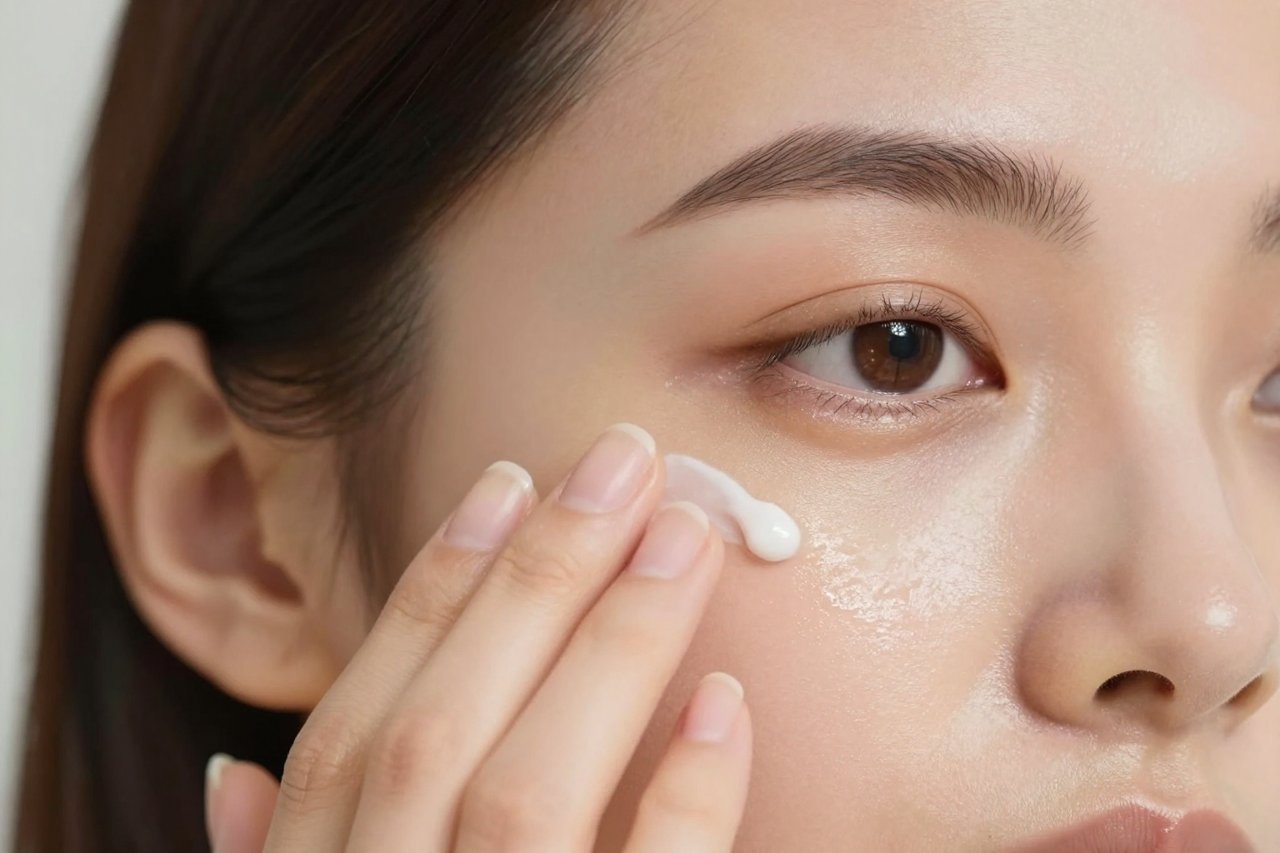
How you apply matters just as much as what you apply. Using your ring finger (which has the lightest pressure), dab a tiny amount — about the size of a grain of rice — along the orbital bone, not directly under the lash line. Gently tap it in a circular motion from the inner eye outward. Don’t rub. Don’t pull. And always apply it after your serum but before your moisturizer, unless your product says otherwise. If you’re layering other skincare, keep your eye cream last in your routine to avoid trapping heavier creams too close to your eyes.
Mistakes That Sabotage Your Eye Cream
Even the best eye cream will underperform if you’re making these errors:
- Using too much product and expecting bigger results. It just wastes product and can cause irritation.
- Skipping sunscreen around your eyes. UV damage is a leading cause of premature aging, and most face sunscreens are safe for the eye area (just avoid stinging formulas). Our guide to the best sunscreen for sensitive skin has some gentle picks that won’t make you tear up.
- Rubbing your eyes when you’re tired. This pulls and stretches delicate skin over time.
- Expecting instant gratification. Eye creams are long-term skincare, not makeup.
Are Expensive Eye Creams Worth It?
The honest answer? Sometimes, but not always. Lab tests show that drugstore brands like CeraVe, The Inkey List, and Good Molecules often outperform luxury creams in blind trials. A $50 eye cream isn’t necessarily better than a $20 one with the same actives. What you’re really paying for is texture, fragrance, and packaging. If you can find an affordable formula with the right ingredients, there’s no reason to blow your budget. That said, if a luxurious texture encourages you to use it twice a day, that’s arguably worth more than the perfect formula you leave in the drawer.
Your Eye Routine Deserves a Sidekick
An eye cream isn’t a standalone miracle. It’s part of a broader skincare strategy. Pair it with a moisturizer that supports your skin barrier and use SPF religiously. Dehydrated under-eyes look worse no matter which eye cream you pick, so consider layering a gentle moisturizer over your eye cream. And don’t forget your neck — the same ingredients that work under your eyes can help your neck and chest.
The Best Eye Cream Is the One You’ll Use Every Day
Here’s the truth: the single best eye cream is the one that makes you feel good and that you will actually apply morning and night. Consistency beats intensity. Whether you choose a budget-friendly caffeine gel from the drugstore or a splurge-worthy peptide cream, commit to using it for at least two months. Take a “before” photo now, and compare it at the end of that period. That’s the only real test that matters.


