
Table of Contents
Finding a sunscreen that doesn’t sting, turn your face into a red. blotchy mess. or feel like a heavy mask can feel like an endless scavenger hunt. One brand promises “gentle” but leaves you burning within an hour. Another feels silky going on, then triggers a breakout that lasts a week.
If this sounds familiar, you’re not alone. Sensitive skin is more commonplace than you’d think—around half of women and nearly a third of men report having skin that reacts to products. And sunscreen, ironically, is one of the biggest culprits because it has to sit on your skin all day. But you still need it. UV damage accelerates aging and increases skin cancer risk, and skipping protection isn’t an option.
The good news: the best sunscreen for sensitive skin isn’t a myth. It comes down to understanding what triggers your skin, knowing which ingredients to embrace, and learning a few application tricks. Here’s what actually matters.
Why Some Sunscreens Make Sensitive Skin Angry
Before we get to the products, it helps to understand the resistance. Most irritation comes from one of two places: the active UV filters or the additives.

Chemical sunscreen filters—like oxybenzone, avobenzone, octinoxate, and octocrylene—work by absorbing UV rays and converting them into heat. That process itself can trigger a reaction in prone skin. Oxybenzone, in particular, has a high rate of contact allergies. Even if you’re not officially allergic, these filters can make rosacea, eczema, or simply reactive skin flare up.
Physical blockers (zinc oxide and titanium dioxide) sit on top of the skin and reflect light. They’re far less likely to cause irritation, which is why dermatologists often recommend them first for sensitive patients.
But the filters aren’t the whole story. Fragrance, artificial dyes, denatured alcohol, and certain preservatives like methylisothiazolinone can be equally irritating. A sunscreen might have a perfectly good UV filter system ruined by a chemical fragrance blend. This is why scanning the full ingredient list matters, not just the active ingredients.
If you want to see which specific formulas we’ve tested and loved, our guide to the best sunscreen for face and sensitive skin breaks down products that passed the patch-test challenge.
What to Look for in a Sensitive-Skin Sunscreen
Mineral Filters Over Chemical Ones (But Not Always)
Zinc oxide is the gold standard for sensitivity. It offers broad-spectrum protection, doesn’t absorb into the bloodstream, and rarely triggers allergic reactions. A formula with 15% to 20% zinc oxide gives solid, balanced protection.
Titanium dioxide is also gentle, but it doesn’t cover the full UVA spectrum as completely as zinc. Many brands pair the two for broader coverage. If you choose a mineral sunscreen, look for one that says “non-nano”—that means the particles are too large to penetrate the skin barrier, which is an extra safety bonus.
That said, don’t completely write off chemical sunscreens. Some newer filters like Tinosorb S, Uvinul A Plus, and Mexoryl are far less irritating than old-school oxybenzone. If you have finicky skin but hate the white cast of mineral-only formulas, a hybrid sunscreen with these modern filters might work well. Just avoid oxybenzone and octinoxate by name.
Soothing Additives That Actually Help
The best sensitive-skin sunscreens aren’t just sun protection—they’re skin protectors. Look for calming ingredients like niacinamide (vitamin B3), which reduces redness and strengthens the barrier. Panthenol (pro-vitamin B5) and allantoin also help calm reactive skin.
Aloe vera is a common addition and for good reason: it has natural anti-inflammatory properties. We’ve covered the topical benefits of aloe vera in depth, but in sunscreen, it adds moisture and soothing relief without greasiness.
On the flip side, avoid these possible irritants: denatured alcohol (often listed as “alcohol denat.”), fragrance (from synthetic blends to natural essential oils like citrus or lavender), and drying gel bases. The simpler the ingredient list, the less chance of a reaction.
The Right SPF for Everyday Reality
SPF 30 blocks about 97% of UVB rays, while SPF 50 blocks 98%. There’s a marginal difference, but what matters is whether you’ll actually slather it on. For sensitive skin, texture may influence how much you use. A watery lotion you’ll reapply beats a heavy cream you’ll skip.
Always choose broad-spectrum, which means it covers both UVA and UVB. And don’t chase triple-digit SPFs—they’re marketing numbers and often tempt people into extended sun exposure, a dangerous move when your skin is already reactive.
Best Sunscreen Formulations by Skin Type
No single sunscreen works for all sensitive skin. Here’s how to match a formula to your specific complaints.
Dry, Flaky, or Eczema-Prone Skin
Look for sunscreen with built-in moisturizing ingredients like ceramides, glycerin, squalane, or shea butter. Creams and emollient sunscreens are your friends. Avoid gel or spray formulas that dry down to a matte finish—they can suck remaining water out of your skin. Instead, pick a tinted or untinted mineral moisturizer-sunscreen hybrid that doubles as your a.m. moisturizer.
- Avoid: high-alcohol sprays, gel sunscreens, anything with a matte finish.
- Look for: ceramides, panthenol, hyaluronic acid, shea butter.
- Bonus: tinted mineral sunscreens with iron oxides also shield against visible light, which can trigger melasma or pigmentation in reactive skin.
Oily, Acne-Prone, and Still Sensitive
If you need oil control and breakouts are a concern, the formula should be “non-comedogenic” (won’t clog pores). But that label isn’t enough—look at the texture. Light lotions or cosmetically elegant mineral blends with micro-fine zinc oxide work well. Niacinamide is a hero here because it controls sebum while calming redness.
Skip the coconut oil or cocoa butter-based sunscreens. They’re nourishing but can trigger folliculitis or breakouts on already-moody skin. A clear or sheer option with silicone (dimethicone) usually provides a smooth base and prevents sensitivity.
Eyes That Water or Burn
Sunburn on eyelids is a real risk; that’s why you need to apply sunscreen around the eye area. Chemical sunscreen tends to migrate when you sweat, causing a burning sting. Mineral sunscreen with titanium dioxide doesn’t sting as much because it stays put. If your eyes are ultra-reactive, a sunscreen stick laid around the orbital bone works well, as it creates a waxier barrier that won’t melt and drip.
How to Apply So You Get Full Protection Without Irritation
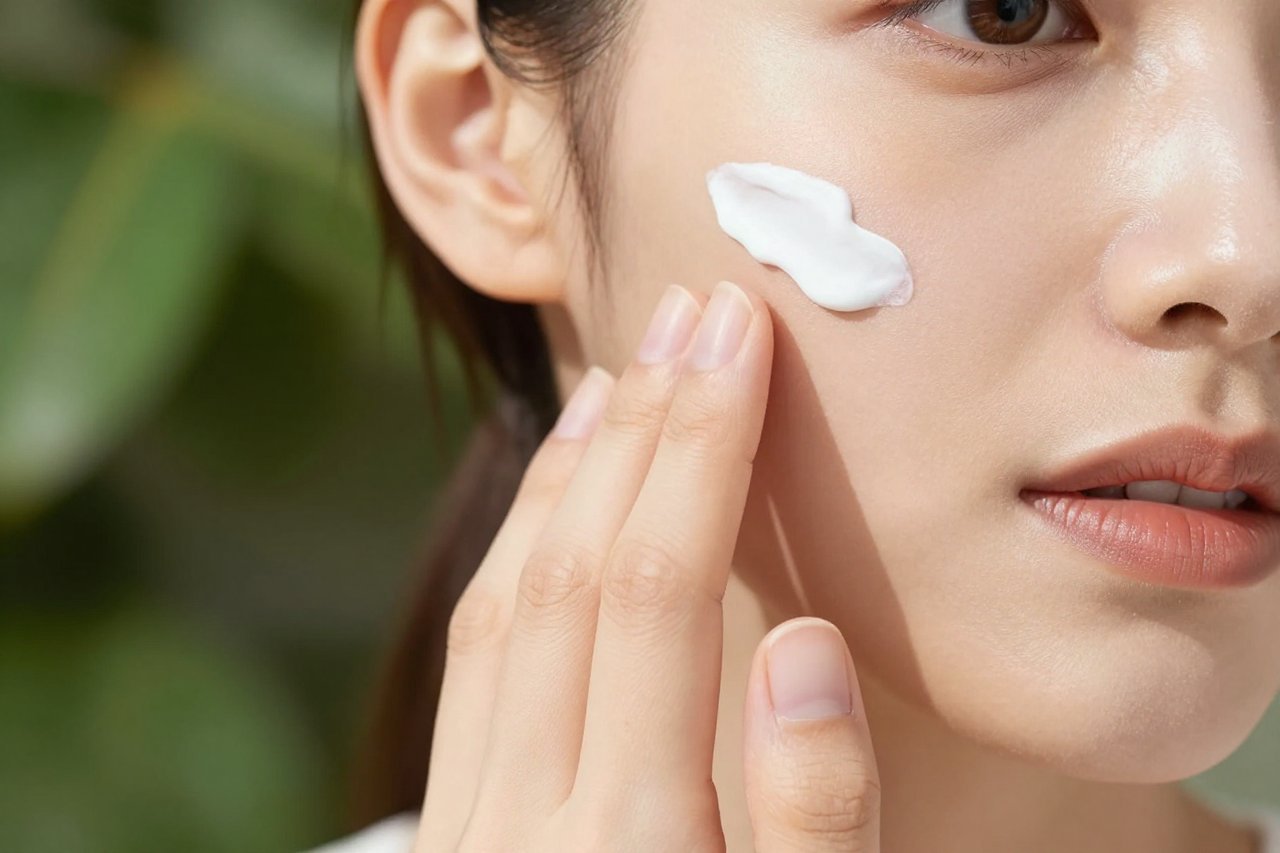
Your application technique matters just as much as the bottle. The face needs about 1/4 teaspoon (roughly the size of a coin) for adequate coverage. Most people in practice use less than half that, which means you’re getting far less protection than the SPF claims. Use your ring finger to dot small amounts and gently pat into skin rather than rubbing hard—this reduces friction on sensitive areas.
If you use moisturizer or serum, apply that first and wait a couple minutes for it to dry down. Sunscreen goes last. For specific advice on building a routine that won’t irritate, our honest guide to building a natural skincare routine is a great place to start.
Reapply regularly—every two hours when outdoors. If your skin is too reactive for a second coat, alternative methods include resetting with a mineral powder sunscreen or using sunscreen mist over makeup, though these rarely provide full protection without a real layer underneath.
Patch Testing Is Non-Negotiable
A patch test will save your face from a whole-day nightmare. But a quick spot on your wrist isn’t enough because that skin is different from your face.
Try this: apply a small amount behind your ear or on the side of your jawline, right where you’d naturally break out. Wear it for 48 hours, reapply twice a day to the same spot. If no redness, itching, or bumps appear, it’s likely safe to try on your face. This is especially important with new brands or indie makers with less established formulas.
If you want to branch out and try a clean, plant-based brand, our feature on whether organic skincare products are actually worth the price can help you decide where to spend your money.
The Long-Term View: Anti-Aging and Sunscreen Together
Most people start using sunscreen to avoid sunburn, but the real benefit is cumulative skin health. In fact, a consistent sunscreen ritual is one of the most evidence-backed anti-aging behaviors you can adopt. It’s actually more effective than most creams you’ll buy. Yet if you’re already dealing with fine lines and discoloration, layering an antioxidant serum (like vitamin C) under sunscreen boosts protection and helps repair existing damage.
If you’re curious about which ingredients truly work long-term, our breakdown of what actually works (and what to skip) in anti-aging creams pairs well with your new sunscreen habit. But even before you introduce anything else, find that one sunscreen you can tolerate. Once you do, everything else gets easier.
Sensitive skin doesn’t mean you’re doomed to a lifetime of patchy, pale freckles from sun damage. It just means you need to be more careful about your product choices. Stick with mineral filters or modern gentle chemicals, avoid fragrance and alcohol, and always test on a small area first. When you find a formula that disappears into your skin without backlash, you’ll never go back.


