
Table of Contents
Hair loss is never fun. Whether it’s a few extra hairs in the drain after a shower or a visibly widening part, the urge to grab a bottle and fix it fast is real. But here’s the thing: not every “best shampoo for hair loss” on the shelf is created equal, and some don’t do much at all. The good news is that a surprisingly small number of ingredients have real research behind them. If you know what to look for, you can pick a shampoo that genuinely helps your condition, and skip the ones that just make your hair smell nice.
What Causes Hair Loss?
A shampoo can only be effective if it targets the right cause. Androgenetic alopecia (also known as pattern hair loss) affects roughly 50 million men and 30 million women in the United States alone. It’s driven by genetics and hormones, specifically dihydrotestosterone (DHT) binding to hair follicles. On the flip side, telogen effluvium is a temporary condition triggered by stress, illness, or major hormonal changes like childbirth. Nutritional shortages, such as low iron, vitamin D, or protein, can also speed up shedding. Knowing which category you fall into will help you set realistic expectations. For permanent hair loss, a shampoo isn’t a cure. But for early thinning, temporary shedding, or general hair that feels weaker, the right formula can make a real difference.
What to Look For in the Best Shampoo for Hair Loss
Skip anything that promises a miracle in one wash. Instead, read the ingredient list like a detective. These are the active compounds that have actually been studied for hair growth.
Proven Active Ingredients
- Ketoconazole (1% to 2%): An antifungal that reduces scalp inflammation and, according to some research, lowers DHT levels in the hair follicle. It’s one of the few treatments that works on both dandruff and hair thinning.
- Caffeine: Shows up in several shampoos because it’s well absorbed through the scalp and can stimulate the hair root. Studies suggest it may help counteract the damage caused by testosterone.
- Saw palmetto extract: A natural ingredient that may inhibit 5-alpha-reductase, the enzyme that converts testosterone into DHT. It’s not as strong as prescription drugs, but it’s a solid preventive option for men.
- Rosemary oil: If you prefer a botanical route, rosemary oil for hair has shown growth results comparable to 2% minoxidil in a well-known clinical trial.
- Niacinamide: Boosts blood flow to the scalp, which can help follicles stay in the growth phase.
Look for a shampoo that contains at least one of these ingredients, ideally near the top of the list. If it’s buried at the very end, the concentration is probably too low to matter.

pH Balance and Gentle Cleansing
Your scalp prefers a slightly acidic pH around 5.5. A shampoo that’s too alkaline can strip the moisture barrier and irritate the follicles, which is the opposite of what you want. Many hair loss shampoos now boast a “pH balanced” formula, but you can also check with your own eye: avoid products that make your hair feel squeaky clean. Squeaky means the cuticle was stripped. You want clean but soft.
What to Avoid in a Shampoo
Some ingredients are doing more harm than good, especially if you have a sensitive scalp. Switching to a sulfate-free shampoo can reduce dryness and irritation, which is particularly important when you’re treating hair loss. An inflamed scalp isn’t a great growing environment. Aside from sulfates, watch out for parabens, high amounts of drying alcohol (look for “SD alcohol” or “denatured alcohol” in the first five ingredients), and heavy silicones that can build up and clog the follicle.
The Right Pick for Different Types of Hair Loss
Not every hair loss scenario needs the same ingredient. Here’s how to choose the best shampoo for hair loss depending on your situation.
For Thinning Hair with a Receding Hairline
Men dealing with early pattern loss often benefit from a shampoo with ketoconazole and caffeine. Ketoconazole’s anti-inflammatory effect makes it a mainstay in many men’s grooming lines, and caffeine has been shown to lengthen the anagen (growth) phase of the hair cycle.
For Postpartum or Stress-Related Shedding
In most cases, this type of shedding resolves itself once your body settles down. For that period, you want a gentle formula with rosemary oil and niacinamide to keep circulation up, but you don’t need anything strong. Focus on avoiding further irritation.
For Sensitive, Itchy Scalps
Look for a hair loss shampoo that doesn’t contain fragrance and has a neutral pH. A little ketoconazole can help if there’s an underlying fungal overgrowth, but if your scalp blisters or weeps, see a dermatologist first.
On a Tight Budget
The most expensive bottle isn’t always the best. A 2% ketoconazole shampoo, often marketed as a dandruff shampoo, is relatively cheap and still one of the most researched options. Pair it with a caffeine-based shampoo on alternate days to keep the daily routine varied.
How to Use a Hair Loss Shampoo Correctly
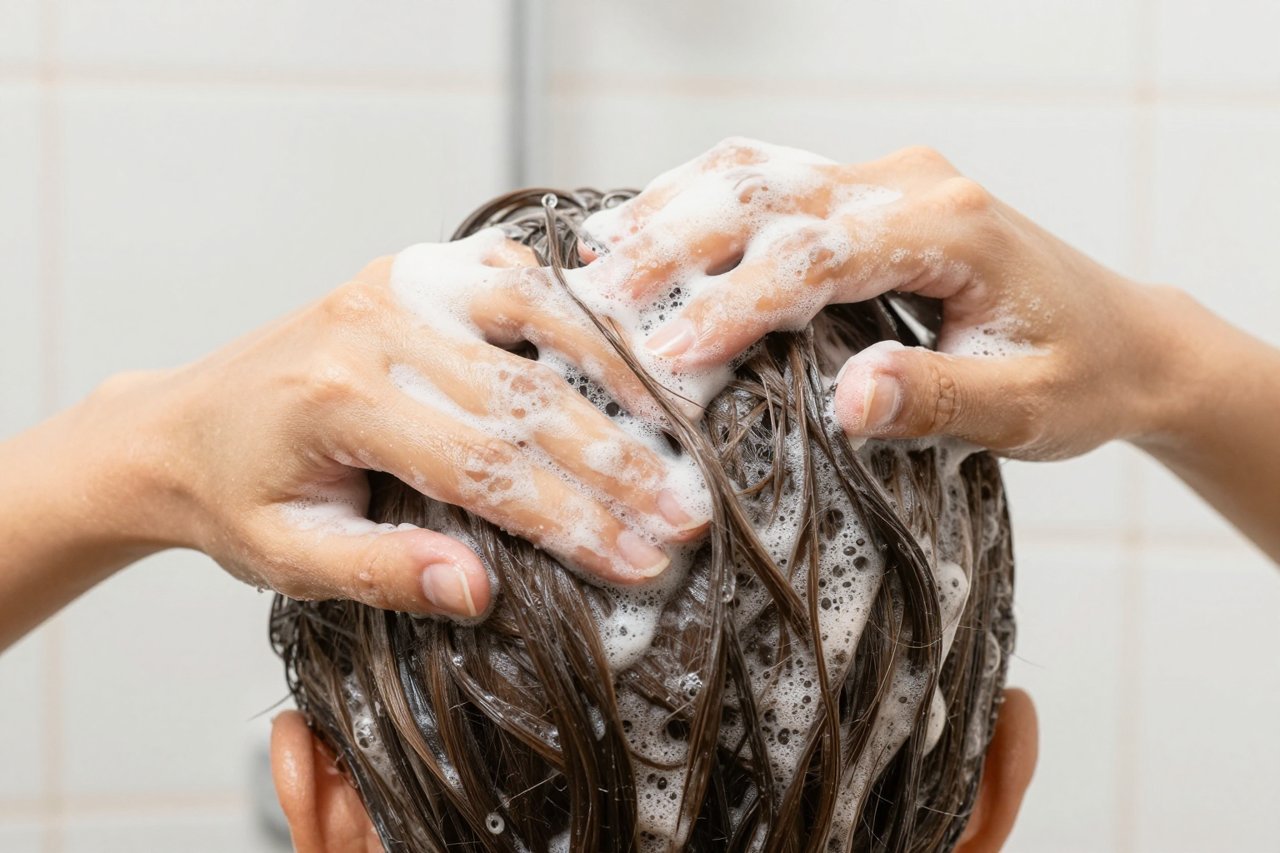
Using a hair loss shampoo the way you would your regular shampoo is a common mistake. These formulas are treatments, not just cleansers. For the active ingredients to penetrate, you need to leave them in contact with the scalp for at least three to five minutes. Do the math: if you rinse it off right away, you’ve washed away the ingredient before it could do anything. Massage the shampoo into your scalp with your fingertips, not your nails. Pressure helps loosen dead skin cells and makes the skin more receptive to the actives. And don’t pile your entire hair with the shampoo. The roots are what matter. You can wash the ends with your regular conditioner if you feel them drying out.
Another thing: you don’t necessarily have to use it daily. Most hair loss shampoos can be used two to three times a week. If you need to wash more often, you can alternate with a gentle daily shampoo. And don’t forget your routine can include other supports. For instance, using a hair mask the right way once a week can add moisture and prevent breakage, which makes the hair you do have look fuller.
Beyond the Shampoo: What Else Actually Works
Shampoo is just one piece of the puzzle. Your scalp’s environment, your overall health, and how you treat your hair all play a role. Gentle scalp massage for five minutes a day can boost blood flow and may help follicle function. Eating enough protein (aim for at least 0.8 grams per kilogram of body weight) is essential because hair is made largely of keratin. Iron and vitamin D deficiencies are particularly common in women with hair shedding. A blood test can tell you if you’re low.
Conditioning matters too. A weekly warm oil treatment can help prevent breakage, but keep in mind that coconut oil for hair is mostly a conditioning agent; it won’t regrow hair. It can, however, make the hair shaft stronger and less prone to snapping, which is a nice complement to your shampoo routine.
How Long Until You See Real Changes?
You won’t see regrowth overnight. The hair cycle is slow: telogen (shedding) lasts about three months, and anagen (growth) takes months longer. Most studies showing benefits from caffeine or ketoconazole follow participants for six months or longer. Plan to use your chosen shampoo consistently for at least four months before judging it a failure. And keep in mind that a temporary increase in shedding in the first two weeks can be normal. Some ingredients bring dormant follicles back into cycle, which pushes out old hairs to make room for new ones.


