
Table of Contents
Building muscle isn’t just about lifting heavy—it’s about what you put on your plate. A high protein diet for muscle gain is the cornerstone of any effective strength training program. Without enough protein, your body simply doesn’t have the raw materials to repair and grow muscle tissue after those tough workouts.
But how much protein do you actually need? And what are the best sources? Let’s break it down with practical, science-backed advice you can start using today.
Why Protein is Non-Negotiable for Muscle Growth
When you lift weights or do resistance training, you create microscopic tears in your muscle fibers. Your body repairs these tears by fusing muscle fibers together, which increases muscle mass and strength. This process, called muscle protein synthesis, requires amino acids—the building blocks of protein. Without adequate dietary protein, your body can’t keep up with the demand, and your gains will stall.
Think of protein as the bricks for your muscle house. You can have the best blueprint (your workout plan) and the best contractor (your hormones), but without bricks, nothing gets built. That’s why nailing your protein intake is the single most impactful dietary change you can make for muscle gain.

How Much Protein Do You Really Need?
The common recommendation for muscle gain is 1.6 to 2.2 grams of protein per kilogram of body weight per day. For a 180-pound (82 kg) person, that’s roughly 130 to 180 grams of protein daily. This range is supported by numerous studies and works well for most people.
But individual needs vary. If you’re in a calorie deficit while trying to build muscle (body recomposition), aim for the higher end of that range. If you’re a beginner, you might need less at first. And if you’re an advanced athlete, your body may require more to overcome the diminishing returns of adaptation.
A simple starting point: eat 0.8 to 1 gram of protein per pound of body weight. So a 200-pound lifter should target 160-200 grams per day. Adjust based on your progress—if you’re not seeing gains after a few weeks, bump it up.
Best Protein Sources for Muscle Gain
Not all protein is created equal. Animal sources provide complete proteins with all essential amino acids, while plant sources are often incomplete and require combining. Here are the top choices:
Animal-Based Proteins
- Chicken breast: About 31g protein per 100g. Lean, versatile, and easy to cook in bulk.
- Eggs: 6g per large egg. The yolk contains healthy fats and micronutrients that support hormone production.
- Greek yogurt: 15-20g per 100g. Also packs probiotics for gut health.
- Beef: 26g per 100g. Choose lean cuts like sirloin to keep saturated fat in check.
- Fish: Salmon (20g) and tuna (23g) are excellent. Salmon also provides omega-3s for joint health.
Plant-Based Proteins
- Tofu and tempeh: Tofu has 8g per 100g; tempeh packs 19g. Both are complete or nearly complete proteins.
- Lentils: 9g per 100g. Pair with rice for a complete amino acid profile.
- Quinoa: 4g per 100g but a rare complete plant protein.
- Nuts and seeds: Almonds (21g) and hemp seeds (31g) are calorie-dense but nutrient-rich.
For a comprehensive list of foods, check out the best high protein foods for muscle building. It’s a handy reference for grocery shopping.
When to Eat Protein for Maximum Muscle Gain
Timing matters, but it’s less critical than total daily intake. That said, strategic timing can give you an edge.
Pre-Workout
Having 20-30 grams of protein 1-2 hours before training can provide amino acids during your workout and reduce muscle breakdown. A chicken breast with rice or a protein shake works well.
Post-Workout
The anabolic window—the period after training when your muscles are primed for nutrient uptake—is real but wider than often claimed. Aim for 30-40 grams of protein within 2 hours of finishing. The best muscle gain protein powder can be a convenient option post-workout when you’re not ready for a full meal.
Before Bed
Casein protein, found in milk and cottage cheese, digests slowly and provides a steady stream of amino acids overnight. A cup of cottage cheese or a casein shake before bed can improve overnight muscle protein synthesis.
Sample High Protein Meal Plan
Here’s a one-day example for a 180-pound person aiming for ~160g protein:
- Breakfast: 3 scrambled eggs (18g) + 1 cup Greek yogurt (20g) + 1 slice whole wheat toast (3g) = 41g
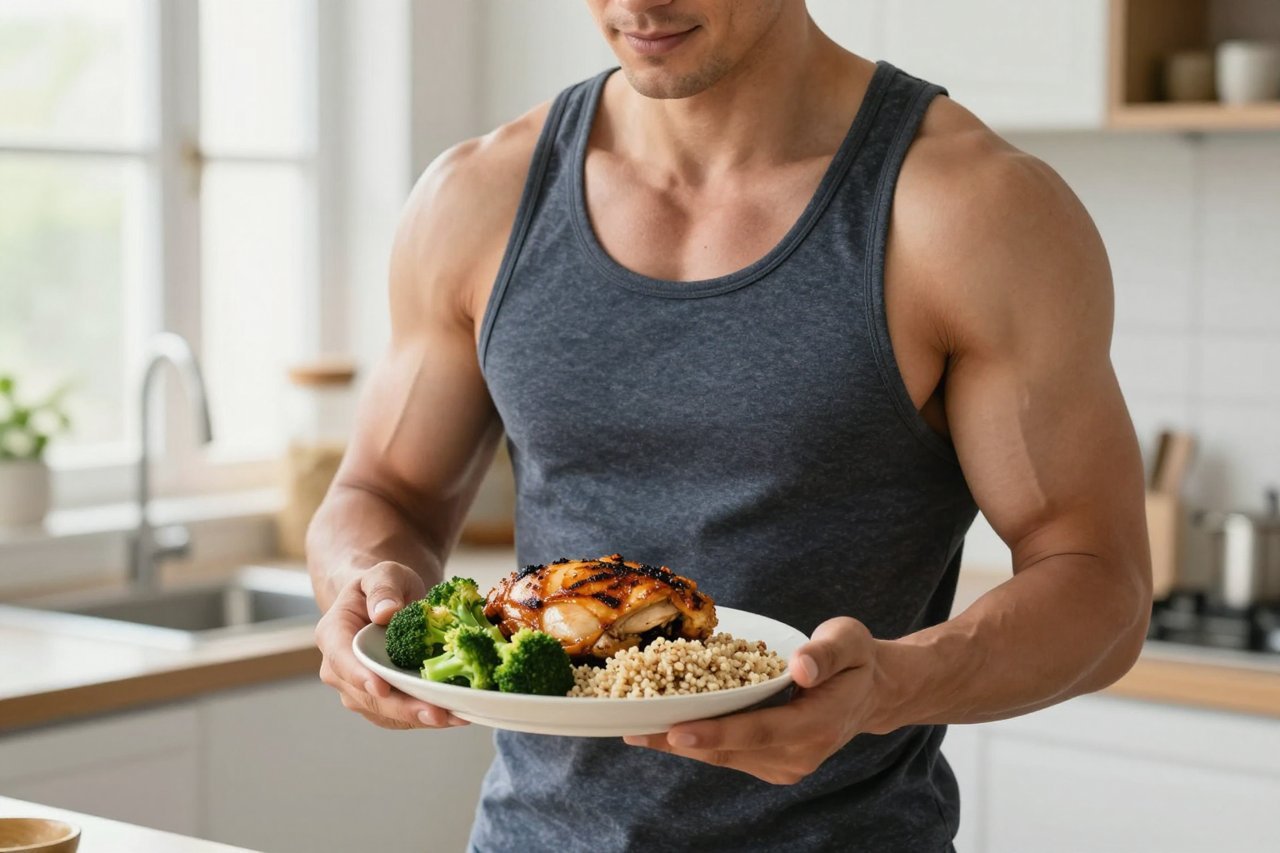
- Lunch: 6 oz grilled chicken breast (52g) + 1 cup quinoa (8g) + mixed vegetables = 60g
- Snack: 1 scoop whey protein (25g) + 1 apple = 25g
- Dinner: 6 oz salmon (34g) + 1 cup lentils (18g) + broccoli = 52g
Total: ~178g protein. Adjust portions based on your body weight and hunger. For more meal ideas that actually taste good, check out this guide to high protein meals for muscle gain.
Avoid These Common Mistakes
Even with good intentions, people often mess up their high protein diet. Here’s what to watch out for:
Skipping Protein at Breakfast
Many people eat a carb-heavy breakfast and then try to cram protein into lunch and dinner. Spreading your intake across 3-4 meals maximizes muscle protein synthesis. Aim for at least 30g at breakfast.
Relying Too Much on Supplements
Protein powders are convenient, but whole foods provide additional nutrients like iron, zinc, and vitamins. Use supplements to fill gaps, not as your primary source.
Ignoring Total Calories
You need a calorie surplus to build muscle. Eating high protein but staying in a deficit will limit gains. Ensure you’re eating enough carbs and fats to fuel your workouts and recovery.
How to Adjust Your Diet as You Progress
Your protein needs may change over time. As you gain muscle, your maintenance protein requirement increases. Recalculate your intake every 10-15 pounds of weight gain. Also, if you plateau for several weeks, try increasing your protein by 10-20 grams per day and see if that kickstarts growth.
Don’t forget that fruits and vegetables support recovery with antioxidants and vitamins. While they’re not protein-dense, they play a supporting role. For example, some fruits can help with weight management while you’re bulking, helping you stay leaner during the process.
Putting It All Together
Building muscle with a high protein diet doesn’t have to be complicated. Calculate your target, choose whole foods you enjoy, spread your intake across meals, and stay consistent. Track your progress every few weeks and adjust as needed. Your body will respond—just give it the fuel it needs.


