
Table of Contents
Most healthy-eating plans collapse in the supermarket aisle, not at the dinner table. You come home with three bags of groceries and realise there’s nothing in them you’re genuinely excited to cook. The problem usually isn’t discipline. It’s the list.
So here are seven foods worth a permanent spot on yours. None of them need a specialty health shop, a supplement budget, or a blender you’ll dread cleaning. Each one earns its place on nutrition evidence rather than clever packaging.
The word “superfood” is doing less work than you think
There’s no legal or scientific definition. It’s marketing shorthand for a food that packs an unusual amount of nutrients per calorie, and it gets attached to whatever sells. A $9 bag of goji berries is not automatically better than a $2 brick of frozen spinach.
What actually moves the needle is what you eat most weeks, not what you eat once because a headline told you to. If you want the longer version of that argument, this practical, no-hype guide to what superfoods really are covers where the label helps and where it misleads.

1. Frozen wild blueberries
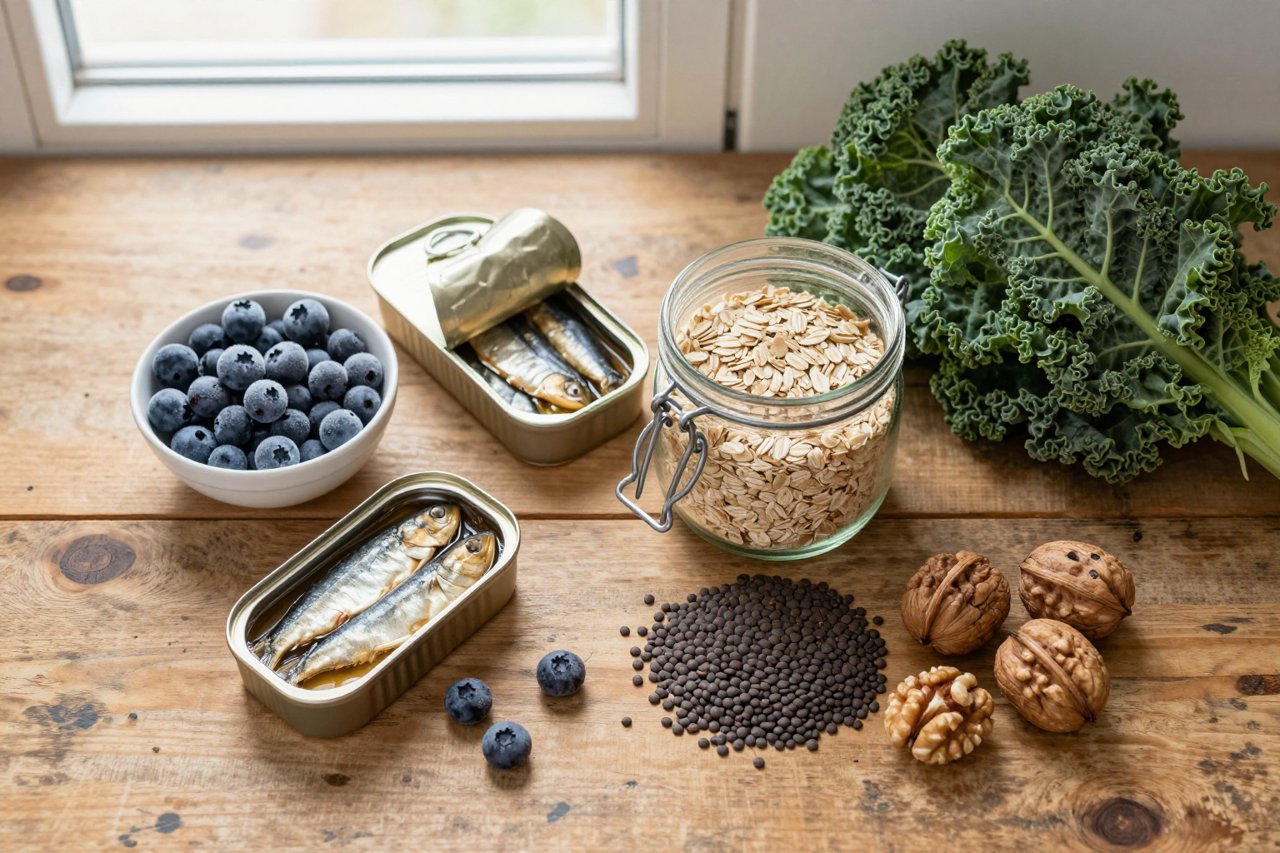
Fresh blueberries in January cost around $5 a punnet and taste like cold water. The frozen wild ones are smaller, which means more skin relative to flesh, and they’re frozen within hours of picking. A three-pound bag runs about $10 at a warehouse club and keeps for months.
Wild blueberries carry roughly double the anthocyanins of the cultivated kind, and those pigments are the reason blueberries keep showing up in studies on blood pressure and inflammation. Throw a frozen handful straight into oats while they cook. They burst, sweeten the pot, and save you adding sugar.
2. Tinned sardines or salmon
A tin of sardines costs $1.50 to $2.50 and delivers about 1.4 grams of omega-3s. Eat the bones, which are soft and completely edible, and you also get roughly 350mg of calcium. Compare that with a fresh salmon fillet at $12 or more.
Sardines, mackerel, herring and tinned salmon are all small, oily fish low in mercury. Mash one onto toast with mustard, lemon zest and a crack of pepper and you have lunch in four minutes.
If the smell puts you off
Rinse them, pat dry, and treat them like anchovies: chopped into a tomato sauce, folded through pasta with chilli and garlic, or mashed into a vinaigrette. Also worth knowing that how you serve these matters. Frying them hard or pairing them with white bread and butter quietly undoes plenty of the benefit, which is the running theme in these everyday mistakes that cancel out heart-healthy foods.
3. Rolled oats
Oats contain beta-glucan, a soluble fibre that forms a gel in your gut and pulls cholesterol out with it. Around 3 grams of beta-glucan a day is the dose linked to a 5 to 7 percent drop in LDL cholesterol. A 40g serving gives you roughly half that, so two bowls is the target.
Cost per bowl: about 15 cents. Buy plain rolled or steel-cut oats and skip the flavoured sachets, which routinely hide 12 grams of sugar. If instant is the only version you’ll actually make at 6:45am, buy instant. Consistency beats optimisation.
4. Lentils
A $1.79 bag makes around six cups of cooked lentils. Each cup brings roughly 18 grams of protein and 15 grams of fibre, plus a serious hit of folate and iron. Red lentils collapse into a thick soup in 15 minutes with no soaking. Green and brown hold their shape and work cold in salads with olive oil, red onion and parsley.
Fibre is one of the few nutrients consistently linked to a longer life across large population studies, which is why lentils appear in almost every serious plan for eating for longevity without obsessing over it. Cook a pot on Sunday and you’ve handled three lunches.
5. Plain Greek yoghurt or kefir
A cup of plain Greek yoghurt gives you around 20 grams of protein and live bacterial cultures. The trap is the flavoured tubs, which can carry 15 grams of added sugar and very little protein. Buy plain, full-fat or 2%, and add your own honey, fruit and nuts.
Kefir is the drinkable alternative, with a broader mix of bacterial and yeast strains. It’s sharper and thinner than yoghurt, and it works well poured over frozen berries or blended into a smoothie. Both keep for weeks, which makes them forgiving in a way fresh milk isn’t.
6. Walnuts
Walnuts are the only common nut with a meaningful amount of alpha-linolenic acid, the plant-based omega-3: about 2.5 grams per ounce. An ounce is roughly 12 to 14 halves, or a small cupped hand.
They’re also the nut most likely to go stale on you. Their high polyunsaturated fat turns rancid within about three months at room temperature, so keep the bag in the freezer and take out what you need. Crush two or three over yoghurt or a salad. The bitterness you sometimes taste in supermarket walnuts is age, not the nut.
7. Dark leafy greens
Kale, collards, chard, spinach. Pick whichever one you’ll genuinely eat. A bunch of kale costs about $2 and yields four generous servings; bagged baby spinach is more convenient but often runs $8 a pound. The $1.29 frozen spinach brick is the quiet bargain of the freezer aisle and works fine in soups, curries and eggs.
Greens deliver lutein and zeaxanthin, the pigments that accumulate in the retina, along with vitamin K and nitrates that support blood vessel function. They also score well under Mediterranean, DASH and plant-based eating patterns alike, which is rare. If you’re deciding which framework to follow, this side-by-side comparison of Mediterranean, DASH and plant-based diets is a sensible place to start.
How seven items turn into an actual week of eating
Don’t buy all seven on your next trip. Buy three, use them until they’re gone, then add more. That’s the whole trick, and it works far better than a fridge full of good intentions.
A few specific moves that make these foods easy to reach for:
- Sunday, 25 minutes: simmer a pot of red lentils with onion, garlic, cumin and a tin of tomatoes. Portion into three containers and you have lunch sorted.
- Overnight oats in a jar: 50g rolled oats, 100g plain yoghurt, a splash of milk and a handful of frozen blueberries. Ready when you wake up, no cooking.
- Keep two tins of sardines at the back of your desk drawer for the days you’d otherwise order a $14 sandwich.
- Freeze the walnuts the day you buy them, in the bag they came in, and stop thinking about it.
- Wash and dry your greens as soon as they’re home. A dry, bagged bunch lasts a week longer than a wet one sitting in the crisper drawer.
If motivation is the part that keeps failing, this seven-step plan for eating better without willpower is built around exactly that problem, and it pairs well with a list this short.
Add it up and the seven items come to somewhere near $25, most of which lasts a fortnight or more. That’s a modest number for a fridge that gives you a real answer when someone asks what’s for dinner. Start with the oats, the frozen berries and the lentils. Those three alone will change more mornings than any supplement you could name.


