
Table of Contents
Some towns empty out slowly, over decades, as the mine runs dry or the ground starts to shift. Others are cleared in a single afternoon, with laundry still on the line. Either way the result looks the same from the pavement: schools, cinemas, kitchens and corner shops left to the weather.
What surprises most travellers is how many of these places you can actually walk through. Not peer at from a fence, not study in a documentary, but buy a ticket, put on decent shoes and wander for an hour or two. The top 7 abandoned cities you can still visit below run from a concrete island off Nagasaki to a sealed-off suburb in Cyprus.
One warning before you book flights: access shifts constantly. War, landslides, a UNESCO listing or a change of local council can all move the goalposts, so verify entry rules a week or two out rather than trusting a post written in 2019. If you like your destinations obscure, there are plenty of hidden travel destinations that still feel like a secret, but even the famous names here need planning.
1. Hashima Island, Japan: the concrete battleship
Six kilometres off Nagasaki, a 6.3-hectare slab of reinforced concrete rises out of the sea like the bow of a wrecked ship. Hashima Island (Gunkanjima, “battleship island”) housed 5,259 people in 1959 while Mitsubishi mined coal 1,000 metres below the seabed. That made it one of the most densely populated places on earth at the time, with nine-storey apartment blocks, a school, a cinema and a rooftop shrine.

The mine closed in 1974 and everyone left. Typhoons tore through the buildings for four decades before UNESCO gave the site World Heritage status in 2015.
What you actually see
Boat tours leave Nagasaki harbour and take around three hours round trip. Landing is decided by the captain on the morning, because the swell around the seawall can be brutal. If you do get ashore, you’re confined to three designated viewing platforms. You look into the ruins, not through them. It’s still the best look you’ll get at twentieth-century industrial collapse.
2. Pripyat, Ukraine: 49,000 people, one afternoon
Pripyat was built in 1970 to serve the Chernobyl nuclear plant, a purpose-designed Soviet city with 49,000 residents and an average age of 26. On 27 April 1986, the day after reactor four exploded, buses arrived and residents were told to pack for three days. They never came back. The Ferris wheel in the Palace of Culture amusement park still stands where it was parked, its gondolas frozen mid-turn.
Access has always been tightly controlled inside the 30-kilometre exclusion zone, and since the 2022 invasion the situation is more complicated still. Check official Ukrainian advisories before making any plan. For context on how a city rebuilds after conflict, the Sarajevo story of war and recovery is a useful counterpoint: Pripyat is what happens when nobody comes back.
Radiation, honestly
Guides hand out dosimeters and the numbers surprise most visitors. A day in the zone typically registers less than a long-haul flight. The real hazards are the ordinary ones: rotten floors, broken glass, and the temptation to touch things. Never sit or put bags on the ground, and never take an object home, whatever it is.
3. Kolmanskop, Namibia: diamonds and dunes
In 1908 a railway worker named Zacharias Lewala picked up a stone in the Namib desert and started a diamond rush. Within a few years Kolmanskop had a casino, a ballroom, an ice factory, a bowling alley and southern Africa’s first X-ray machine. It also had the desert, which is why the town was dead by 1956.
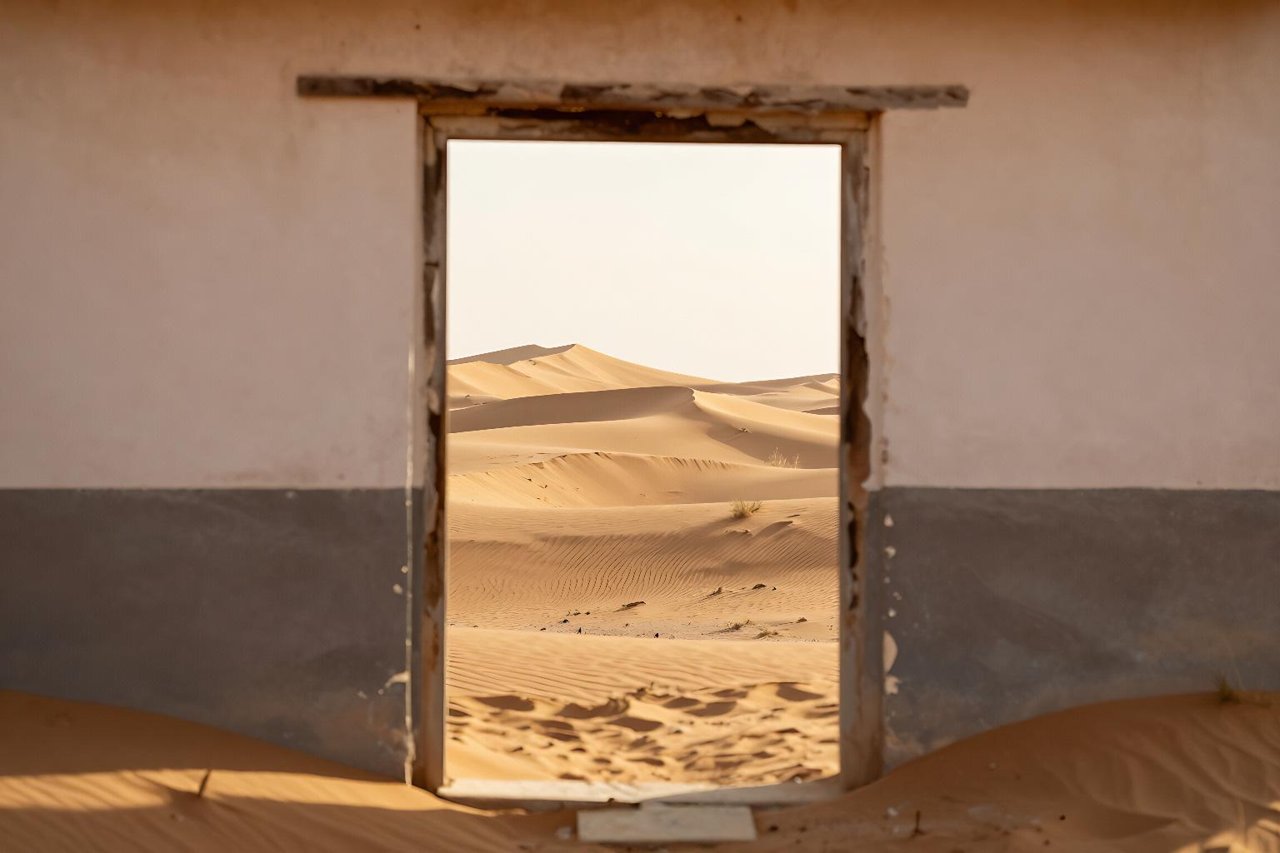
Today the sand has reclaimed the ground floors. It pours through doorways and drifts against wallpaper in long, smooth ripples, and photographers have been making pilgrimages here for years. Access is via a permit bought in Lüderitz, 10 kilometres away. Guided tours run on weekday mornings, and serious photographers can buy an earlier entry slot before the sun gets hard.
4. Craco, Italy: the hill town that slid away
Craco sits on a ridge in Basilicata, and people lived on that spot for a thousand years. Then the ground started moving. A landslide in 1963 forced the last residents out to a new settlement a few kilometres down the valley, and the medieval core has been standing empty ever since, its Norman tower leaning over a sea of collapsed roofs.
The abandonment is recent enough to feel eerie rather than romantic. Frescoes survive in the church of San Nicola. Film crews turned up for The Passion of the Christ and a James Bond opening sequence. Entry is by guided tour only and booked in advance, which is a good thing: the alleys are not remotely safe without someone who knows which walls are still standing. Set against the sites in the world’s oldest archaeological ruins, a thousand years looks almost new, yet Craco already reads as ancient to anyone walking it.
5. Bodie, California: arrested decay
Gold brought miners to the eastern Sierra Nevada in 1859, and by 1879 Bodie had around 10,000 people, 65 saloons and a reputation for violence that outlasted the gold itself. The last mine shut in 1942. California turned the town into a state historic park in 1962 and adopted a policy they call “arrested decay”: nothing is restored, nothing is rebuilt, the buildings are simply prevented from falling down.
Roughly 170 structures survive, with shelves still stocked and pool cues still in the racks. It sits 13 miles east of Bridgeport off US 395 via Highway 270, the last three of which are unpaved. There is no food, no fuel and no water. Arrive early, pay the per-person fee at the gate and bring layers, because Bodie sits above 2,500 metres and the wind bites.
6. Kayaköy, Turkey: a village emptied by a treaty
The 1923 population exchange between Greece and Turkey ended the Greek Orthodox community of Karmylassos, 8 kilometres from modern Fethiye. Around 2,000 people left, and the village they called Kayaköy has been silent since. Roughly 350 stone houses remain, along with two churches, a dozen chapels and a fountain that still works.
Unlike most sites on this list, Kayaköy is easy and cheap to reach. Dolmuş minibuses run from Fethiye, the entrance fee is small, and you can walk the lower village in an hour or give it a whole afternoon. Sunrise is magical and almost empty. Watch for loose stone and the occasional snake in summer.
7. Varosha, Cyprus: the suburb behind the wire
Before 1974, Varosha was the beach resort district of Famagusta, with around 15,000 residents and high-rise hotels along the sand. When the fighting broke out, the entire district was fenced off with barbed wire and left untouched for 46 years. From the outside it looked like a stopped clock: cars rusting, curtains still hanging in windows.
Sections reopened to visitors in 2020. You can now walk or cycle certain streets between roughly 8am and sunset, bringing photo ID. The rules matter. Stay on the marked roads, do not enter buildings, and do not photograph anything marked as a military zone. The atmosphere is strange and heavy in a way that photos never capture.
Practical things that catch people out
- Land status varies enormously. Bodie is a state park, Hashima is World Heritage, Varosha is a former military zone. Each has its own rules and its own tolerance for curiosity.
- Permits beat spontaneity. Kolmanskop, Craco and Pripyat all require something bought or arranged in advance. Turn up cold and you’ll be photographing a gate.
- Wear closed shoes with grip. Broken glass, rebar and rotting floorboards are the standard trio. Sandals are a bad idea in every one of these places.
- Leave your drone at home. Almost every site here bans them outright, and the penalties are not gentle.
- Take nothing but pictures. It sounds like a scout slogan until you watch someone pocket a bottle from Bodie and get fined for it.
- Budget for the basics. These towns are usually a long way from a supermarket, so carry water and snacks. On longer trips through Namibia or California, the habits in these tips for eating cheaply on the road save real money.
The appeal of an empty city is not really ruin-watching. It’s the sudden, physical sense of how quickly ordinary life can be handed over to weather and sand and time. Hashima had 5,259 people in 1959. Kayaköy emptied because of a treaty. Varosha was sealed in an afternoon. All three are now open to anyone willing to read the rules, book ahead and walk quietly.
Go while you can. Access to these places rarely widens over time, and the buildings themselves are on borrowed years.


