
Table of Contents
In a village in northern Spain, grown men in red-and-yellow devil costumes sprint down a cobbled street and leap over rows of babies laid on mattresses. Nobody flinches. The infants mostly sleep.
Travel enough and you realise that the strangest-looking rituals usually turn out to be the most logical. They mark the passing of a year, settle a score, honour a guest, or simply give a community a reason to stand in the cold together. Here are seven countries with genuinely unusual customs, plus what’s actually going on underneath them.
Japan: Manners So Detailed They Feel Like a Secret Language
Leave a tip at a Tokyo restaurant and you may find yourself chasing a waiter down the street to hand it back. Good service is treated as part of the job, not a favour to be rewarded, and a few extra coins can read as mildly insulting. The same logic runs through daily life. Shoes come off at the genkan, business cards get exchanged with both hands and actually read, and slurping your ramen signals that the broth is worth the noise.
Gift-giving has its own calendar. In summer, people buy ochugen gifts for bosses and relatives; in winter, oseibo gifts go out again. Department stores dedicate entire floors to the wrapping and the correct ribbon colour.

Then there’s Christmas. An estimated 3.6 million Japanese households order fried chicken from KFC on 24 December, a marketing campaign that started in 1974 and never let go. Bookings open weeks in advance. If you’re in Osaka in late December, expect a queue outside the station branches.
Guatemala: Burning the Devil, Then Flying Kites the Size of Buildings
On 7 December, at exactly 6 pm, the streets of Guatemala City fill with smoke. Families drag old furniture, newspapers and homemade effigies of the devil into the road and set them alight for La Quema del Diablo, meant to sweep the house clean of bad luck before Christmas. Children wear red, fires crackle on every corner, and the fire brigade spends the evening looking nervous.
A few weeks earlier, in the town of Sumpango, a different spectacle takes over the cemetery. For Día de los Muertos on 1 November, local teams spend months building kites from bamboo and tissue paper, some reaching 20 metres across, then fly them over the graves while families picnic among the headstones. The kites are partly a message to the living: the dead are still part of the conversation.
Spain: The Village That Vaults Over Babies
El Colacho has been running in Castrillo de Murcia, in Burgos province, since 1620. Each June, during Corpus Christi, babies born in the previous twelve months are laid on mattresses in the main street. Men dressed as the Colacho, a whip-cracking character in red and yellow, take a running start and jump clean over them.
The Church has never formally loved it, and Spanish authorities attach a long list of safety requirements, but the families keep volunteering. The leap is believed to absorb original sin and protect the children from illness. A priest sprinkles holy water afterwards, the infants get handed back, and the whole village eats lunch.
Scotland: Torches, Longships and a Norse Hangover
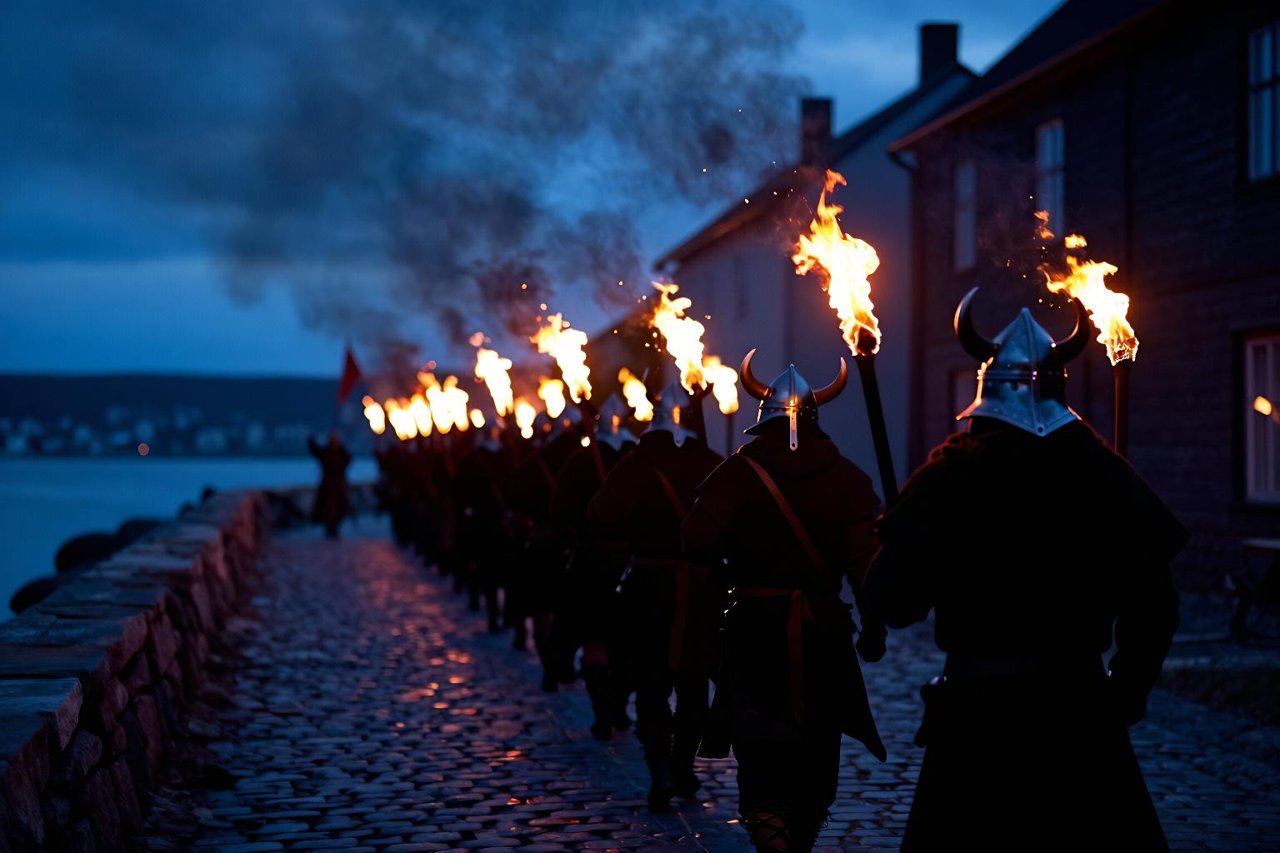
The last Tuesday of January is the most important night of the year in Lerwick, Shetland. Up to a thousand people march through the streets of the harbour town carrying lit torches, following a squad of costumed Vikings. At the end, the torches go into a replica longship, and roughly 900 years of Norse heritage goes up in flames in a park.
Up Helly Aa dates to the 1870s, when local men started celebrating the end of the long winter with a bit of theatre. A 2023 vote opened the main procession to women for the first time since it began. If you go, plan months ahead: Lerwick has about 7,000 residents and the festival attracts visitors from everywhere.
Finland: Sauna, Silence and the Sleepyhead Dunking
Finland has roughly 3 million saunas for 5.5 million people, and they are not a spa treatment. They are where deals get done, families argue, and strangers settle into silence without anyone finding it awkward.
Less well known is Unikeonpäivä, or Sleepyhead Day, on 27 July. In the seaside town of Naantali, the town’s designated sleepyhead is woken with music, paraded through the streets and thrown into the harbour. The tradition references a seventh-century legend of seven brothers who slept for centuries, and lately it has taken on a cheekier role: Finland also uses the day to name politicians who have been caught napping on the job.
India: Weddings Where the Groom’s Shoes Get Stolen
During joota chupai, the bride’s sisters and cousins snatch the groom’s shoes while he’s barefoot near the wedding fire. He then negotiates for them, through his brothers, with cash changing hands on the spot. Amounts run from pocket change to a few thousand rupees depending on how smug the groom looked during the ceremony.
At the other end of the scale, the Kumbh Mela in Prayagraj turns a riverbank into a temporary city. The 2025 Maha Kumbh drew hundreds of millions of pilgrims across six weeks, with sanitation, roads and pontoon bridges built for a population bigger than most countries.
South Korea: Drinking Rules With Choreography
Pouring your own soju is a small faux pas in Korea. You fill other people’s glasses, especially an elder’s, holding the bottle with both hands. When you drink in front of someone senior, you turn slightly away and cover your mouth with one hand. Refilling an empty glass before it’s finished is its own mild offence.
Age shapes everything. Korean speech drops formal endings for people you know, but only after a long conversation about birth years, and the 100-day celebration of a baby’s life (baek-il) still brings families together with rice cakes, because infant survival was once far from guaranteed.
When a Custom Catches You Off Guard
Nobody expects you to memorise seven cultures before boarding a plane. You need four habits instead.
- Watch before you act. Order of service, who eats first, whether shoes stay on: all of it is visible at the table.
- Ask one direct question. Most people are delighted to explain a ritual that visitors find baffling. Vague politeness gets you nowhere.
- Take a small portion. Refusing food outright causes more offence than eating a token amount of something you don’t love.
- Apologise properly, once. A clear “I’m sorry, I don’t know this tradition” buys far more goodwill than pretending you do.
The practical side matters too. Before a trip built around festivals, check the details that ruin arrivals: a passport with six months’ validity, a printed reservation for the visa desk, and a working knowledge of the airport luggage tag scam that can cost you your checked bags in 2026. Standing in a Spanish plaza with no suitcase and a queue of costumed devils behind you is not the memory you want.
Customs travel badly out of context and beautifully in it. The point is not that other people are strange. It’s that every one of these rituals solves a problem: how to clean a year, name a generation, respect an elder, or keep a village warm in January. Show up curious, keep your hands where people can see them, and you’ll get invited back.


