
Table of Contents
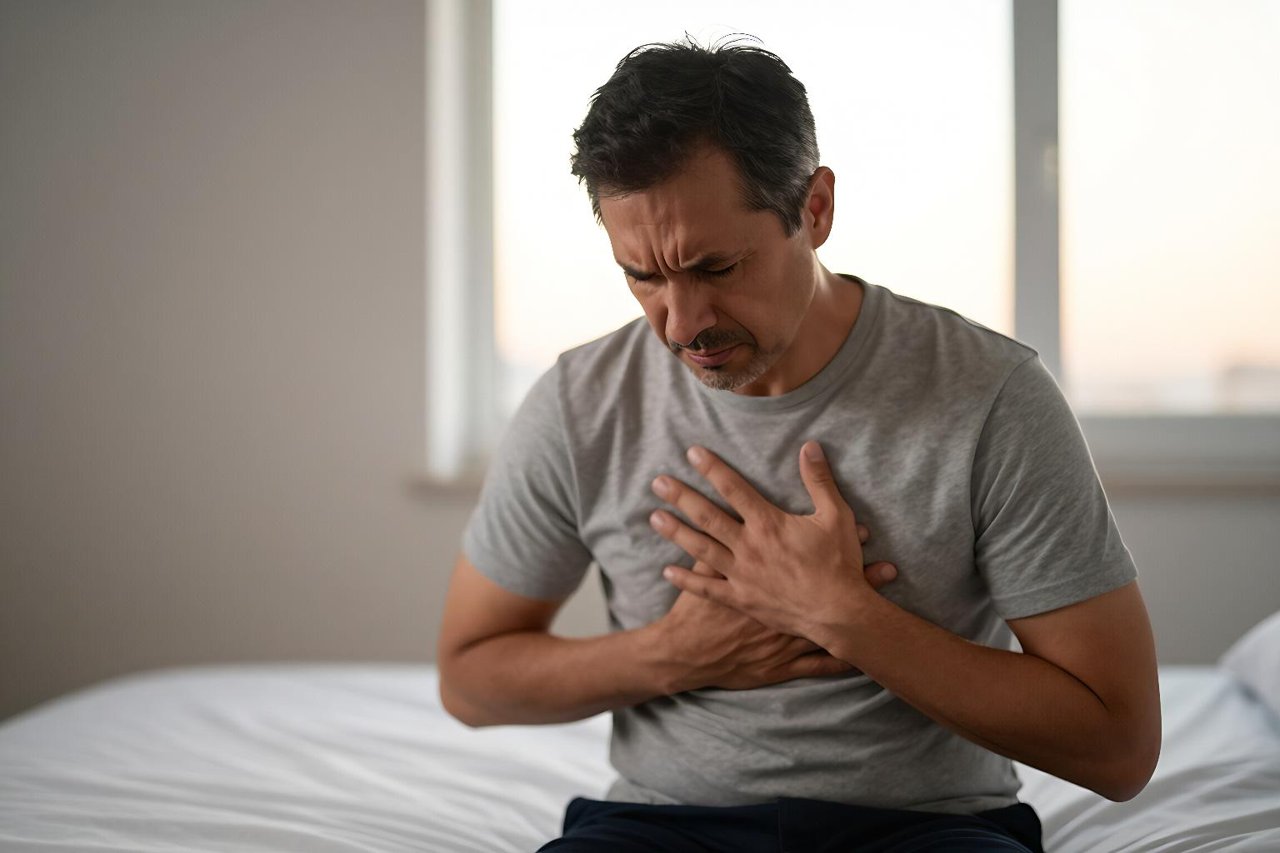
It rarely looks like the movies. A man clutches his chest, gasps, and drops — that happens, but it’s a minority of cases. Far more often a heart attack arrives as something vaguer: a heaviness behind the breastbone that feels like bad indigestion, a sudden wave of nausea in the middle of a meeting, an ache in the jaw that came from nowhere. People talk themselves out of it for an hour. Sometimes two. That delay is the most damaging thing that happens, because heart muscle begins to die within about 20 to 30 minutes of an artery closing and never grows back.
Heart disease is the leading cause of death worldwide and sits at the top of any list of the most common diseases globally and who’s at risk. Which is exactly why the signs are worth memorising — not so you can diagnose yourself, but so you recognise the pattern fast enough to act on it.
1. Chest pressure that feels like a weight, not a stab
Ask someone who has had one and they’ll reach for comparisons: an elephant sitting on the chest, a tight band, a fist pressing down, a belt cinching shut. Pay attention to the quality. It’s usually a squeezing, crushing or heavy fullness in the centre of the chest or slightly to the left, and it lasts more than a couple of minutes — or fades and comes back in waves.
Sharp, stabbing pain that gets worse when you breathe in deeply or twist your torso is more often muscular or related to the lining around the heart. That distinction is useful. It is not a reason to stay home if you’re unsure.

2. Pain that travels somewhere else
The heart doesn’t have a single dedicated pain nerve. Its signals ride the same spinal pathways as the arm, neck and jaw, so the brain misreads the source. That’s why the classic spread is down the left arm — though the right arm, both shoulders, the upper back between the shoulder blades, the throat and even the upper teeth can be involved.
Dentists occasionally see patients with a toothache that turns out to be cardiac. If jaw or neck discomfort shows up alongside chest tightness, or arrives with exertion and fades when you stop, treat it as a heart symptom until someone qualified says otherwise.
3. Breathlessness with no good reason
Shortness of breath can be the only sign, full stop. You’re sitting still and can’t get a full breath. You wake at night gasping. Lying flat feels worse, and propping yourself up on two pillows helps. Climbing one flight of stairs that was easy last month now leaves you winded at the top.
In women and in adults over 65, breathlessness often outranks chest pain as the symptom that actually brings someone to hospital. It’s easy to write off as asthma, anxiety or being out of shape.
4. A cold sweat, nausea, or a stomach ache you can’t place
Breaking into a sweat when you’re not hot and haven’t moved is a red flag. So is feeling clammy and grey while sitting on the sofa. Nausea, vomiting and a heavy fullness in the upper belly are common, particularly when the blockage sits in the lower wall of the heart, and they get misdiagnosed as food poisoning more often than you’d think.
Worth keeping in mind that cardiac events don’t all behave the same way — the range of heart diseases and what each one does to the body produces quite different symptom patterns, from blocked arteries to faulty valves to rhythm problems.
5. Lightheadedness, or a sudden sense of doom
Feeling faint, dizzy or unsteady as the chest tightens suggests the heart isn’t pumping efficiently enough to keep blood pressure up. Some people also report an overwhelming, inexplicable dread in the minutes before an event — a certainty that something is badly wrong, without being able to say why. It sounds like folklore. Emergency staff hear it often enough to take it seriously.
6. Fatigue heavy enough to feel like the flu
This one is under-recognised because it’s so ordinary. Women in particular describe days or weeks of exhaustion before the event — arms that feel leaden, a flight of stairs that suddenly requires a rest, sleeping badly, feeling drained in a way that has no explanation. It’s not the tiredness of a busy week. It’s the kind that makes you cancel plans you were looking forward to.
If your energy has dropped off a cliff and stayed there, especially with any of the symptoms above, that’s a conversation worth having with a doctor rather than a nap.
7. Indigestion that antacids don’t touch
Burning behind the breastbone, belching, a sour taste in the mouth, a churning feeling. Heart pain and reflux share the same neighbourhood of nerve endings, so the overlap is real. The practical test: if you take an antacid and feel no better after 15 to 20 minutes, stop assuming it’s your stomach.
One pattern deserves its own flag. Chest tightness that reliably arrives with exertion — walking uphill, carrying shopping, climbing stairs — and eases within a few minutes of rest is angina, a warning that an artery is narrowing. It’s a rehearsal, not a false alarm. The detail of how that’s assessed and managed is set out in heart disease symptoms, treatment and prevention.
When the signs don’t match the script
Roughly one in five heart attacks is silent, meaning it causes damage without producing the textbook chest pain. It’s often discovered years later on a routine ECG. Certain groups are far more likely to get the muted version:
- People with diabetes — nerve damage from years of high blood sugar blunts the pain signal, so the event may register as nothing more than nausea or a vague unease.
- Women — more likely to report breathlessness, jaw or back pain, nausea and profound fatigue, sometimes with little or no chest discomfort.
- Adults over 75 — a sudden collapse, confusion or extreme weakness can be the whole presentation.
- Fit, younger people — plaque doesn’t check your 5k time before it ruptures. Dismissing symptoms because you’re 38 and play football has killed people.
The pattern of dismissing the one detail that doesn’t fit the expected picture is hardly unique to the heart. It shows up just as clearly in the early warning signs of cancer and the detail that matters most, where the symptom people wave away is frequently the one that changes the outcome.
What to do in the first ten minutes
If the signs above are stacking up, act before you’re certain. Certainty is not the goal here; time is.
- Call emergency services. Say the word “chest” and let them triage you. Do not drive yourself, and don’t let a relative drive you — an ambulance can start treatment and can restart your heart.
- Chew one adult aspirin (325 mg), unless you’re allergic, have a bleeding disorder or have been told never to take it. Chewing gets it into the bloodstream faster than swallowing it whole.
- Sit or lie down, loosen tight clothing, and unlock the front door so help can get in.
- Note the time the symptoms started. It changes which treatments are available and how urgently they’re given.
- If the person becomes unresponsive and isn’t breathing normally, start chest compressions and ask for a defibrillator.
Minutes matter more than certainty
Emergency departments see tens of thousands of people a year with chest pain who turn out to have nothing wrong with their hearts, and every one of that crowd made the right call. Nobody is scored on accuracy. A false alarm costs you an afternoon and a bit of embarrassment. The other outcome costs years.
There’s also the longer game. Blood pressure, LDL cholesterol, waist circumference, resting heart rate, smoking, sleep and how much you sit — these quietly decide how much plaque builds up over the next two decades. The numbers worth knowing and the habits that actually shift them are broken down in heart and cardiovascular health: the numbers, habits and warning signs that actually matter. Read it while you feel fine. That’s the only time it’s easy to act on.


