
Table of Contents
The first meal of the day rarely gets the attention it deserves. It’s either a rushed bowl of cereal or a coffee-to-go. But what you eat in the morning can influence your energy, mood, and metabolism for the next twelve hours. After years of testing different combinations, a few foods consistently rise to the top. These seven standouts deliver real nutrition without requiring a culinary degree. They’re flexible, affordable, and easy to find in almost any supermarket. Let’s talk about why they work and how to make the most of them.
The 7 Best Breakfast Foods
1. Eggs
Eggs are the undisputed champion of the breakfast table. One large egg packs about 6 grams of high-quality protein, all nine essential amino acids, and a surprisingly rich supply of choline—a nutrient that supports memory and mood. The yolks also contain lutein and zeaxanthin, two antioxidants that protect your eyes from UV damage. You can have them scrambled, boiled, poached, or baked into a frittata, and they pair well with almost everything else on this list. And if you’re worried about cholesterol, current research suggests that for most healthy people, dietary cholesterol from eggs has little effect on blood cholesterol levels. That’s why eggs are a staple in many traditional diets around the world—they’re cheap, versatile, and genuinely good for you. They also consistently appear in our roundup of the top healthy foods in the world, and it’s easy to see why.
2. Oats
Oats have been a breakfast essential for centuries, and science keeps proving why. The key player is beta-glucan, a soluble fibre that forms a gel in your gut, slowing digestion and helping to keep your blood sugar steady. A half-cup of dry rolled oats (about 40 grams) provides 4 grams of fibre and 5 grams of protein, along with magnesium, iron, and B vitamins. Steel-cut oats take longer to cook, but they have a chewier texture and a lower glycaemic index than instant oats. If you’re short on time, overnight oats made with milk or Greek yogurt are a brilliant no-cook option. Just avoid the pre-flavoured packets, which can pack in 12 grams of sugar or more per serving. This staying power is exactly why oats are a not-so-secret weapon in weight loss plans.
3. Greek Yogurt
Greek yogurt is the lazy person’s protein powerhouse. Unlike regular yogurt, it’s strained to remove whey, leaving behind a thick, creamy product with roughly 15–20 grams of protein per 170-gram container. It also delivers probiotics that support your gut microbiome, which plays a surprisingly large role in immune function and even mood regulation. Calcium and potassium are in there too, making it a solid choice for bone health. The tartness of plain Greek yogurt makes it a natural partner for berries, but you can also use it as a savoury base—mix in cucumber, dill, and a little olive oil for a quick tzatziki-inspired topping on eggs or toast.

4. Berries
Berries are the lowest-effort source of antioxidants you can find. Blueberries, raspberries, strawberries, and blackberries are all packed with anthocyanins, the compounds that give them their vivid colours and help neutralize free radicals. A one-cup serving of raspberries pushes nearly 8 grams of fibre, while a cup of strawberries has more vitamin C than an orange. They’re also naturally sweet, so they can satisfy a sugar craving without sending your blood glucose on a rollercoaster. Frozen berries are picked at peak ripeness and flash-frozen, which means they often retain more nutrients than ‘fresh’ berries that have sat in transit for a week. Add them to Greek yogurt, oatmeal, or just eat them by the handful.
5. Avocado
Avocado has taken over breakfast menus for good reason. It’s one of the few fruits that supply heart-healthy monounsaturated fat—the same type found in olive oil. A third of a medium avocado contains about 7 grams of fibre and 7 grams of fat, which together slow stomach emptying and keep you full for hours. That fat also enhances the absorption of fat-soluble vitamins like A, D, E, and K from other foods you eat at the same meal. The simplest way to enjoy it is smashed on whole grain toast with a pinch of salt and a squeeze of lemon, but it also works beautifully folded into scrambled eggs or blended into a smoothie for creaminess without dairy.
6. Nuts and Seeds
Nuts and seeds are tiny nutrient bombs that can be sprinkled over nearly any breakfast without extra prep. Almonds offer vitamin E and magnesium; walnuts provide plant-based omega-3s; chia seeds swell into a pudding-like texture and pack 5 grams of fibre per tablespoon; flaxseeds are rich in lignans, which have antioxidant properties. Since they’re calorie-dense, a small handful (about 30 grams) is the sweet spot. Toasting seeds briefly in a dry pan intensifies their flavour, and soaking chia seeds overnight in milk or yogurt creates a satisfying breakfast pudding that’s hard to beat. Keep a jar of mixed nuts and seeds on your counter so reaching for them becomes automatic.
7. Whole Grain Toast
Whole grain toast is the versatile base that ties the other foods together. It provides complex carbohydrates, which your brain prefers as fuel, and the fibre in a proper whole grain slice—typically 3–5 grams—helps prevent an afternoon crash. The important thing is to read the label: ‘whole wheat’ or another whole grain should be the first ingredient, not enriched white flour with a dusting of caramel colour. With the right slice in hand, your options are endless. Top it with smashed avocado and a fried egg, layer it with Greek yogurt and berries, or go simple with peanut butter and banana slices. The toaster does the work, and you get a breakfast that’s ready in minutes.
How to Combine the 7 Best Breakfast Foods
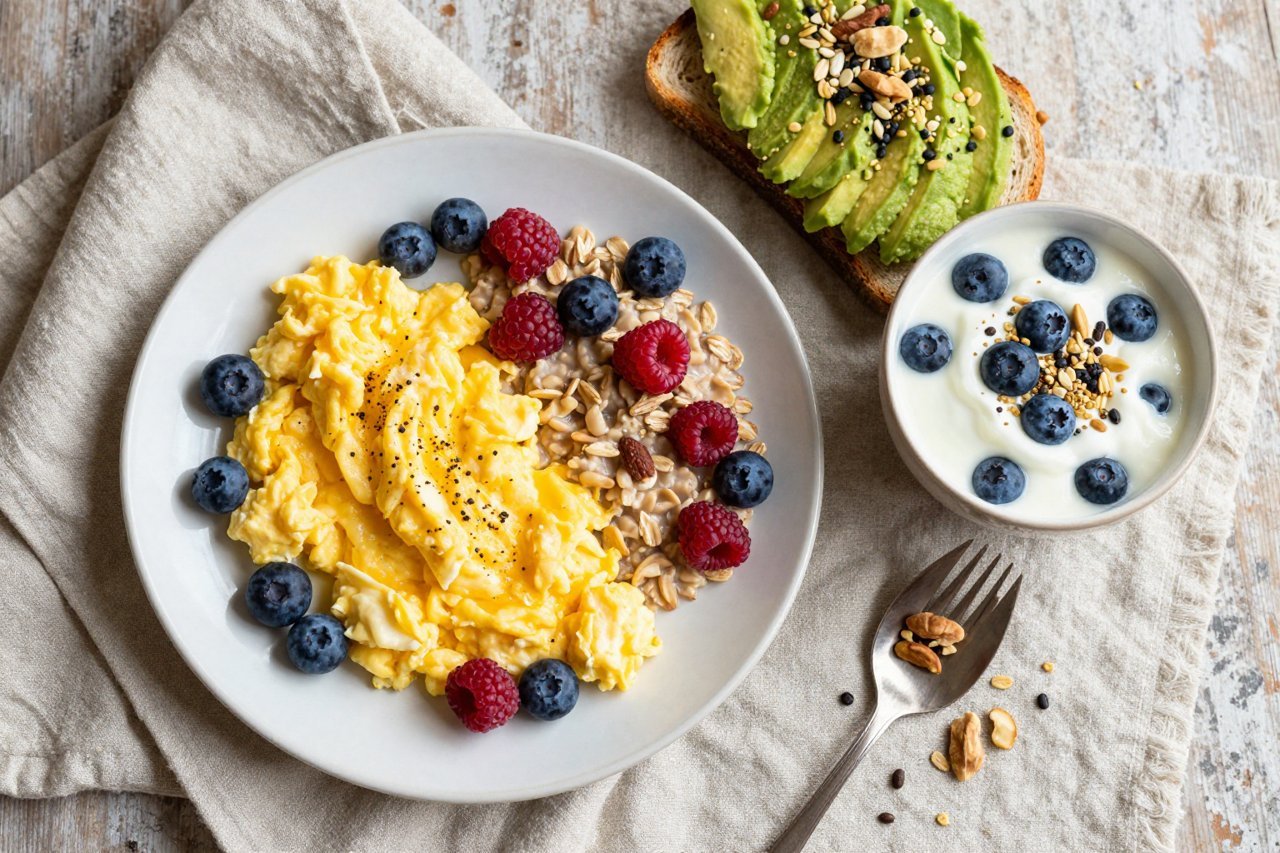
These seven foods work great on their own, but they’re even better when you combine them. The ideal breakfast includes a source of protein (eggs or Greek yogurt), slow-digesting carbohydrates (oats or whole grain toast), a healthy fat (avocado or nuts), and at least one serving of fruit (berries or whatever’s in season). Here are three no-nonsense combos to try tomorrow morning:
- Greek yogurt bowl: 170g plain Greek yogurt, a handful of berries, and 1 tablespoon of chia seeds. Drizzle with a little honey if you need extra sweetness.
- Savoury toasts: Two slices of whole grain toast, one smashed avocado, two poached eggs, and a sprinkle of chili flakes on top.
- Overnight oats: Combine 50g rolled oats, 1 tablespoon of flaxseeds, 150ml milk or Greek yogurt, and a handful of raspberries in a jar. Leave in the fridge overnight and grab it on your way out.
None of these require more than ten minutes of active time, and they all taste like actual food—not a cardboard bar or a frozen sandwich from a drive-thru. If you’re curious how even the best fast food breakfasts compare, take a look at our breakdown of the 7 best fast food chains of 2025, but we think these whole-food options will become your new morning routine.


