
Table of Contents
Ask someone why their chamomile tea did nothing and you’ll usually hear that herbal medicine is overrated. Dig a little and the real story appears: a teabag from a discount shop, ninety seconds of steeping in water that had barely left the kettle, one cup, then never again. The herb wasn’t the problem. Everything around the herb was.
That pattern repeats constantly. People rarely fail with natural remedies because they picked the wrong plant. They fail because of a handful of avoidable mistakes that show up again and again: dosing by guesswork, expecting overnight results, swallowing a capsule nobody has ever tested, or ignoring a symptom that needed a doctor three weeks ago. Fix the mistakes and a surprising number of these remedies start earning their shelf space.
Mistake 1: Assuming “Natural” Means “Harmless”
Plants are chemistry. They contain compounds that change how your body works, which is precisely why they can help and precisely why they can cause trouble. Dose matters, and so does what else you’re taking.
Licorice root is a good example. A daily cup of licorice tea for a few weeks is enough to push blood pressure upward in some people, which is not ideal if you’re already managing hypertension. St John’s wort speeds up the liver enzymes that clear a long list of drugs, including oral contraceptives, warfarin and several antidepressants, so it can quietly make a prescription stop working. Senna is fine for a few days of constipation; use it for a month and your gut starts relying on it.

Then there are the genuinely dangerous basics. Honey is a lovely cough soother for a five-year-old and a botulism risk for a five-month-old. Undiluted essential oil on skin will burn. A garlic clove tucked into the ear canal, a folk remedy that resurfaces every winter, leaves people with an angry red burn down the ear.
Mistake 2: Believing the Myths That Refuse to Die
Some remedies get repeated so often that nobody checks them anymore. A few that deserve scepticism:
- Apple cider vinegar cures everything. It’s a decent vinegar. It is not a treatment for diabetes, arthritis or infections. Drink enough neat and you’ll just erode tooth enamel.
- Mega-doses of vitamin C stop colds. Consistent intake may shave a little off how long a cold lasts. A gram an hour when you feel a tickle in your throat mostly produces loose stools.
- You need to “detox.” Your liver and kidneys already do that, free of charge. Most detox teas are laxatives with good marketing.
- Colloidal silver is a natural antibiotic. It can turn skin permanently blue-grey and doesn’t treat infections reliably.
- Herbs can replace antibiotics. For a strep throat or a urinary infection climbing toward your kidneys, they can’t, and waiting is how people end up in hospital.
The useful filter: if a remedy claims to fix a long list of unrelated conditions, it probably fixes none of them. Real plant medicine is specific and modest.
Mistake 3: Botching the Preparation
This is the most common reason a remedy that should work doesn’t. Green tea wants water around 75°C; pour a rolling boil on it and you get bitterness instead of the compounds you were after. Most herbal infusions want the opposite: fully boiling water, a lid or saucer over the cup, and a full ten minutes. Walk away after two minutes and you’ve made scented water.
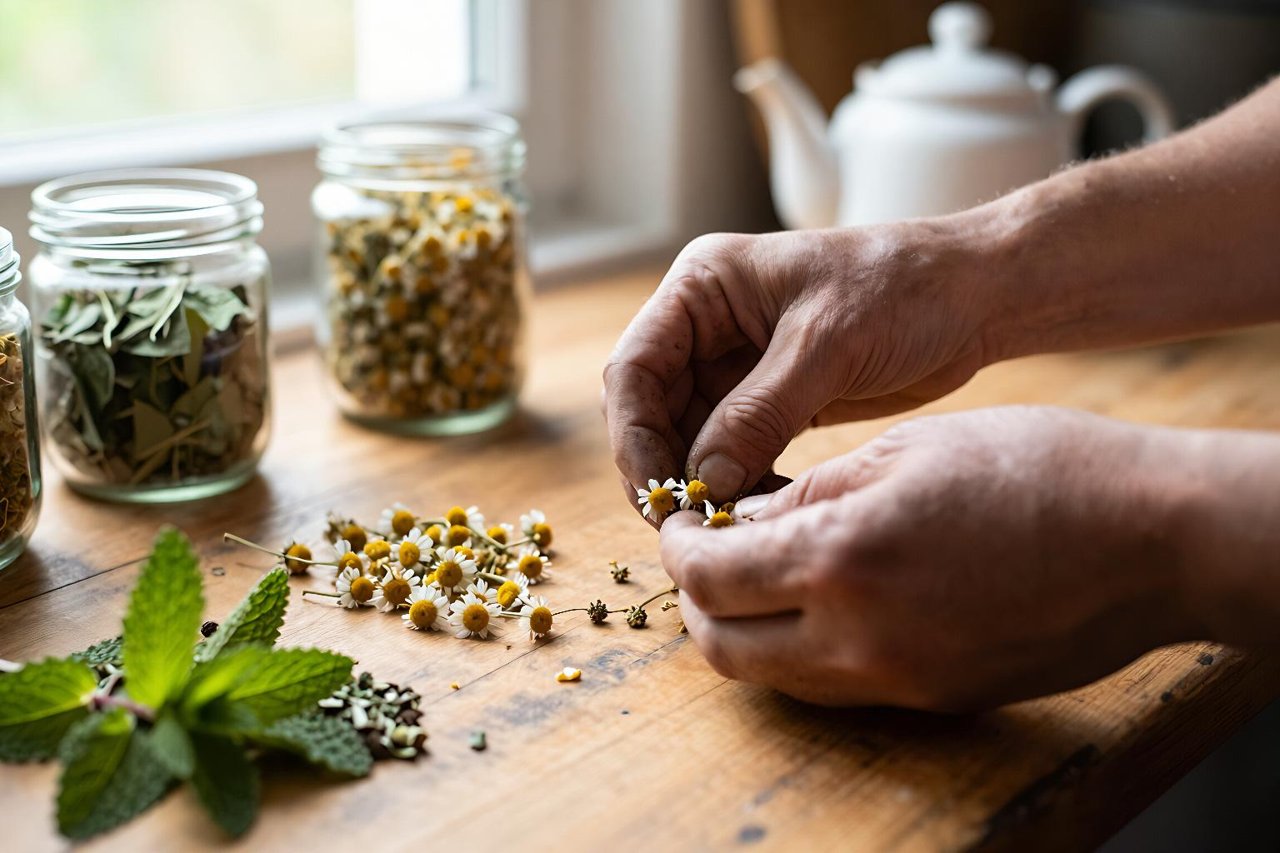
Dried herbs also decay. A jar of chamomile that’s sat open above the stove for two years has lost most of its volatile oils. Keep dried plant material airtight, dark and cool, and expect roughly a year of useful life. If you’re unsure whether you’re steeping, decocting or infusing correctly, this walkthrough on how to actually prep and use natural remedies covers the mechanics properly.
Mistake 4: Choosing the Wrong Format for the Job
People buy capsules because they’re convenient, then wonder why a capsule of dried valerian does less than a proper infusion. Format changes absorption, onset and how much you can realistically take. A tea is gentle and quick, good for digestion and sleep. A tincture is concentrated, easy to dose in drops and lasts for years. Capsules suit powders you’d never drink and roots that need steady daily intake.
If you’re torn between the three, this comparison of tinctures, teas and capsules will save you buying the wrong one first. Matching the format to the problem is half the battle.
Mistake 5: The More-Is-Better Trap
Doubling the dose of a sedative herb doesn’t produce twice the calm. It produces a hangover, or nausea, or both. Herbalists work with grams and drops for a reason, and the therapeutic window for many plants is narrower than people assume. Two grams of dried chamomile makes a pleasant cup of tea; a heaped handful makes something bitter and unpleasant you won’t finish.
Topical remedies are worse. Essential oils need diluting to roughly 1–2%, which is about six to twelve drops per 30 ml of carrier oil. Anything stronger is a chemical burn waiting to happen, especially on children and on skin around the eyes.
Mistake 6: Quitting at Day Three, or Never Quitting at All
There are two failure modes here and they’re opposites. Some things genuinely work fast: ginger for nausea, peppermint for a tension headache rubbed on the temples, honey for a scratchy throat. Others need weeks. Adaptogens, topical treatments for skin, anything addressing a chronic pattern, all take time.
Give a remedy a fair trial and then decide. Two weeks is a reasonable window for most acute complaints; six to eight weeks for chronic ones. Write down what you’re measuring before you start, or you’ll be arguing with your own memory. And set a stop rule in advance: if nothing has changed by day fourteen, stop taking it rather than adding a second remedy on top.
Mistake 7: Buying Blind
The supplement aisle is the weakest link in most natural remedy routines. Independent testing has repeatedly found products containing none of the herb on the label, or a cheaper plant substituted for an expensive one, or heavy metals picked up somewhere in the supply chain.
Buy from companies that publish batch numbers and third-party certificates, and look for independent verification marks where they exist. Whole herbs you can see and smell are harder to fake than powders in opaque capsules. If the price is dramatically lower than everywhere else, you’ve found the reason.
Mistake 8: Treating Red Flags Like Minor Annoyances
Natural remedies are excellent for the everyday stuff: colds, mild digestive upset, insomnia, minor cuts, headaches. They are the wrong tool for chest pain, a fever in a newborn, a lump that’s changed, blood in your stool, or a wound that’s spreading redness up your arm.
There’s also a subtler version of this mistake, which is using a remedy to avoid a diagnosis. If a symptom has lasted a month, self-treatment isn’t management, it’s delay. Knowing which situations call for the pharmacy and which call for the kitchen is worth thinking through properly; this piece on home remedies versus the pharmacy sorts the two out sensibly.
Mistake 9: Chasing Novelty Instead of Consistency
New remedy every week, no remedy ever gets a chance. A cupboard full of half-used bottles is a sign that nothing was given a fair run. Pick one approach for one problem, run it properly, and keep everything else steady so you can tell what changed and why.
A Five-Minute Check Before You Start
Run through these questions first and most of the mistakes above disappear before they cost you anything:
- What exactly am I treating, and how will I know if it’s better?
- Am I on any medication, and does this herb interact with it?
- Is this safe for my age group, and for anyone pregnant or breastfeeding in the house?
- Do I have the right format and a realistic dose, written down?
- Where did this come from, and can the seller prove what’s in it?
- Have I set a date to stop if it isn’t working?
For a rundown of which remedies hold up and which don’t, what actually helps for everyday ailments is a good place to sanity-check your shortlist before spending money.
How to Tell in Two Weeks Whether It’s Working
Pick one measurable thing. Not “I feel better” but “I fall asleep within 30 minutes on four nights out of seven” or “the cough is gone by day ten” or “I’m using the antacid twice a week instead of twice a day.” Note the baseline honestly, take the remedy consistently, and change nothing else in that window if you can help it.
Then look at the numbers rather than the vibe. If they’ve moved, keep going and adjust the dose slowly. If they haven’t, you’ve learned something useful and cheap: this remedy, at this dose, in this format, doesn’t work for you. Either change one of those variables and try again, or move on. That’s the whole discipline, and it beats collecting bottles.


