
Table of Contents
Animals never cease to amaze. Whether it’s a tiny tardigrade surviving the vacuum of space or a parrot that can outsmart a five-year-old, the natural world is packed with surprises. Some facts sound too bizarre to be true, yet science backs them up. Let’s explore some of the most incredible animal facts that reveal just how extraordinary life on Earth truly is.
Octopuses Have Three Hearts and Blue Blood
Octopuses are often called the aliens of the sea, and for good reason. They have three hearts: two pump blood to the gills, while the third pumps it to the rest of the body. When they swim, the systemic heart stops beating, which explains why they prefer crawling—it’s less exhausting. Their blood is blue because it uses hemocyanin, a copper-based protein, to transport oxygen instead of the iron-based hemoglobin we have. This adaptation helps them survive in cold, low-oxygen environments.
Each Arm Has Its Own Brain
About two-thirds of an octopus’s neurons reside in its arms, meaning each arm can taste, touch, and even make decisions independently. This decentralized nervous system allows an octopus to solve puzzles, open jars, and camouflage simultaneously. In fact, if an arm is severed, it can still react to stimuli for hours afterward. For more on animal cognition, check out Ray Nayler’s discussion on animal minds.
The Immortal Jellyfish Can Cheat Death
Turritopsis dohrnii, commonly known as the immortal jellyfish, has a unique ability: when stressed or injured, it can revert to its juvenile polyp stage, essentially starting its life cycle over. This process, called transdifferentiation, allows it to bypass death indefinitely. While it can still be eaten or killed by disease, under ideal conditions, this jellyfish is biologically immortal. Imagine a creature that never grows old—it’s a real-life fountain of youth.

Cows Have Best Friends and Get Stressed When Separated
Research has shown that cows form strong social bonds and experience stress when isolated from their preferred companions. In studies, cows paired with a friend had lower heart rates and cortisol levels compared to those paired with unfamiliar cows. They also moo more excitedly when reunited. This emotional depth is often overlooked in farm animals. If you’re curious about more surprising animal behaviors, these 8 facts you probably don’t know about animals will open your eyes.
Elephants Can ‘Hear’ with Their Feet
Elephants produce low-frequency rumbles that travel through the ground as seismic waves. Specialized nerve endings in their feet and trunks detect these vibrations, allowing them to communicate over distances of up to 10 miles. They can even distinguish between the footfalls of different individuals. This ability helps them locate water sources, warn of predators, and coordinate group movements. Their infrasonic calls are so powerful that humans can feel them as a physical sensation when standing nearby.
Grief and Rituals
Elephants are known to mourn their dead. They will stand over a deceased companion for hours, touching the body with their trunks, and sometimes covering it with leaves or dirt. They have also been observed visiting the bones of dead relatives, gently caressing them. This level of emotional complexity is rare in the animal kingdom. For a deeper look at animal intelligence, Ray Nayler’s novel explores the inner lives of animals.
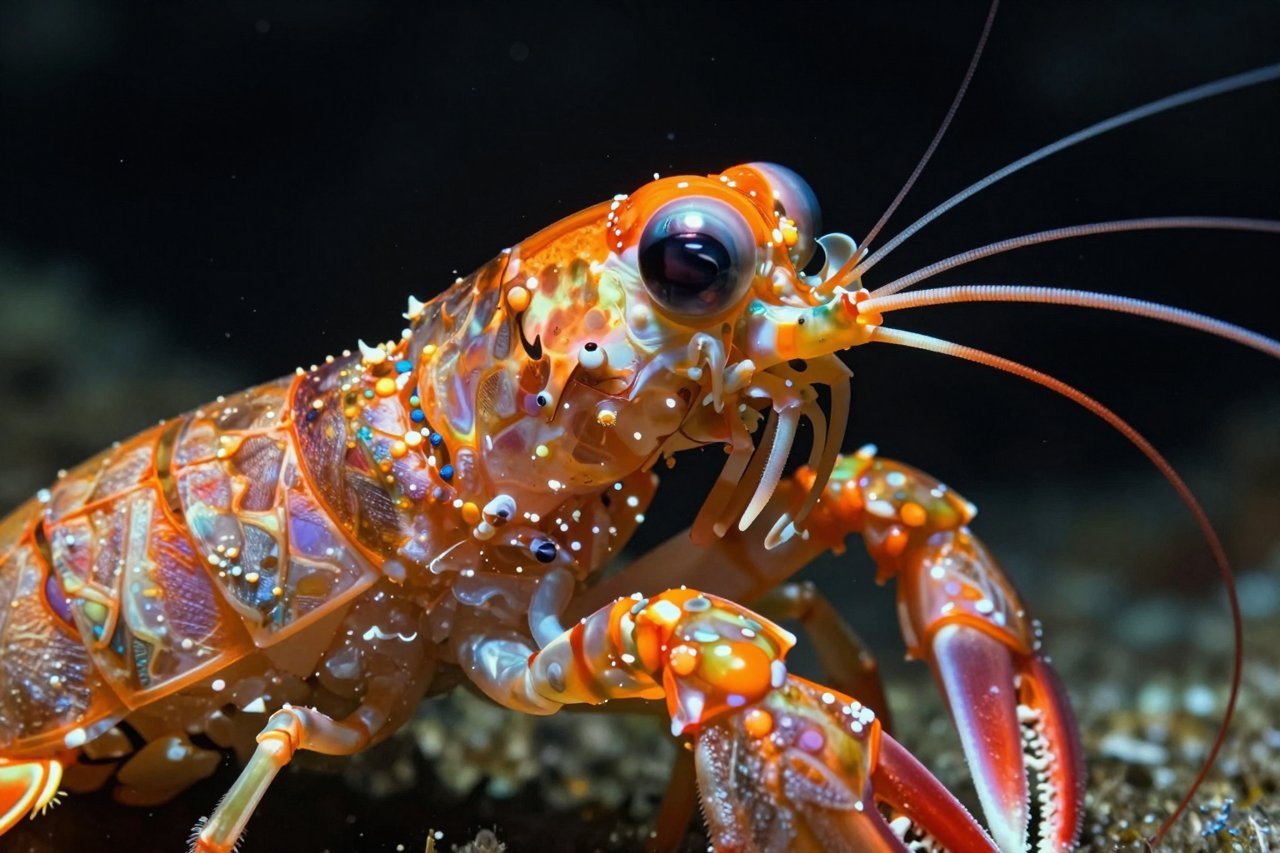
The Mantis Shrimp Has the Most Complex Vision in the World
Mantis shrimps have eyes with 12 to 16 types of photoreceptors (humans have three). They can see ultraviolet, infrared, and polarized light. Each eye moves independently, giving them trinocular vision in each eye. They can even see circularly polarized light, a feat no other animal can match. Their eyes are mounted on stalks that rotate 360 degrees. This visual prowess helps them hunt prey with stunning accuracy. Their claws can strike with the speed of a bullet, creating cavitation bubbles that generate heat and light.
Pistol Shrimp Stun Prey with Sound
This tiny creature, only a few centimeters long, snaps its claw shut so fast that it creates a cavitation bubble that collapses with a loud pop, reaching temperatures of up to 4,700°C (8,500°F)—almost as hot as the sun’s surface. The shockwave stuns or kills small fish and other prey. The sound is one of the loudest in the ocean relative to its size, and it can even interfere with submarine sonar.
Dolphins Call Each Other by Name
Bottlenose dolphins develop unique signature whistles that function like names. They learn these whistles from their mothers and use them to identify and call out to specific individuals. Dolphins will respond to recordings of their own signature whistle, even if the sound is altered. They can also remember the whistles of companions they haven’t seen for over 20 years. This sophisticated communication system rivals human language in complexity.
Honeybees Can Recognize Human Faces
Despite having only 0.01% of the neurons humans have, honeybees can be trained to recognize human faces. They do this by assembling a composite image of facial features—a process called configural processing, similar to how humans recognize faces. Bees also perform the famous waggle dance to communicate the location of food sources to hive mates. Their tiny brains are capable of memory, learning, and even basic emotions.
The Peregrine Falcon Is the Fastest Animal on Earth
When diving to catch prey, the peregrine falcon can reach speeds over 240 mph (386 km/h). Its aerodynamic shape and specialized nostrils that prevent air pressure damage allow it to achieve this incredible velocity. The falcon’s nictitating membrane (third eyelid) protects its eyes from debris during the dive. It’s a master of the sky, capable of stunning mid-air strikes.
Crows Use Tools and Hold Grudges
Crows are among the most intelligent birds. They craft tools from twigs and leaves to extract insects from crevices. They can also recognize human faces and remember whether that person was a threat or a friend. In studies, crows who were captured and released by a masked person would scold that mask whenever they saw it, even years later. They also pass this knowledge to their offspring. For more on animal tool use, check out these lesser-known animal facts.
Tardigrades Can Survive Almost Anything
Tardigrades, also known as water bears, are microscopic creatures that can survive extreme conditions: boiling water, freezing temperatures, radiation, dehydration, and even the vacuum of space. They enter a state called cryptobiosis, where their metabolism drops to near zero, and they can remain dormant for decades. When rehydrated, they simply resume activity. They are found everywhere from ocean depths to moss on rooftops.
Some Animals Have Superpowers
- Electric eels generate up to 600 volts to stun prey—enough to power a small appliance.
- Axolotls can regenerate entire limbs, parts of their brain, and even their heart without scarring.
- Bombardier beetles spray a boiling chemical mixture from their abdomen to repel predators.
- Arctic foxes change fur color with the seasons—white in winter for camouflage, brown in summer.
- Cheetahs can accelerate from 0 to 60 mph in just three seconds, faster than most sports cars.
Why Animal Facts Matter
Understanding these animal facts deepens our appreciation for biodiversity and evolution. Each adaptation is a solution to a specific environmental challenge, honed over millions of years. They remind us that intelligence and complexity come in many forms—not just human. Whether it’s the emotional bonds of cows or the regenerative powers of axolotls, animals continually challenge our assumptions about life. Next time you see a pigeon on the street, remember: its brain can navigate complex routes and recognize itself in a mirror. The natural world is full of wonders, and we’ve only scratched the surface.


