
Table of Contents
Most people think low carb means giving up everything you love. That’s not really how it works. You can eat well, feel full, and still have energy without piling your plate with pasta or bread. The trick is knowing which foods are low in carbohydrates and which ones quietly pack them in.
In simple terms, a low carb diet means limiting foods that contain a lot of carbohydrates. That includes obvious things like bread, rice, and sugar, but also some foods you might not expect, like certain fruits and root vegetables. How low you go depends on your goals. Some people follow a strict ketogenic diet with under 20 grams of carbs a day. Others just cut back to 100–150 grams to manage weight or blood sugar.
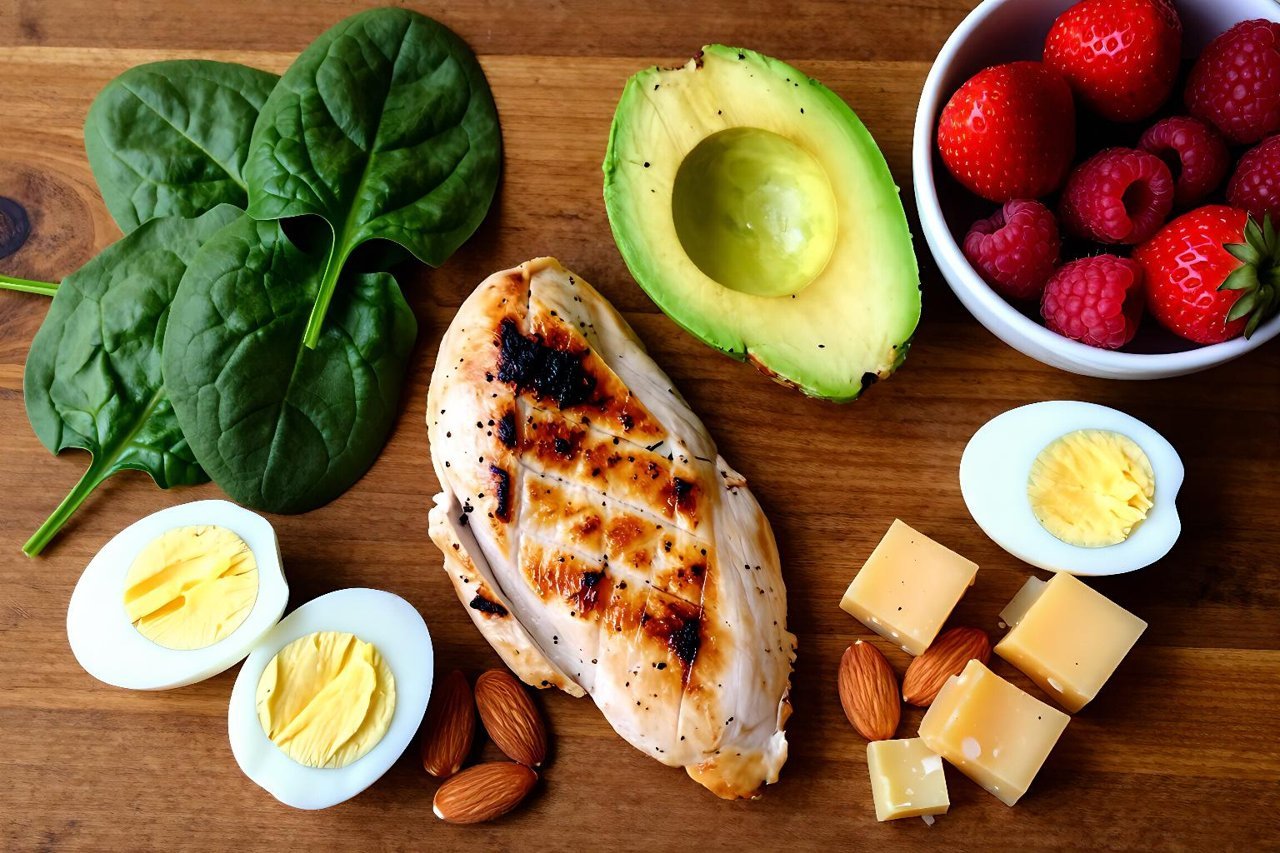
One thing that helps is understanding net carbs. That’s the total carbohydrate minus fibre. Fibre doesn’t raise your blood sugar, so many people count net carbs instead of total carbs. For example, half an avocado has about 8.5g of carbs, but 6.7g of that is fibre, leaving fewer than 2g net carbs. That means you can eat avocados generously.
The Best Low Carb Foods to Build Your Plate Around
Protein-Rich Foods That Keep You Full
Protein is the backbone of a good low carb diet. It helps preserve muscle, keeps you full, and takes more energy to digest. Look for unprocessed sources. Chicken breast, turkey, beef, pork, and fish are all naturally carb-free. A 100g serving of grilled chicken breast gives you 31g of protein and zero carbs. Salmon adds healthy omega-3 fats on top of that.

If you want to dial in your protein intake, check out our guide to the best high protein foods for muscle gain — it covers portion sizes and protein content in detail.
Vegetables That Won’t Spike Your Blood Sugar
As a general rule, the best low carb vegetables grow above ground. Leafy greens, broccoli, cauliflower, zucchini, asparagus, and bell peppers are all excellent choices. A whole cup of raw spinach has just over 1g of carbs. Even cooked, you can eat a huge volume for very few carbs. The key is to avoid starchy ones like potatoes and corn.
For a complete breakdown, our ultimate guide to the lowest carb vegetables lists the top choices and their exact carb counts.
Healthy Fats That Really Satisfy
Fat is not the enemy. On a low carb diet, fat often becomes your body’s main fuel source. That means you want good quality fats from whole foods, not processed oils. Avocados, olives, nuts, seeds, and coconut are all low carb and nutrient-dense. A tablespoon of olive oil has no carbs at all and can be drizzled over salads or vegetables.
Dairy: Choose Full-Fat
Dairy can be a great low carb addition, but you have to read labels. Plain Greek yogurt has about 4g of carbs per 100g, while flavoured yogurts can have double or triple that because of added sugar. Cheese is almost always very low in carbs. A 30g serve of cheddar has less than 1g of carbs. Hard cheeses like parmesan keep digestion a bit slower too.
Berries and Other Fruit That Fit
Most fruit is high in sugar, but berries are the exception. Strawberries, raspberries, blackberries, and blueberries are all relatively low in carbohydrates and packed with fibre and antioxidants. Half a cup of raspberries has about 3g net carbs, making it a reasonable way to satisfy a sweet tooth. Meanwhile, a banana has about 24g net carbs, so that’s one to skip or eat rarely.
Low Carb Foods You Should Avoid (or Limit)
Now for the other side. It’s easy to get tripped up by foods that seem low carb but aren’t. Bread, pasta, rice, and baked goods are obviously high in carbs, but here are a few less obvious ones:
- Starchy vegetables like potatoes (a medium potato has 37g carbs), sweet potatoes, corn, and peas.
- Legumes and beans: lentils, chickpeas, and black beans are high in carbs, though you can have small amounts.
- Sugary drinks: soda, fruit juice, and sweet tea pack a lot of carbs with no fullness.
- Flavoured yogurts and low-fat products often have added sugar to compensate.
- Processed snacks labelled “low-fat” or “diet” usually have hidden carbs.
- Most fruits besides berries.
Check labels on condiments too. Ketchup has about 4g of carbs per tablespoon. Salad dressings often contain sugar. Stick to simple ingredients.
A Simple Low Carb Shopping List
Here’s a cheat sheet for your next trip to the store. Print it out or keep it on your phone.
- Proteins: chicken, turkey, beef, pork, eggs, salmon, tuna, tofu
- Low carb vegetables: spinach, lettuce, broccoli, cauliflower, zucchini, peppers, asparagus, mushrooms
- Fats: avocado, olive oil, coconut oil, nuts, seeds, olives
- Dairy: full-fat Greek yogurt, cheddar, mozzarella, cottage cheese, butter
- Fruits: strawberries, raspberries, blackberries, lemons, limes
- Pantry: almond flour, coconut flour, unsweetened almond milk, nut butters
How to Make Low Carb Work for You in Real Life
Going low carb doesn’t have to mean cooking everything from scratch. It just takes a bit of planning. One easy approach is to swap out one meal at a time. For breakfast, replace cereal with eggs and a bit of cheese. For lunch, have a big salad with chicken and avocado instead of a sandwich. For dinner, serve your protein with a generous pile of vegetables and skip the potato.
If weight loss is your main goal, low carb pairs well with high protein. In fact, our guide to the best protein foods for weight loss explains how protein affects hunger hormones and helps you eat less automatically. Similarly, many low carb foods are also low in calories overall. You might find this list of 22 low calorie foods that actually fill you up useful for building meals that keep you satisfied.
Eating out can be tricky, but it’s manageable. Choose grilled or baked proteins instead of battered ones. Ask for extra vegetables instead of fries. Keep a salad dressing on the side. And remember that you don’t have to be perfect. If you eat something with more carbs than you planned, just adjust your next meal.
A One-Day Low Carb Menu to Get You Started
Here’s a practical example of what a satisfying low carb day looks like. No need to follow it exactly, but it shows how balanced it can be.
Breakfast: Two scrambled eggs with a handful of spinach and a sprinkle of cheese. Black coffee or unsweetened tea.
Lunch: Grilled chicken breast on a bed of mixed greens with cucumber, tomatoes, and a tablespoon of balsamic vinaigrette. Half an avocado.
Snack: A small handful of almonds and a string cheese.
Dinner: Baked salmon with roasted broccoli and cauliflower drizzled with olive oil. A side salad with olive oil and lemon.
Optional dessert: Half a cup of raspberries with a dollop of whipped cream (unsweetened).
Total carbs for that day will land somewhere around 25–35 grams net, depending on portion sizes. It’s filling, includes all your macronutrients, and doesn’t require any fancy ingredients.


