
Table of Contents
Forget the celery-stick stereotype. Low calorie foods have come a long way from the sad, watery snacks people used to force down. You can eat a massive plate of food, feel completely satisfied, and still stay in a calorie deficit. The secret isn’t just eating less. It’s eating smarter.
Low calorie foods are typically high in water, fiber, or protein, which makes them incredibly filling without blowing your daily energy budget. This article will walk you through the best options, the science behind why they work, and how to build meals around them.
What Makes a Low Calorie Food Worth Eating?
It’s not just about the number on a label. A food that’s low in calories but tiny in volume (think a few potato chips) won’t keep you satisfied. What matters is calorie density—the number of calories in a given weight or volume of food.
Vegetables like lettuce, cucumber, and zucchini are around 90% water. That water gives them bulk without many calories. A pound of raw zucchini has just about 74 calories. A pound of chocolate has over 2,200. The difference in volume affects how full you feel after eating.

Protein and fiber also play huge roles. Both slow down digestion, stabilize blood sugar, and signal to your brain that you’re satisfied. If you combine those two factors with water-rich foods, you’ve got a winning formula.
How to Spot a Low Calorie Food
- It’s under 100 calories per cup (like most no-starchy vegetables and some fruits).
- It has at least 3 grams of fiber per serving.
- It contains protein, ideally with less than 5 grams of fat per serving.
- It’s eaten in its whole form, not juiced or dried.
The Best Low Calorie Foods, Grouped by Category
These aren’t the only low calorie foods, but they are the ones that actually keep you full. We’ve grouped them so you can build your grocery list easily.
Vegetables That Go Far Beyond Salad
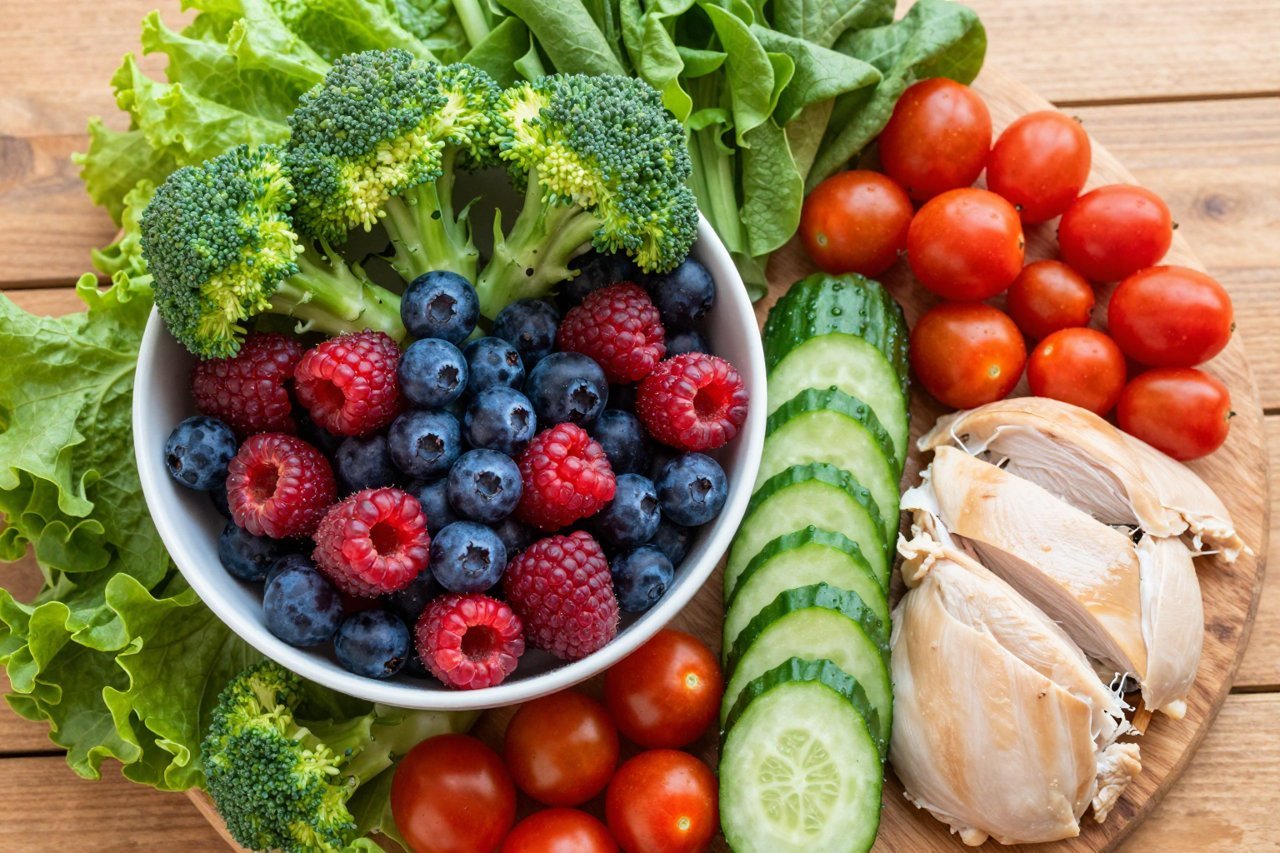
Broccoli, cauliflower, cabbage, and leafy greens are the MVP of low calorie eating. A cup of chopped broccoli has about 31 calories, while a whole cup of raw spinach brings just 7 calories. They’re also packed with vitamin C, folate, and antioxidants.
If you’re looking for a more complete list, check out these 22 low calorie foods for weight loss that actually fill you up to stock your fridge with even more options.
Fruits That Feel Like a Cheat
Berries are the standout group. A cup of strawberries has around 48 calories and three grams of fiber. Raspberries pack eight grams of fiber per cup with only 64 calories. Watermelon is another sleeper hit: a cup of diced watermelon has about 46 calories. It’s over 90% water, which explains why it’s so refreshing.
Just be careful with dried fruits. Raisins, dates, and dried apricots have concentrated sugar and calories. A handful can easily be 200 calories compared to the same weight of grapes at 60.
Lean Proteins That Satisfy
When you’re eating low calorie foods, protein should be the star of your plate. Chicken breast, turkey breast, and white fish are all low in fat and calories but high in satiety. Four ounces of cooked chicken breast has around 187 calories and 35 grams of protein. A 6-ounce cod fillet brings 150 calories and 30 grams of protein.
If you want exact numbers for different cuts and cooking styles, our guide to foods high in protein breaks it down in plain language.
Greek yogurt (non-fat, plain) is another top pick. It has about 100 calories and 17 grams of protein per cup. The key is to skip flavored versions, which can double the calories with added sugar. Add your own berries instead.
Surprising Low Calorie Foods You Might Not Have Tried
Air-popped popcorn is a whole grain that comes in at just 31 calories per cup. You can eat five cups for around 155 calories. A massive, satisfying snack. Shrimp is also a hidden gem: three ounces has about 84 calories and 20 grams of protein. And then there’s cauliflower rice. At 25 calories per cup, you can replace white rice and save around 200 calories per meal.
Why Protein and Fiber Matter More Than You Think
Low calorie foods work best when they’re paired with the right macros. Protein reduces ghrelin, the hormone that triggers hunger, while fiber thickens the food being digested and slows the release of sugar into your bloodstream. That combination keeps you feeling full long after you’ve eaten.
Fiber also feeds the healthy bacteria in your gut, which plays a role in appetite and mood. If you want to add more fiber without the bloating, start slow. Our practical guide to eating more fiber without the bloat explains how to ramp up gradually.
Here are some high-fiber low calorie foods to mix into your routine:
- Raspberries: 8 grams of fiber per cup, only 64 calories
- Lentils: 16 grams of fiber per cup, though they’re higher in calories at 230. So watch portions
- Brussels sprouts: 4 grams of fiber per cup, about 38 calories
- Chia seeds: 10 grams of fiber per 2 tablespoons, about 138 calories
How to Build a Low Calorie Meal (And Actually Enjoy It)
A simple formula works every time. Fill half your plate with non-starchy vegetables, a quarter with lean protein, and a quarter with fiber-rich carbs like quinoa or sweet potato. Add one small portion of healthy fat, like a drizzle of olive oil or a few avocado slices.
Here’s what that looks like in practice: grilled salmon (6 ounces), a cup of roasted broccoli, half a cup of quinoa, and a side salad with a teaspoon of olive oil. The entire plate comes to around 420 calories and it’s genuinely satisfying.
This approach is the same one we use in our weight loss foods guide, where we focus on satiety and realistic portions rather than starvation.
Low Calorie Swaps That Save You Hundreds of Calories
You don’t have to overhaul your entire diet overnight. Simple substitutions add up quickly.
- Use zucchini noodles (20 calories per cup) instead of pasta (220 calories per cup).
- Swap white rice for cauliflower rice and save roughly 175 calories per cup.
- Use lettuce wraps instead of bread or tortillas. Two slices of bread are about 160 calories, while a large lettuce leaf is under 5.
- Blend frozen banana slices into “nice cream” instead of ice cream. A cup of frozen banana is about 100 calories, compared to 250+ for regular ice cream.
These swaps let you eat the same amount of food, just with far fewer calories. Over a week, that reduces thousands of calories without making you feel deprived.
A Day of Eating Low Calorie Foods (Real Meals, Not Just Salad)
Let’s put it all together. This is a sample day that stays around 1,400 calories, yet you’ll still feel full.
Breakfast: Non-fat Greek yogurt (1 cup) with a cup of raspberries and a tablespoon of chia seeds. Around 220 calories.
Lunch: Grilled chicken breast (5 ounces) over a big spinach salad with cucumber, bell pepper, tomato, and two tablespoons of light vinaigrette. Add a quarter cup of black beans for extra fiber. Around 400 calories.
Snack: Five cups of air-popped popcorn with a sprinkle of sea salt. About 155 calories.
Dinner: Baked cod (6 ounces) with roasted asparagus (1 cup) and half a baked sweet potato. Around 430 calories.
That’s roughly 1,205 calories, and you still have room for a piece of fruit or a small treat if you want. The volume of food is enormous because it’s built from low calorie foods that keep you full.
The takeaway isn’t to memorize every calorie. It’s to understand that low calorie foods can be filling, delicious, and sustainable. Stock your kitchen with these staples, and you won’t need to calculate your intake all day long. You’ll naturally listen to your body and feel satisfied.


