
Table of Contents
Your dog slips out the back gate, and your heart drops. You shout, you search the neighborhood, and for twenty minutes you imagine the worst. Then a neighbor three streets over calls: they’ve found your Lab sniffing around their trash cans. It happens to the best of owners. But it doesn’t have to end with a panicked search. A canine GPS tracker is the difference between a short scare and a sleepless night.
Why you’d actually want one
Some dogs are born escape artists. Others are spooked by fireworks and bolt before you can grab the collar. Field dogs cover miles of thick brush, and trail dogs can wander off the path without a sound. For all of them, a good tracker gives you the same thing: real-time peace of mind. You don’t have to wait for a microchip to be scanned, because you already know the exact spot where your dog is standing.
How a canine GPS tracker works
It uses the same satellite network your phone relies on. The tracker collects GPS coordinates, then sends them to your phone through a cellular network, typically LTE or a lower-power version. That means two things: you’ll need a SIM card and a data subscription in most cases, and the tracker only works where there’s cell service. Some models use radio frequency instead, like a walkie-talkie system, but those usually have a shorter range of a few miles and require you to carry a matching receiver.
The subscription question
Most top-tier trackers cost money each month. Tractive’s basic plan runs about $5 to $8 depending on whether you pay monthly or yearly. Fi’s Smart Collar Plan starts at around $19 per month but includes the collar and cellular coverage on a custom network. There are also subscription-free true GPS trackers, but they rely on radio frequencies and a handheld receiver, so you’re carrying an extra device. And then there’s the Apple AirTag, which uses Bluetooth and the Find My network instead of GPS. It’s fine for a set of keys, but not for a dog that runs into a forest. It only updates when another iPhone happens to pass by.

What separates a good tracker from a useless one
You want four things in this order: battery life, size, coverage, and durability. Let’s be honest about battery life. A live-tracking device that needs charging every day is a hassle, but it’s still easier than losing your dog. Most subscription-based trackers last two to five days between charges. The Fi collar is a notable outlier; it can go up to three months with its GPS off and use geofencing to wake up only when the dog leaves a safe zone.
Weight matters more than you think
Chihuahuas and Cavaliers can’t carry a heavy plastic box. A good rule of thumb is to keep the tracker under five percent of your dog’s body weight. For a 15-pound Cavalier King Charles Spaniel, that means no more than 0.75 ounces. That’s why the dedicated lightweight trackers like the best 7 Cavalier activity trackers for 2026 are designed specifically for small breeds. They clip onto the existing collar and don’t drag, rub, or interfere with normal head movement.
Battery and charging specifics
Don’t forget to check how long charging takes. A tracker that needs 12 hours to charge but only lasts two days is a dealbreaker. I’ve personally used a Tractive tracker for my own dog, and the magnetic charging cable is easy, but the real clue is in the manual: it wants two to three hours for a full charge, which is roughly the same as any other device.
Real-world range and accuracy
The specs will say something like ‘GPS + GLONASS’ or ‘dual-band GNSS.’ In plain English, that means more positioning satellites, which gives you a more accurate read. In an open field, any good tracker will put you within 5 to 10 meters of your dog. In dense city blocks with tall buildings, accuracy drops. Trees and hills also interfere. That sounds bad, but in practice, the tracker gets you to the right park or the right backyard, and then you can call your dog by name.
Geofencing and live tracking
The two cleverest features are geofencing and live tracking. Set up a virtual fence around your property. When your dog crosses the boundary, the tracker sends you an alert. That’s perfect for owners who let their dog out into the garden without watching every minute. Live tracking is what you use when you’re actively hunting or hiking; the app shows your dog’s movement in real time, updating every few seconds. Some apps even show a breadcrumb trail, so you can see where they’ve been for the last hour.
Pitfalls and mistakes to avoid
Here’s a list of things that catch people off guard:
- Subscription lock-in. Some trackers only work with their own proprietary plan, and the price can rise after the first year. Check the monthly cost over a three-year period, not just the first month.
- Charging fumbles. If the tracker dies without you noticing, you’re carrying a silent plastic brick. Most apps show the last known location, but that’s not a live feed anymore.
- Poor coverage. If you live in a rural area and your dog hunts in canyons, a tracker that depends on a single cellular network may not connect. Look for a device that supports multiple carriers or has an offline radio mode.
- Mistaking Bluetooth for GPS. A Bluetooth-only tag works only within 100 meters. It’s not a canine GPS tracker, no matter how many reviews on Amazon call it one.
Which dogs are the hardest to track?
The real problem is always size and terrain. A tiny dog can’t carry a tracker with a big battery, so small-breed owners need to prioritize weight. For example, the difference between an 8-ounce tracker and a 1-ounce tracker is enormous for a Cavalier. The good news is that the market has caught up. There are now several trackers that weigh less than 1.5 ounces and still offer live GPS, weekly activity reports, and the ability to share your dog’s location with a person who’s dogsitting.
Should you use an activity tracker instead?
Activity trackers are a different beast. They log steps, sleep, and calories, and they use Bluetooth to sync with your phone. That’s great for monitoring your dog’s health, but it’s not for finding a lost dog. Of course, it’s possible to get both in one device. If your dog is a healthy breed without major escape risks, an activity tracker might be enough. If not, make sure the tracker you pick actually has GPS built in. If you’re still weighing your options, the dog tracker guide spells out exactly which types are worth your money and why.
How much should you pay?
Expect to pay anywhere from $50 to $200 for the device, plus a monthly fee between $5 and $20. The annual subscription often brings the price down to around $7 per month, and some brands offer a lifetime subscription for a one-time fee, which is rare but worth hunting for. If you’re not in a hurry to buy, mark your calendar for late June and early July; that’s when early Prime Day deals on tested pet tech often include trackers at a meaningful discount, like the kind seen in the 38 best early Amazon Prime Day deals on products we’ve tested (2025) list. But don’t let a sale convince you to ignore the size, battery, and coverage factors. The cheapest tracker that doesn’t work in your backyard is never a bargain.
Putting it to practice
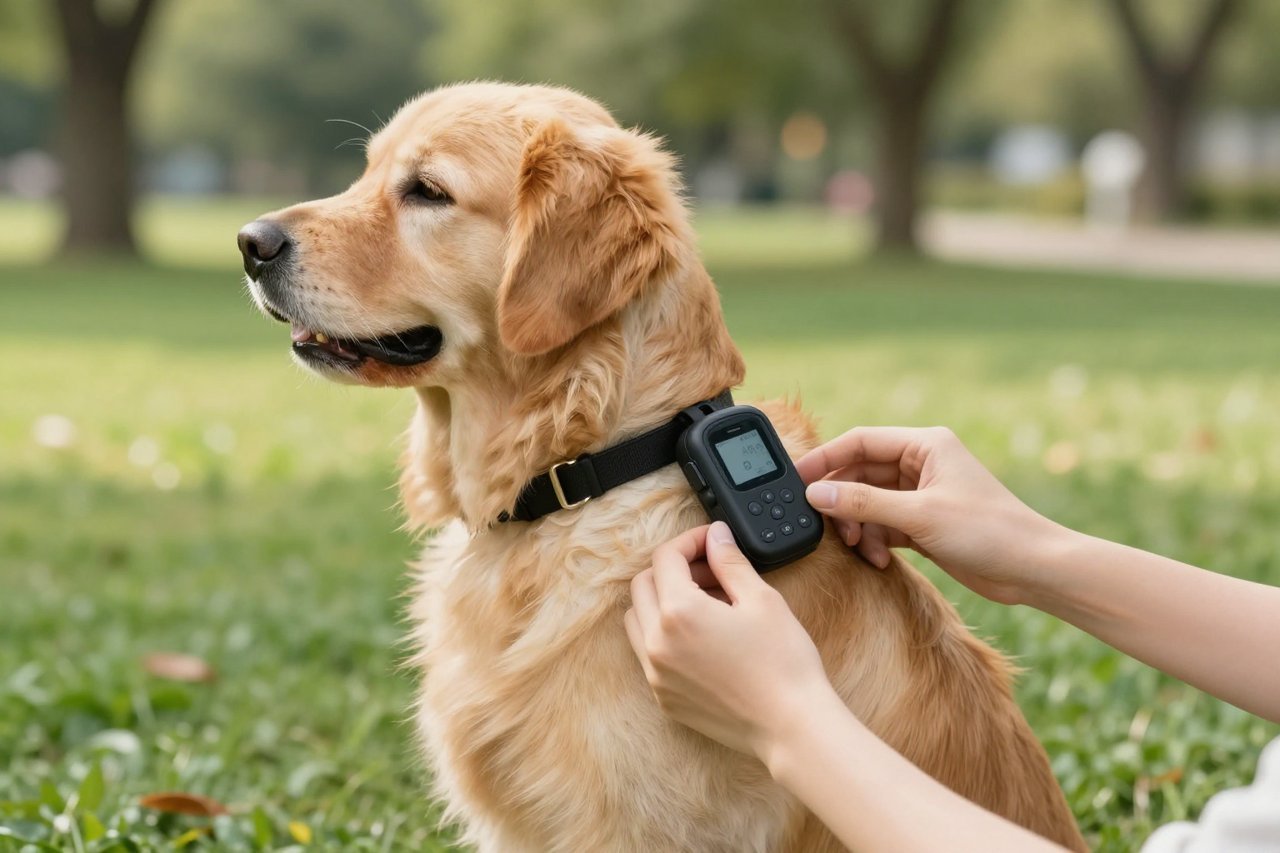
A tracker is only useful if you attach it properly. Slide the collar through the tracker’s loop, pull it snug, and check that you can still slip two fingers between the collar and your dog’s neck. Make it part of your morning routine: while your dog’s eating, grab the collar, press the button to check the battery level, and put the collar back on. The tracker will do the rest.
Match the tracker to your dog’s actual life
If your dog has never slipped a leash and spends most of its time on the couch, a simple Bluetooth tag might be enough. If you’ve ever had that stomach-dropping feeling, or you live near a busy street, or your dog has a strong prey drive, spend the extra money. The mental cost of a lost dog is higher than any subscription fee, and knowing exactly where your pup is on a Saturday morning makes the investment feel trivial. So look at your dog, look at your schedule, and pick the tracker that fits the way the two of you actually live. Or better yet, buy two and keep one fully charged at all times. Dogs don’t plan escapes; they just act on instinct. The tracker is your backup plan, and it will never say ‘sorry, I wasn’t watching.’


