
Table of Contents
There is no such thing as a genuinely hypoallergenic dog. Any allergist will say so in the first minute of the appointment, and they are correct: the protein that sets off most reactions (Can f 1) turns up in saliva, urine and skin flakes, not in fur. What low-allergen breeds actually give you is a numbers game. Less shedding means fewer allergen-carrying hairs on the sofa, on the duvet, floating in the air at nose height. For a household where someone starts sneezing ten minutes after meeting a Labrador, that shift in numbers is often the difference between “we can’t have a dog” and “we can.”
The breeds below are the ones that keep surfacing in that conversation, plus the practical stuff nobody mentions until you’re three months in and the groomer’s bill arrives.
Why Some Breeds Bother Allergies Less Than Others
Most people assume the problem is fur. It isn’t, exactly. The allergen is a protein found in a dog’s saliva, sebum and urine, and it travels on dander (dead skin flakes) and loose hair. A German Shepherd that blows coat twice a year launches far more of that material into your living room than a Bichon Frise whose hair stays attached until someone cuts it.
Two coat traits matter most: a single coat that grows continuously, more like human hair than animal fur, and a texture that holds dander close to the body. Curly and wiry coats score well on both. Hairless breeds technically score best of all, though they come with their own upkeep, including sunscreen in July and moisturiser in January. If you want the deeper physiology, this explanation of hypoallergenic breeds and real solutions for allergy sufferers covers how the proteins behave inside a home.

Eight of the Best Hypoallergenic Dog Breeds
Poodle (Toy, Miniature and Standard)
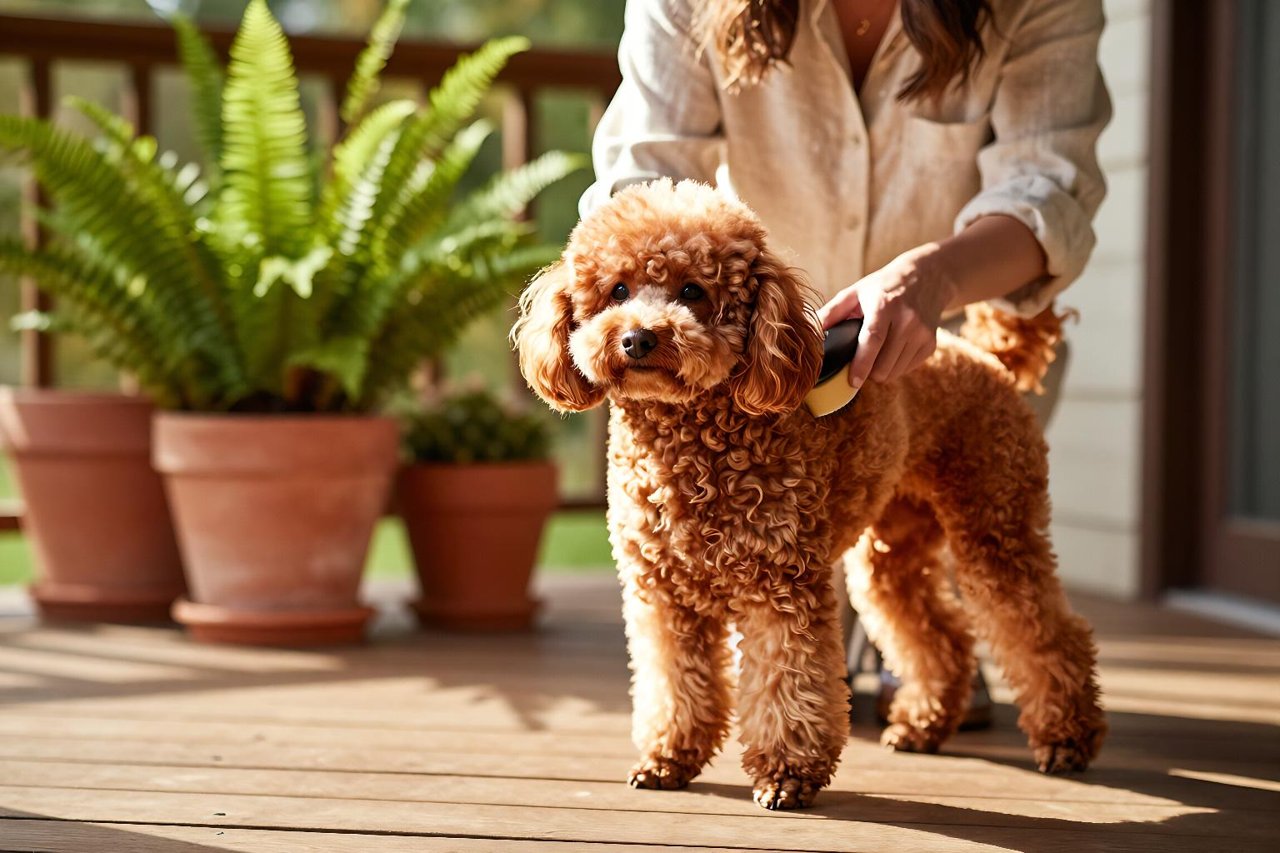
The default answer, and for good reason. Poodles come in three sizes (roughly 2–4 kg toy, 5–8 kg miniature, 20–32 kg standard), all with the same dense curly coat that sheds almost nothing. The trade-off is commitment: a clip every six to eight weeks and a proper brush-out three times a week, or the coat mats into felt. Poodles also rank among the most trainable dogs on the planet, which makes them forgiving of first-time owners.
Bichon Frise
A 5–10 kg puffball with a white double coat and a permanently cheerful disposition. Bichons were bred as companion dogs and act like it: they want to be in the same room as you, always. Brush three or four times a week and book a groomer every four to six weeks. They are prone to separation anxiety if left alone for long stretches, so they suit home workers or households with someone around most days.
Portuguese Water Dog
Bigger and busier than most on this list, at 16–25 kg, with webbed feet and a waterproof curly coat. These dogs need a job, whether that’s swimming, fetch in a field or a long daily walk, and a bored one will redecorate your garden. Clip every six to eight weeks. The breed became famous when the Obama family brought two into the White House, partly because Malia has allergies.
Soft Coated Wheaten Terrier
A 14–20 kg Irish farm dog with a soft, wavy, wheat-coloured single coat. Wheatens shed lightly rather than heavily, and their coat needs a good brushing two or three times a week plus a trim every couple of months. They are playful, stubborn in the way terriers always are, and happiest with a fenced garden and a family that laughs at their zoomies.
Miniature Schnauzer
Wiry topcoat, minimal shedding, 5–8 kg of alert little watchdog. The beard is the catch: it collects everything from soup to garden mud, so rinse it after messy meals. Schnauzers are sturdy enough for children and sharp enough to learn quickly, though they will test the rules if you let them.
Yorkshire Terrier
Yorkies have hair rather than fur, growing continuously and shedding very little. At 2–3 kg they are genuinely tiny, so they belong in homes with older children or adults rather than toddlers who might sit on them. Daily brushing keeps the coat tangle-free, and patience with housetraining is essential because small bladders plus stubbornness is a well-documented combination.
Maltese
A gentle 2–4 kg lap dog with a silky white coat and almost no shedding. Daily combing is the price, along with wiping away the tear stains that show up so clearly on a white face. Maltese are calm, adaptable and famously good in flats, which makes them a common pick for city dwellers.
Lagotto Romagnolo
The Italian truffle-hunting breed, 11–16 kg, with a curly coat that traps dander and drops very little hair. Still uncommon outside Europe and North America, so expect a waiting list and a price to match. Owners describe them as somewhere between a poodle and a spaniel: trainable, affectionate, and happiest with plenty of outdoor time.
Hypoallergenic Breeds That Suit Small Flats
If you’re choosing a dog for a 40-square-metre apartment, size and noise matter as much as coat. Maltese, toy poodles and Yorkies all adapt well to lift-life, provided they get two solid walks a day. Our round-up of small dog breeds that genuinely thrive in apartments covers the noise, stair and neighbour considerations in more detail, and there’s a wider comparison in these top small dog breeds for every type of owner.
If There Are Children in the House
Coat type is only half the decision. Temperament around unpredictable little humans matters more. Poodles, wheatens and bichons generally handle noise and grabbing with good humour, while miniature schnauzers are sturdy enough to survive a chaotic playroom. Tiny toys and terriers need supervision with toddlers, not because they are aggressive but because a 2 kg dog is breakable. For a fuller breakdown by age of child, see dog breeds that actually thrive with kids.
Quieter, Calmer Options
Some allergy households also want a dog that doesn’t bounce off the walls at 6am. The Maltese and bichon are the obvious names, both content with a short walk and a warm lap. If you’d rather trade coat type for temperament, calm dog breeds for a stress-free home is worth a read before you commit.
Home Habits That Cut Allergens More Than Any Breed Choice
Buying a low-shedding dog and then letting it sleep on your pillow undoes most of the benefit. A few routines make a measurable difference:
- Vacuum with a HEPA-filter machine twice a week, including under furniture and along skirting boards.
- Wash dog bedding and blankets weekly at 60°C, which denatures the allergen protein.
- Brush your dog outdoors, or in the bathroom with the door shut, then wipe surfaces down.
- Keep the bedroom a dog-free zone. This single rule helps more allergy sufferers than any other.
- Wipe paws and coat with a damp microfibre cloth after walks to remove pollen and dander.
- Bathe every three to four weeks with a gentle dog shampoo. More often than that dries the skin and can increase dander.
- Run a HEPA air purifier in the room where you spend the most time.
Meet the Breed Before You Sign Anything
Allergy reactions are individual. Two poodles from the same litter can provoke different responses in the same person, because allergen levels vary by dog, not just by breed. Spend at least half an hour in a home that already has the breed you’re considering, ideally sitting on the floor with the dog. Ask a breeder for a visit, or foster through a rescue for a fortnight. If your eyes stream within twenty minutes, that’s useful information and it cost you nothing.
The First 90 Days, and What It Actually Costs
Budget for grooming before you budget for toys. A poodle or bichon clip runs roughly $60–100 every six weeks in most cities, which lands somewhere between $500 and $900 a year, and skipping appointments leads to matting that costs far more to fix. Set a recurring reminder for the groomer on day one, buy a slicker brush and a metal comb, and book a vet check in the first week.
Then watch how the household actually feels. Allergy symptoms often settle over four to six weeks as your body adjusts to one specific dog, and they often don’t. Keep antihistamines on hand, keep the bedroom off-limits, and give it a fair three months before deciding. Plenty of people who assumed they could never own a dog are now sharing a sofa with a miniature schnauzer, and the difference came down to coat, cleaning routine and one very good vacuum cleaner.


