
Table of Contents
Every dog owner has that moment. The gate swings open, the leash slips, or a squirrel dashes across the park and your dog vanishes. For ten seconds, your heart stops. Usually they come back, but the thought of one day searching for hours is enough to make anyone consider a tracker for their dog.
The market is crowded. Small Bluetooth tags, chunky GPS collars, and radio signal receivers all claim to be the best. Only one type lets you see your dog’s location from your phone while you’re miles away. In this guide, we’ll cover what those differences actually mean, the features that matter, and the mistakes that turn a promising tracker into expensive plastic.
Why a tracker for your dog is more than a gadget
If your dog has never escaped, a tracker can feel unnecessary. But a gate left ajar, a delivery driver propping the door open, or a sudden noise can turn a normal day into a tense search. When that happens, a tracker can turn hours of panic into a fifteen-minute walk to the exact spot marked on a map.
Older dogs lose their bearings. Scent hounds follow a trail into dense woods and stop responding to calls. A tracker gives you peace of mind regardless of your dog’s age or habits. Most also monitor activity levels, which helps you spot changes in sleep or exercise patterns. That’s useful, but the real reason to buy one is knowing you can find your dog if they disappear.

GPS, Bluetooth, or radio: how tracker types differ
The three technologies behind dog trackers are not interchangeable. Each works best for a different lifestyle.
GPS trackers use satellites to determine your dog’s position and a cellular network to send it to your phone. They work from miles away and are the only type that gives you a live map. If you want to know the trade-offs, this honest guide to what actually happens when a dog wears a GPS collar covers real-world battery life and signal problems.
Bluetooth trackers are small discs that connect to your phone over a short range. They rely on other nearby phones to report the location, which works well in a city but is nearly useless in rural areas. They’re better for keys than for a dog that runs off into a forest.
Radio frequency trackers come with a handheld receiver that points you in the right direction using signal strength. No mobile coverage is needed, which makes them popular with hunters. The range is limited, though, and there’s no map to look at, just a beeping wand.
Still unsure which type fits? The dog tracker guide on this site compares each style side by side with the kind of dog it suits best.
What to look for in a tracker for your dog
Once you’ve chosen a technology, the details separate the good from the forgettable.
Battery life
GPS trackers are power hungry. Some last a week, but with daily walks and map checks you’ll often charge every three or four days. If your dog goes missing on day five after you forgot to plug it in, you’ll regret it. Bluetooth tags survive months on a coin battery, but they’re not live-trackers either.
Coverage and connectivity
City coverage is rarely an issue. Rural mountains and valleys are a different story. Check the cellular network the tracker uses and look at coverage maps for the places you walk. If you spend time in dead zones, a radio frequency tracker might be the wiser choice.
Weight and waterproofing
A 5 kg dog shouldn’t haul a 90 gram brick around its neck. The smaller the dog, the more you need a lightweight model. Also look for an IPX6 or better rating if your dog swims. Many trackers survive rain but not a full lake jump.
Subscription fees
This catches many buyers off guard. A GPS tracker without an active subscription shows nothing. Expect to pay between $8 and $20 per month. Some brands include the first year, and some don’t. Bluetooth and radio trackers have no fees, which makes them attractive if you just want a basic safety net.
Whatever you choose, here’s my shortlist of must-haves:
- Real-time tracking with updates at least every 30 seconds
- An escape alert when your dog leaves a safe zone
- Battery life that matches your charging habits
- Waterproof rating good enough for your dog’s lifestyle
- A subscription cost you can afford long term
What I learned from testing six GPS collars
I spent weeks using six different GPS trackers on my own dog, taking them into the city, the countryside, and a local park. Some cost nothing, others hundreds. I’ve shared the full results in my hands-on review of six GPS collars, but the short version is this: the most expensive tracker was rarely the most accurate. A mid-priced unit with a proper GPS antenna often found a clearer position than a premium model that relied on the phone. Battery ratings were also optimistic across the board. Every tracker needed charging more often than promised.
Common mistakes that make a tracker useless
Buying a tracker for your dog is only the beginning. Using it properly is where most people slip up.
Ignoring local coverage tops the list. A tracker with excellent city coverage will fail in a valley with no signal. Forgetting to charge it is a close second. The best tracker in the world won’t help if it’s dead when your dog decides to explore. Third, relying on Bluetooth for a dog that can outrun phone range. Those tags are for keys, not escape artists. Finally, not setting up the safe zone. Most GPS apps let you create a geofence around your home. If you skip that, you won’t get the escape alert that matters most.
If you’re comparing options, this guide to what works and what doesn’t highlights the traps before you spend money.
Helping your dog get used to wearing a tracker
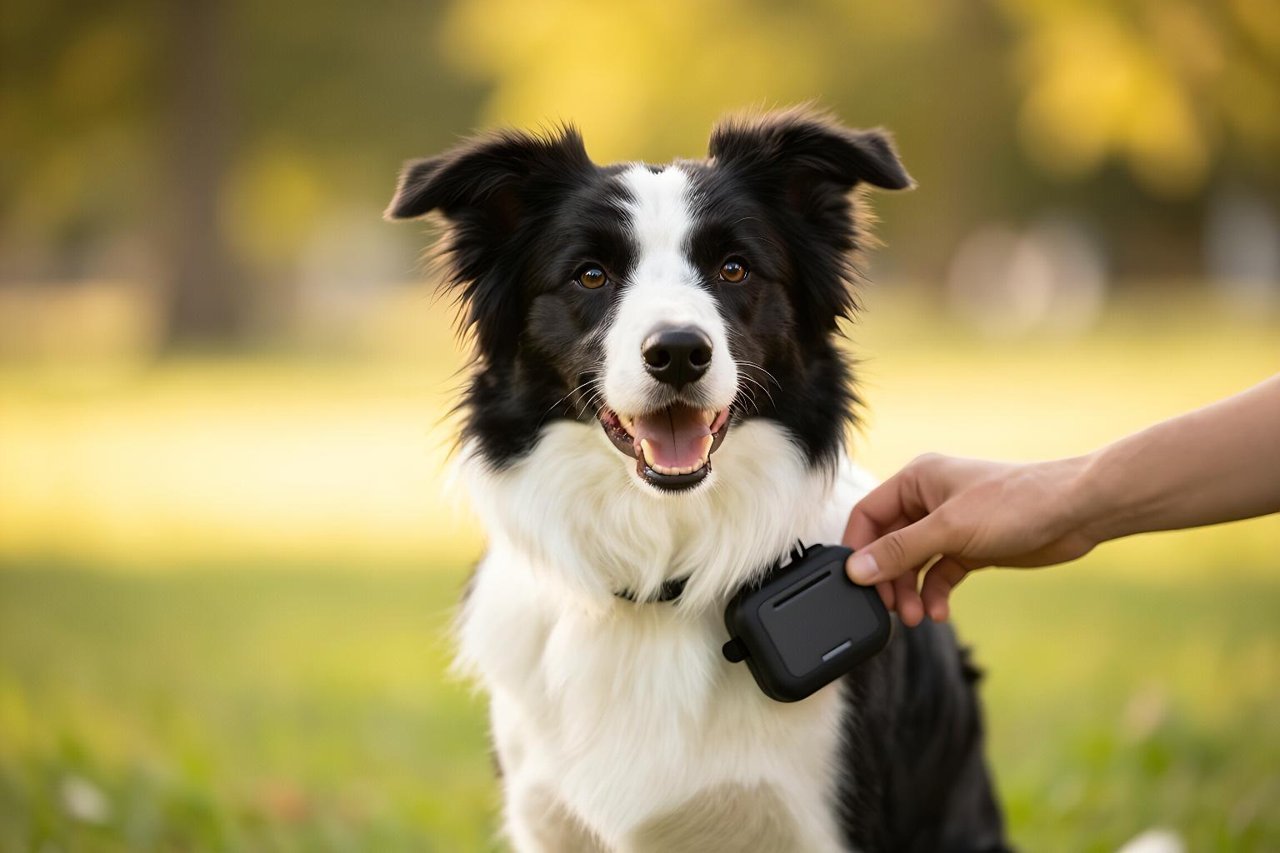
Some dogs ignore a tracker as if it’s invisible. Others act like you’ve strapped a bag of frogs to their neck. Introduce it gradually. Let your dog sniff the tracker while it’s still in the packaging, then clip it on the collar for a few minutes during play indoors. Reward calm behaviour. Repeat over several days before the first walk with it fully attached.
If your dog is extra sensitive, attach the tracker to the side of the collar rather than underneath the chin. And check the attachment clips regularly. The little rubber tabs that hold some trackers onto a collar loosen easily in thick bushes. A tracker that falls off is no better than no tracker at all. For general gear sensitivity, the training tips here work just as well for getting used to a collar.
Setting up your dog’s tracker for daily life
After the tracker is charged and your dog is comfortable, take it for a test run. Walk down the street, then around the block, watching the app’s map update. If the position lags badly, that tracker will frustrate you in an emergency.
Set up a safe zone on the first day. Give it a radius that covers your garden and a little extra, then test what happens when your dog crosses it. And don’t treat the tracker as the only answer. Keep a spare collar with a name tag, make sure your microchip details are current, and have a printed map of your local area in the car. A tracker for your dog is a brilliant tool, but it works best when it’s part of a simple plan, not a single point of failure.


