
Table of Contents
Aloe vera is the most forgiving ingredient in my skincare cabinet. It calms a sunburn, cools a breakout, and adds a layer of lightweight hydration without making my oily skin feel sticky. But I wasted a lot of time using it wrong. I bought fragrance-filled gels. I applied it over heavy creams. I left a cut leaf in the fridge and watched it turn brown.
Here’s the fix. This is a step-by-step guide to making aloe vera actually work for your skin. If you’d rather start with the science, my earlier post on aloe vera for skin covers what it does under a microscope. For now, we’re using it.
Before You Start: Pick the Right Aloe
You have two options: a fresh leaf from the plant or a bottled gel. Both work, but you need to know what to look for.
Fresh Leaf
Choose a thick, plump leaf. The gel inside will be firm and slippery. If the leaf feels thin or soft, it may be too old. Cut it close to the stem, because the highest concentration of gel sits near the base.

Store-Bought Gel
Flip the bottle over and read the ingredients. The first ingredient should be aloe vera leaf juice or aloe vera leaf water. If you see water or alcohol before that, skip it. Avoid gels with added dyes or fragrances; they can irritate your skin. Look for a colorless, thick gel.
Step 1: Patch Test Before Anything
Your skin might be fine with aloe. Or it might react. So do a small patch test. Apply a dime-sized amount to the inside of your wrist. Wait 24 hours. No redness or itching? You’re clear to proceed. If you feel any burning, wash it off and skip this guide.
Step 2: Extract and Store the Gel Properly
How to Filet a Fresh Leaf
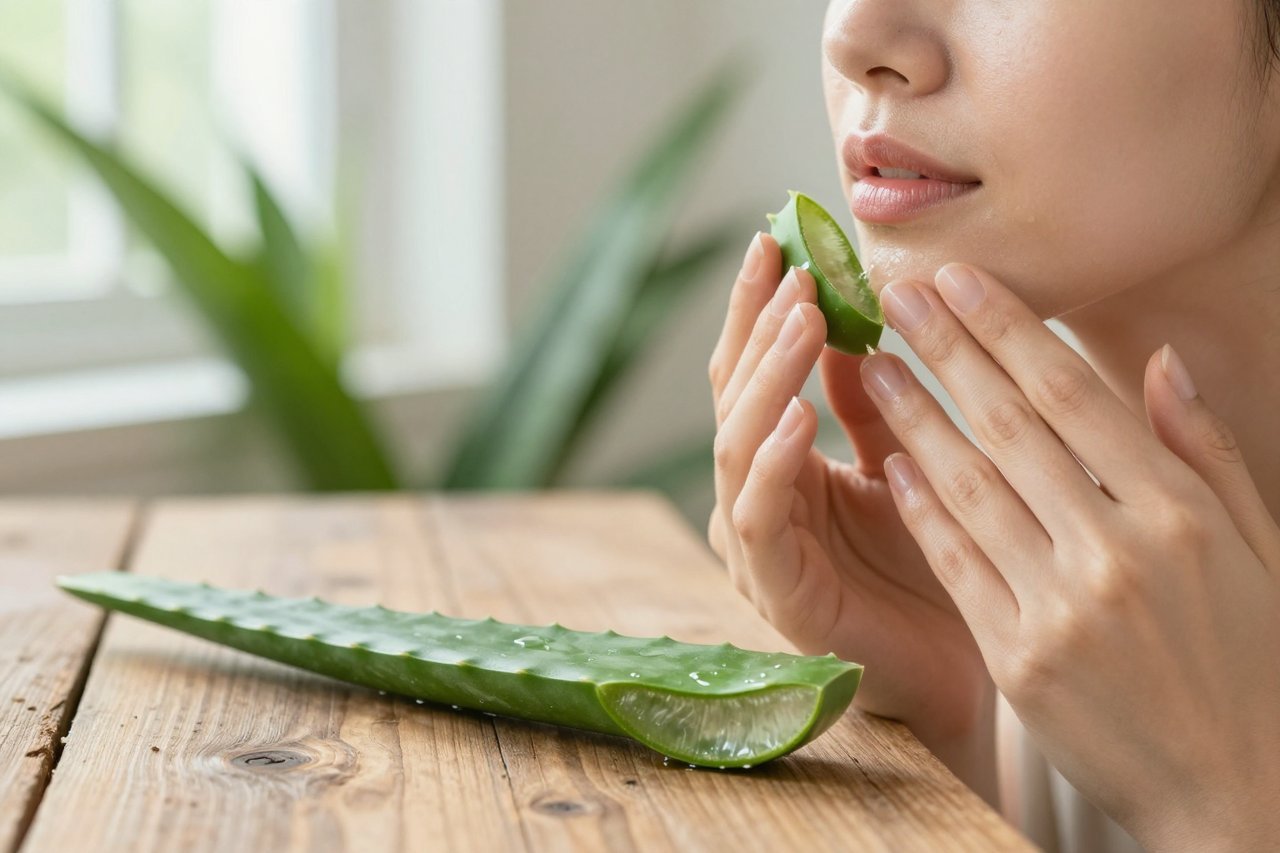
Cut off a 3-inch section of the leaf. Stand it upright in a cup for 10 minutes. A yellow sap called latex will drip out. That latex is a laxative and can irritate your skin, so you want to get rid of it. Rinse the leaf, then slice off the spiky edges. Lay it flat on a cutting board. Run a sharp knife just under the green rind and lift the gel out. You’ll have a clear piece of aloe. Rinse it one more time. If you see any yellow latex still clinging to the gel, slice it off. That layer is bitter and can cause contact dermatitis.
How to Store It
Fresh aloe gel in an airtight container keeps in the fridge for about a week. To make it last longer, freeze the gel in an ice cube tray. One cube is about one tablespoon. Pop out a cube as needed and let it thaw in a clean dish.
Step 3: Apply It the Right Way (Morning vs. Night)
Morning: A Hydrating Layer
After cleansing and before you apply anything else, smooth a thin layer of aloe gel onto damp skin. It acts like a hydrating serum. Wait two minutes for it to dry, then follow with your regular moisturizer. If your skin is dry, this guide to the best moisturizer for dry skin pairs perfectly with aloe. Then finish with sunscreen. Aloe will not protect you from UV rays. If your skin is sensitive, you’ll find a sunscreen that works in this sunscreen for sensitive skin guide.
Night: Soothing Mask
At night, apply a slightly thicker layer of aloe to clean skin. Leave it on for 10 minutes, then rinse with lukewarm water. Follow with your night cream. If you have breakouts, you can skip the rinse and let a very thin layer soak in; aloe is non-comedogenic, so it won’t clog pores. You can also use aloe in your DIY face mask recipes for an extra boost.
Step 4: Use It for Specific Skin Issues
Sunburn Relief
Keep a container of aloe gel in the fridge, not the bathroom cabinet. Cold gel is more soothing. Apply a thick layer to the sunburned area and leave it on for 30 minutes. Reapply every few hours. Skip any oil-based moisturizer on top, because that can trap heat.
Dry Patches
Mix one part honey with two parts aloe gel. The honey pulls moisture into the skin while the aloe locks it in. Apply to elbows, knees, or any flaky spot. Leave it for 15 minutes, then rinse. It’s a classic homemade skincare remedy that costs pennies.
Post-Shave Irritation
After a shower, apply a thin layer of aloe to the shaved area. It calms razor burn and helps the skin heal faster. Wait until any alcohol-free toner is dry, or the aloe will slide off.
Acne and Redness
If a pimple is red and swollen, dab a small amount of aloe directly on it. Aloe contains compounds that can temporarily reduce the redness. Leave it on overnight. It won’t dry out the pimple like benzoyl peroxide, but it can calm the surrounding skin.
Step 5: Mix Aloe With the Right Ingredients (And Avoid the Wrong Ones)
What Works Well
Here are my go-to aloe combos:
- Aloe + jojoba oil: one drop of jojoba oil per teaspoon of aloe for a lightweight moisturizer.
- Aloe + green tea: brew a strong cup, let it cool, and mix equal parts with aloe for a refreshing mist.
- Aloe + a few drops of essential oil: add one drop of lavender or tea tree oil to a teaspoon of aloe. Tea tree is strong, so start with one drop. Check this guide to essential oils for skin before you go further.
What to Avoid
Don’t mix aloe with acid exfoliants like AHA or BHA in the same layer. Aloe raises the pH and makes them less effective. Use your acid toner at night and aloe in the morning. Similarly, wait 20 minutes after applying retinol before layering aloe over it. Aloe can form a barrier that changes how much retinol gets absorbed.
A Simple Routine With Aloe Vera
To help you put all of this together, here’s your starter routine:
Morning: cleanser → thin layer of aloe → moisturizer → sunscreen.
Evening: cleanser → aloe mask (10 minutes) → rinse → retinol or night cream.
Twice a week: mix aloe with honey and leave it on your face for 15 minutes as a hydration mask.
Adjust the order depending on which product is thickest. If your sunscreen is a physical one, apply it last.


