
Table of Contents
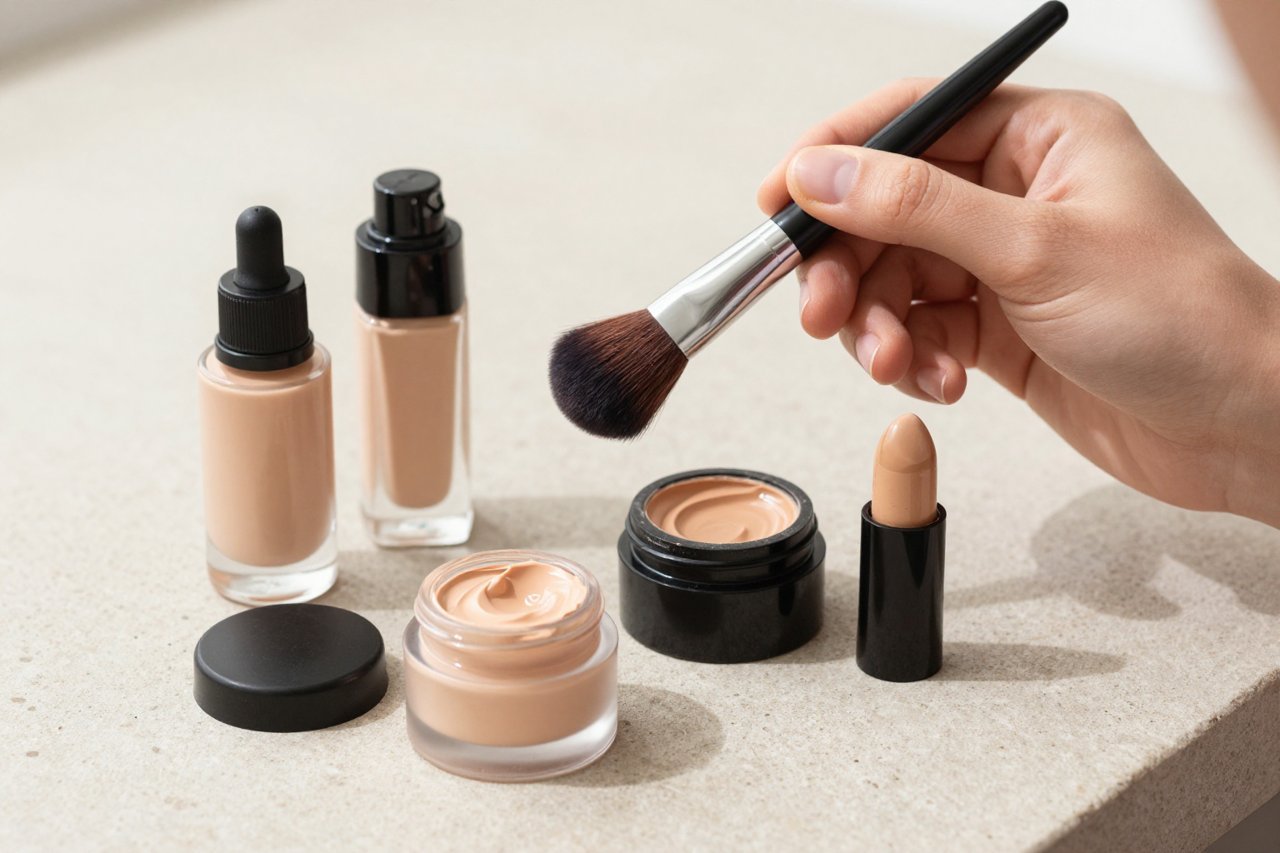
A tube of radiant liquid. A compact of pressed powder. A chubby stick that doubles as concealer. A dropper bottle promising skin-like finish. Every brand insists theirs is the best foundation – but they’re all winning in different categories.
The truth is simpler: the right base depends on what you’re willing to give up. Do you want speed? You trade blendability. Do you want coverage? You trade the weightless feel. Do you want a natural finish? You trade longevity.
Here’s how the main foundation formats actually stack up against each other, with no brand-loyalty bias and more than a few honest trade-offs.
The Five Basic Foundation Formats
Every launch from luxury and drugstore brands can be squeezed into one of these five families. Each family has a specific texture, application method, and end result. Once you know how they behave, you can stop chasing the hype and start picking based on your real needs.

Liquid Foundation: The Versatile Workhorse
Liquid is the default for a reason. It’s the most forgiving on dry patches, the easiest to layer from sheer to full, and the simplest to shade-match with more undertones available than any other format. A good liquid like Estée Lauder’s Double Wear shows why it’s a long-wear legend, but even a budget-friendly option will outperform most powders when it comes to blending into the skin.
Pros:
- Most flexible coverage control
- Works across all skin types if you pick the right formula
- Best for undereye and redness coverage
Cons:
- Messier and slower to apply
- Requires a sponge, brush, or fingers and a bit of technique
- More likely to settle into fine lines if not set
Powder Foundation: Speed Over Smoothness
Powder foundation is a godsend for oily skin and rushed mornings. One sweep with a fluffy brush gives a matte finish that rarely needs touch-ups. Mineral powders also function as sunscreen boosters, though most won’t give you even medium coverage unless you build them in sections.
The flip side: powders cling to dry flakes and can look chalky around the nose. They also don’t photograph well if you use flash photography, thanks to the silica and mica content that reflects light.
If your skin is both oily and prone to breakouts, skip the heavy liquids and look into foundations tested specifically for oily skin – many of which are powders that blur pores all day.
Stick Foundation: The On-the-Go Contradiction
Stick foundations occupy a strange place: they look heavy in the pan but can be sheered out like nothing else. Swipe, stipple, then blend with a damp sponge. The coverage is where you want it, not all over. They’re the best choice for travel and mid-day repairs because they don’t spill and fit in any bag.
However, sticks are less forgiving if you have texture. The creamy wax base can drag over dry patches, and some formulas sit on top of peach fuzz. The newest 2025 cream-to-powder sticks have gotten better, though. For a varied roundup of what’s currently hitting that sweet spot of coverage and convenience, on-the-go people already have a full guide to consult.
Cream Foundation: Maximum Coverage on a Schedule
Cream foundations come in pots, compacts, or pans. They’re what TV makeup artists reach for when someone needs to look flawless under 4K lighting. Creams contain more pigment than liquids, so they hide dark spots, melasma, and tattooed eyebrows with one pass.
The trade-off is time. Creams need dedicated blending — either with a dense brush that takes patience or a sponge that eats half the product. They also melt throughout the day on anyone with combination or oily skin, unlike today’s transfer-resistant liquids. Use them for photoshoots and long events where you have a mirror to check.
Serum and Tinted Moisturizer: Skin-Care Adjuncts
The last category isn’t really foundation, but it’s what many people wear most days. Serum foundations mix hyaluronic acid and niacinamide with pigments that mimic flushed, warm skin. They never look mask-like because they have less than half the pigment of a true foundation. That’s also precisely why they disappoint anyone expecting real blemishes covered.
These sheer bases work best on near-clear skin where you just want evening. If you need more than 20% coverage, treat them as a primer and pair with buildable concealer. In spring, when sweaters give way to bare necks, many people switch to exactly this formula — lightweight foundations that breathe with the weather are a separate breed worth knowing.
Coverage, Finish, and Wear Time: Pick Your Trade
Once you know the basic formats, the next question is what trade-off matters most to you. Here are the main axes to compare.
Sheer to Full: How Much Do You Hide?
Powders and tinted moisturizers land at sheer-to-light. Liquids and creams cover medium-to-full. Sticks cover medium but can be built higher.
Don’t just pick the highest coverage number – higher pigment means more visible skin texture. A full-coverage matte foundation on a forty-something woman with fine lines will age her by five years. A light layer of a formula that fits your skin’s actual needs will always look better than the “buildable” promise from a one-size-fits-all launch.
Dewy vs Matte: Where Does the Light Hit?
Finish is about light reflection. Dewy formulas bounce light away from wrinkles and dryness, giving a youthful glow. But they slide off oily T-zones by lunchtime. Matte formulas soak up oil and make pores less obvious, but flatten the face and exaggerate flakes.
A hybrid approach works for many people: apply the luminous first layer, then set the oily zones with powder. That’s more nuanced than any single product marketing claim you’ll see.
Application Time: What’s the Morning Cost?
Powder can be done in under a minute. Stick takes about two if you warm it on the back of a hand first. Liquid needs three to five plus setting. Cream needs five and no audience. If your mornings are chaos, do yourself a favour and match your starter to your actual schedule, not your aspirational one.
Skin Type: The Non-Negotiable Filter
Your skin’s oil production and hydration level should overrule every other preference. Oily skin copes best with powder or oil-free liquids; dry skin needs liquids and creams with glycerin or squalane; sensitive skin benefits from mineral powders or fragrance-free serum bases.
That sounds obvious, but check reviews and you’ll see people complaining about a “cakey” product when the real issue is they bought a mattifier for a dry winter face. If you want a system to narrow down your own match, the step-by-step method at finding your best foundation without guesswork breaks this down into a checklist you can use at any counter or drugstore aisle.
When Every Format Is Right – and Wrong
Let’s make this practical with four everyday scenarios.
Scenario 1: Monday morning commute. You leave in 20 minutes. Powder or tinted moisturiser. Don’t attempt a full cream base unless you enjoy hating yourself while the train doors close.
Scenario 2: Saturday afternoon outdoor wedding. You’ll be photographed, sweating lightly, and need to last six hours. A long-wear liquid with a mattifying primer wins. Skip the powder-only look because flashback and midday shine are real.
Scenario 3: Gym and errands. No one needs foundation to sweat. A sheer SPF with a little tint, or a stick you rub in with fingertips for imperfections.
Scenario 4: Zoom-heavy work day. Sticks and powders can look harsh under harsh conference-room lighting. A serum foundation with satin finish sits the most naturally on skin.
Tools Change the Game, Too
A sponge dampened just past dry gives the most skin-like finish for any liquid, and brushes are for speed and precision. Your fingers are unexpectedly good for thin serum formulas. Clean hands transfer less oil than you think.
Whichever formula you choose, always prep the skin at least a little. Foundation sitting on peeling skin will never look like the video online.
The best foundation for you is rarely the top-selling one. It’s the one whose compromise you can live with on a normal Tuesday.


