
Table of Contents
Ask ten people to describe the Mediterranean diet and you’ll get ten different answers. One swears it’s all about olive oil. Another thinks it’s pasta with a side of guilt. A third says it’s just vegetables and fish. Each of them is holding a piece of the picture, which is why the first week of a Mediterranean diet meal plan tends to feel oddly slippery. There’s no rulebook, no banned-foods list, and nobody selling a starter kit.
Here’s the version I’d give a friend who has never tried it. No history lecture, no calorie spreadsheets. Just the fundamentals, in the order they actually matter.
It’s a Pattern, Not a Menu
The Mediterranean diet describes how people in Crete, southern Italy, and coastal Greece ate in the early 1960s, back when researchers noticed they were having far fewer heart attacks than Americans of the same age despite eating plenty of bread and fat.
Nobody invented it. That matters, because it means the framework bends to fit your life rather than the other way round. If you hate sardines, you don’t eat sardines. If you’re vegetarian, the beans-and-grains backbone carries the whole thing. What you’re copying is the shape of the eating, not a specific shopping list.

The Food Groups, Ranked by Frequency
The easiest way to remember the Mediterranean pattern is to sort foods by how often they show up. Three tiers do the job.
Every day
- Vegetables: aim for two or three different ones at both lunch and dinner
- Fruit: two to three pieces, whole rather than juiced
- Beans, lentils, and chickpeas: a cup or so most days, in soups, salads, or dips
- Whole grains: barley, oats, brown rice, whole-wheat bread and pasta
- Olive oil as your main cooking and dressing fat
- Nuts and seeds: a small handful
- Herbs, garlic, onion, lemon, and vinegar, which is where most of the flavour comes from
- Yogurt and a little cheese
A few times a week
Fish and seafood land here, ideally twice a week, with oily fish like sardines, mackerel, or salmon once. Poultry, eggs, and potatoes fit comfortably too. Red meat appears maybe once a week, in a small portion rather than as the centrepiece.
Now and then
Sweets, pastries, processed meats, refined white bread, and sugary drinks. Butter and cream step aside for olive oil. None of this is forbidden, but none of it is a daily habit either.
The Single Habit That Does Most of the Work
If you only change one thing, change the fat you cook with. Olive oil, nuts, and fish bring monounsaturated and omega-3 fats. Butter, cream, and processed meats bring saturated fat. Swapping one for the other is the move most strongly linked to the heart benefits in the research.
The catch is that pouring good oil onto a poor diet doesn’t rescue it. Refined carbs, late-night grazing, and skipped meals can cancel out genuinely good food, which is the pattern behind these diet mistakes that quietly cancel out the foods that actually work. Quality matters. So does what surrounds it.
What a Day Actually Looks Like
Beginner meal plans fail when they read like restaurant menus. A real Tuesday looks closer to this:
Breakfast: Greek yogurt with walnuts, a spoon of honey, and whatever berries are cheap. Or whole-grain toast rubbed with tomato, a drizzle of olive oil, and a pinch of salt.
Lunch: A large bowl of chickpeas, cucumber, tomato, red onion, feta, parsley, olive oil, and lemon, with half a whole-wheat pita. About ten minutes to assemble if the chickpeas come from a can.
Afternoon: A handful of almonds and an orange.
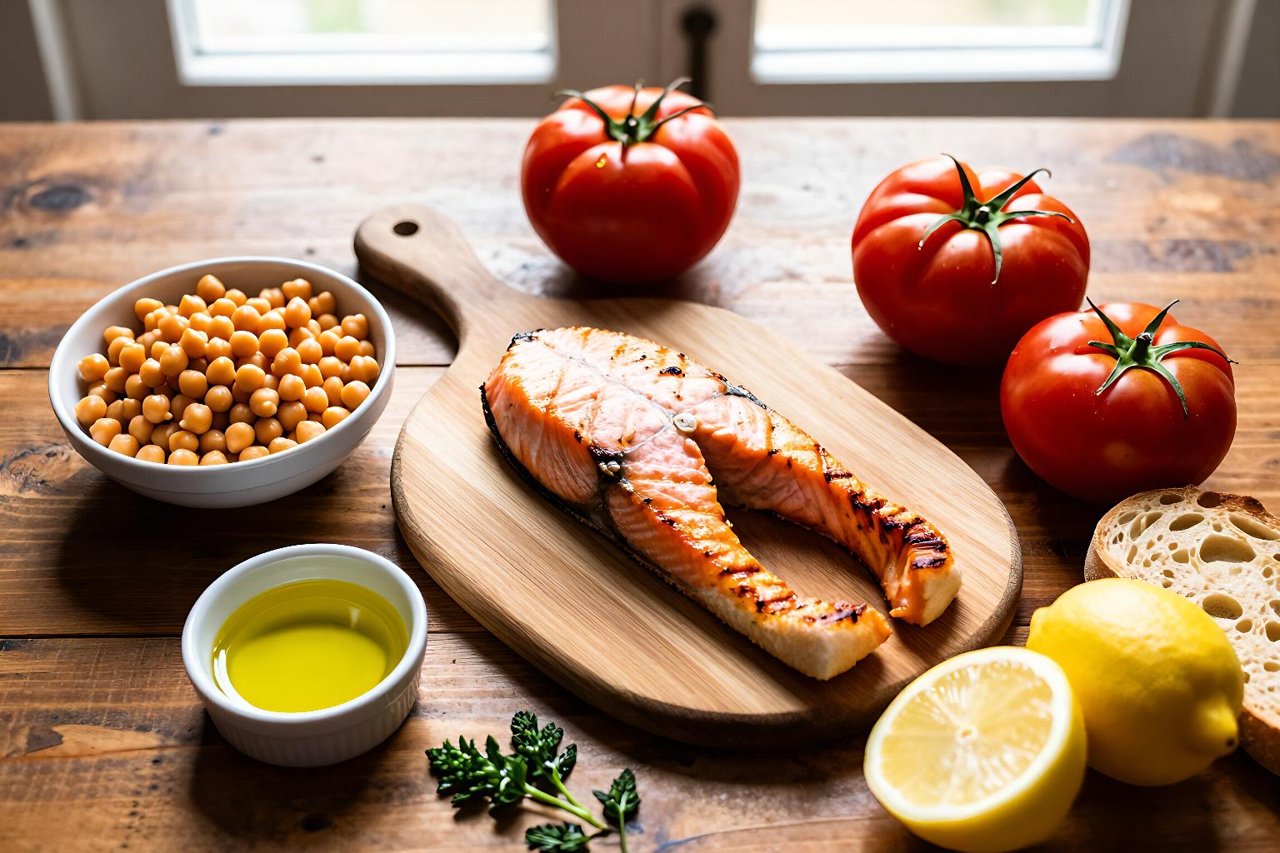
Dinner: Baked salmon, roasted peppers and zucchini, and a scoop of barley or orzo. Greens on the side, dressed with oil and vinegar.
After dinner: Fruit, or a square of dark chocolate if you want one.
Notice the volume. This is not a small-food plan. People are often surprised by how much they’re eating in week one, and that’s the point. For a whole week laid out meal by meal, there’s a realistic 7-day Mediterranean meal plan guide worth cooking from.
Portions Without Weighing Anything
Put the kitchen scale away for now. Use the plate instead: half vegetables, a quarter whole grains, a quarter protein. Add a thumb of olive oil, a fist of fruit, and a cupped hand of nuts. Fish portions should be roughly the size of your palm.
That’s about it. Precision is a second-month problem, once the pattern is automatic and you actually want to fine-tune it.
Where Beginners Slip Up
Most early stumbles fall into a handful of predictable shapes. Turning the diet into a low-fat regime and ditching olive oil. Going vaguely Mediterranean by sprinkling feta over an otherwise unchanged diet. Treating the whole thing as a 30-day weight-loss sprint rather than a way of eating you keep for years. Or leaning on restaurants and assuming their versions are the real thing, when they usually arrive with triple the oil and a basket of white bread. A longer list of these traps lives in this breakdown of why a Mediterranean meal plan stops working, and it’s worth reading before you start rather than after you stall.
Stock a Kitchen That Makes It Easy
Adherence is a logistics problem more than a willpower problem. If the right food is within arm’s reach, you’ll eat it.
Buy these once and you’ll always be twenty minutes from dinner: good olive oil, canned chickpeas and white beans, canned tomatoes, tuna packed in olive oil, whole-wheat pasta, barley or farro, frozen spinach and peas, olives, capers, lemons, garlic, onions, tinned anchovies, tahini, walnuts, and dried oregano.
Then shop for fresh produce twice a week instead of once. Vegetables bought on Sunday are sad by Thursday, and sad vegetables get ordered around.
Your First Week Should Feel Almost Boring
Pick three changes and leave everything else alone. Cook with olive oil instead of butter. Add a vegetable to lunch. Eat fish twice. That’s week one.
Week two, swap the afternoon biscuits for nuts and fruit. Week three, put beans on the menu three times. By week six you’ll have a rhythm, and the rhythm is the part that lasts. If you’d rather map the whole thing out yourself from the start, this step-by-step walkthrough of how to build your own Mediterranean meal plan covers the planning side properly. And if you’re torn between a rigid weekly template and something looser, these competing meal plan styles compared side by side will help you pick one instead of dithering.
How to Tell It’s Working
Bloodwork takes months to shift, so don’t judge by that alone. In the meantime, watch for steadier energy through the afternoon, less bloating after meals, and the simple fact that you’re not white-knuckling your way to dinner. If you can eat this way on a Tuesday in November without resenting it, the plan is working. If you’re miserable, adjust the meals rather than abandoning the pattern, because the pattern is the part with decades of evidence behind it.


