
Table of Contents
Put a 200-calorie glazed doughnut next to a 200-calorie bowl of Greek yoghurt with blueberries and a spoon of pumpkin seeds. Identical energy. Nothing else about them is remotely the same. One hands you protein, calcium, fibre, vitamin C, magnesium and live cultures; the other hands you sugar, refined flour and a short burst of pleasure.
That gap — what you actually get per calorie — is the entire idea behind nutrient-dense foods. It also explains why two people eating the same number of calories can feel, look and function completely differently.
What “Nutrient-Dense” Actually Means
Nutrient density is a ratio. On one side: the vitamins, minerals, protein, fibre and beneficial fats a food supplies. On the other: the calories it costs you. Foods that deliver a lot for very little are nutrient-dense. Foods that deliver calories with almost nothing attached are the opposite.
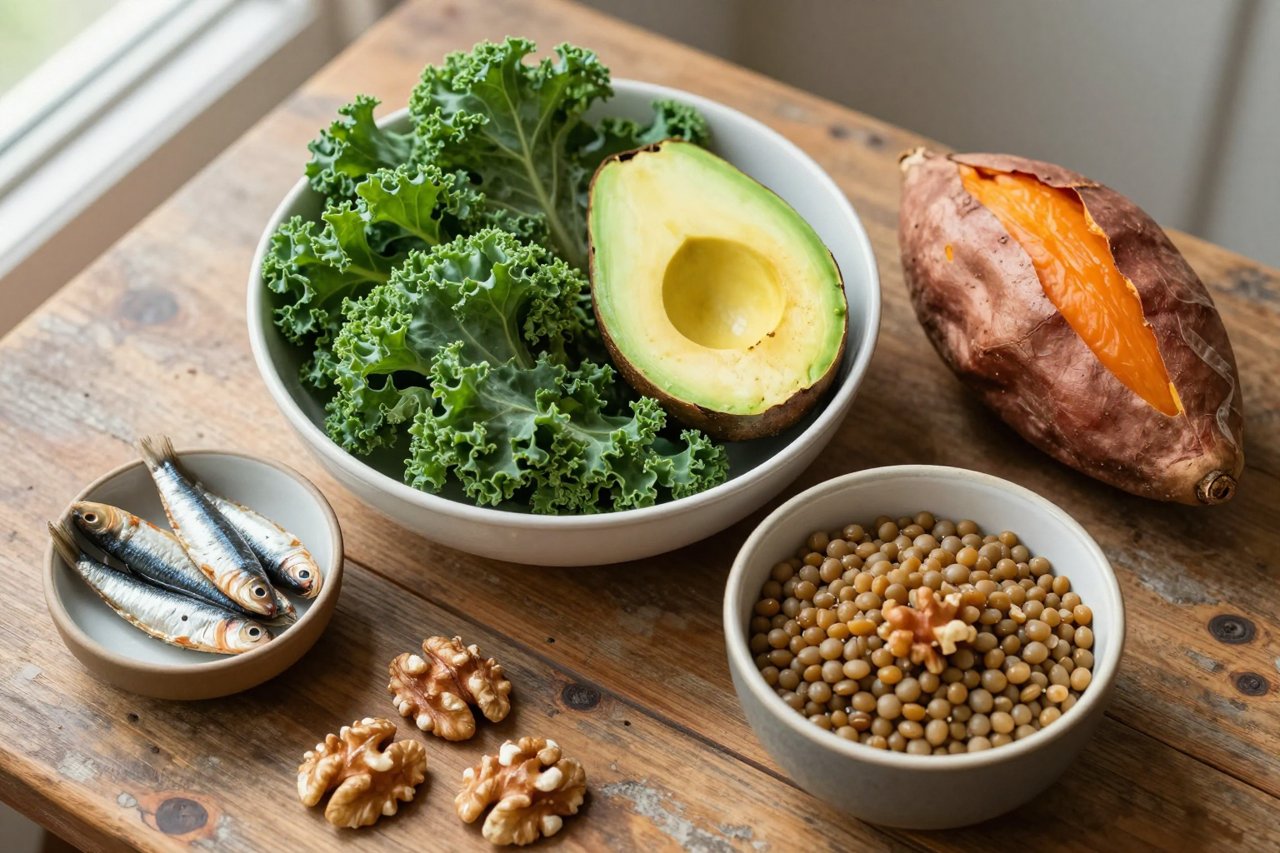
The comparison gets vivid fast. One hundred grams of raw curly kale costs about 33 calories and returns around 120 mg of vitamin C — more than an orange — along with vitamin K, folate, calcium and a decent hit of fibre. One hundred grams of a supermarket croissant costs about 400 calories and returns refined starch, some butter and very little else.

How researchers keep score
Nutrition scientists have built formal ranking systems, the Nutrient Rich Foods Index being the best known, which score foods per 100 calories. They reward protein, fibre, potassium, iron, vitamin D and similar nutrients, and penalise added sugar and saturated fat. You don’t need the spreadsheet. The rankings simply confirm what traditional cuisines worked out generations ago: whole vegetables, eggs, fish, dairy and legumes sit near the top; fizzy drinks, sweets and refined baked goods sit at the bottom.
Why Nutrient Density Matters More Than the Calorie Count Alone
Calories tell you how much fuel is in a food. They tell you nothing about whether your body can run properly on it. Three practical consequences follow.
You stay full on less. Protein and fibre both slow digestion and nudge satiety hormones into action. A 300-calorie plate of lentils and roasted vegetables keeps hunger away for hours; a 300-calorie slice of banana bread often leaves you hunting the cupboard forty minutes later. That’s the mechanism behind most sensible weight loss foods that keep you full without punishing portions — volume and fibre do the work, not deprivation.
Your micronutrient budget is real. You need roughly 4,700 mg of potassium, 18 mg of iron, 1,000 mg of calcium and 15 mg of zinc every single day. Fill 1,800 calories with crisps, white bread and cola and you run a genuine deficit even if your weight never shifts. That deficit shows up as afternoon fatigue, slow workout recovery, brittle nails, low mood and catching every cold that circulates the office.
Food quality shapes long-term risk. Eating patterns built around minimally processed, nutrient-rich foods are consistently linked with lower rates of heart disease, type 2 diabetes and several cancers. That’s not a single nutrient working magic. It’s the cumulative effect of thousands of meals built on better raw material.
The Food Groups That Deliver Most
Dark leafy greens and cruciferous vegetables
Spinach, kale, chard, broccoli, watercress, cabbage. One hundred grams of raw spinach costs 23 calories and returns 2.7 mg of iron, 194 micrograms of folate and well over three times your daily vitamin K target. Greens are also the cheapest nutrient density in the shop, especially the frozen bags.
Eggs, fish and other animal foods
A single large egg is 72 calories with 6 g of protein, 147 mg of choline and a useful dose of B12 and selenium. Tinned sardines are close to unbeatable: 100 g gives you 25 g of protein, 382 mg of calcium (from the softened bones) and around 370% of your daily B12 for about 200 calories. Liver is the extreme end of the scale — a 100 g portion covers weeks’ worth of vitamin A, iron and B12.
Legumes
One cup of cooked lentils delivers roughly 230 calories, 18 g of protein, 15 g of fibre — half a day’s target — plus 6.6 mg of iron and 358 micrograms of folate. Black beans, chickpeas, butter beans and edamame all sit in the same league. Few foods cover that many bases for that little money.
Nuts and seeds
A 30 g handful of almonds is about 165 calories and brings 6 g of protein, 3.5 g of fibre, 76 mg of magnesium and most of your daily vitamin E. Pumpkin seeds carry around 8 mg of zinc per 100 g. Keep a jar on the counter and sprinkle them on everything.
Berries and brightly coloured produce
Colour is a surprisingly decent shortcut to nutrient density. A red bell pepper holds about two and a half times the vitamin C of an orange. A medium baked sweet potato with the skin on covers more than 100% of your vitamin A needs as beta-carotene and carries more potassium than a banana. Blueberries, tomatoes and beetroot earn their place for the same reason.
What Nutrient-Dense Foods Are Not
Two traps worth naming. The first is fortified junk: a cereal or energy drink with a dozen vitamins sprayed into it is not nutrient-dense, it’s a poor food with a supplement glued on. Whole foods bring their nutrients packaged with fibre, healthy fats and hundreds of compounds nobody has isolated yet.
The second trap is assuming nutrient-dense means low-calorie. Avocados run about 160 calories per 100 g and olive oil is almost pure fat, yet both are nutrient-dense. Density is a ratio, not a promise of thinness. It’s also the reason the marketing around miracle ingredients gets so overheated — what superfoods actually are, and what they aren’t is a useful reality check before you spend £9 on a bag of powdered berries.
Five Swaps That Take Under a Minute
- White toast for wholemeal or rye, and add a boiled egg — roughly 6 g of extra protein and a third of your daily fibre before you’ve left the kitchen.
- Fruit juice for the whole fruit. One orange gives about 3 g of fibre; the juice gives essentially none.
- Salted crisps for roasted chickpeas or a handful of nuts — same crunch, added protein and magnesium instead of refined oil.
- White rice for half rice, half lentils. Same pot, same effort, roughly triple the fibre and iron.
- A protein bar for Greek yoghurt with seeds — fewer ingredients, more calcium, no sugar alcohols.
If you want a starting point rather than a list of swaps, these everyday foods that support overall wellness cover a lot of ground without requiring a new shopping habit.
Where Nutrient Density Gets Complicated
Plant-heavy eating is nutrient-dense by default, but a few nutrients need deliberate attention. Vitamin B12 occurs naturally almost only in animal foods, so anyone eating largely plant-based needs fortified products or a supplement — energy crashes and tingling fingers are the classic warning signs, and the B12 food sources worth building into your week are worth knowing well.
Iron from plants is absorbed far less efficiently than iron from meat, so pair lentils and spinach with something rich in vitamin C — a squeeze of lemon, half a pepper, a handful of berries. Tannins in tea and coffee block absorption, so leave an hour between your brew and your meal. Calcium from spinach is largely locked up by oxalates; kale, broccoli and tinned fish with bones are better sources.
Building a Plate You’ll Actually Repeat
The practical version is simple enough to run without thinking: something colourful, something with protein, something with fibre, every time you eat. Breakfast of oats, Greek yoghurt and frozen berries. Lunch of lentil soup with a slice of rye. Dinner of salmon, roast sweet potato and broccoli. Nothing exotic, nothing expensive, and each plate quietly clears a chunk of your micronutrient requirements.
That pattern also happens to line up with the strongest evidence on cardiovascular health — oily fish twice a week, olive oil instead of butter, nuts instead of biscuits. If that’s your priority, this guide to eating for a healthier heart takes the same nutrient-density logic and applies it specifically.
If you do one thing this week, put a bag of frozen spinach and a tin of sardines in your trolley. Both cost very little, both keep for months, and both will out-nutrient almost everything else in the cupboard.


