
Table of Contents
Buying a car abroad and shipping it home sounds simple until a customs officer asks for your HS-7. The good news is that importing a vehicle into the United States is a well-worn process with published rules and thousands of people doing it every month. The less good news is that nearly every rule has an exception, and every exception comes with paperwork.
What follows is the real sequence: whether the car is even allowed in, which federal agencies have to sign off, what the landed cost looks like, how it travels, and what it takes to walk out of a DMV with plates. Knowing the order of operations ahead of time is the difference between a two-month project and a year-long headache.
Answer the Age Question Before You Send Any Money
The single most important fact about any vehicle you plan to bring in is its build date. Under U.S. law, a car that is 25 years old or older, counted from the month it was manufactured, is exempt from the Federal Motor Vehicle Safety Standards. That one provision explains why 1990s Japanese sports cars and old Land Rover Defenders flow through American ports while a three-year-old European sedan usually cannot.
A 2000 Nissan Skyline GT-R clears the bar. A 2020 model does not, at least not without a specialist spending serious money to make it comply. If you are shopping near that cutoff, check the month on the door-jamb plate rather than the model year on the registration. A car built in September 2001 becomes eligible in September 2026, not January.

With American sticker prices having climbed for a long list of reasons, the arithmetic on a foreign purchase can look genuinely attractive. Just run it against the full landed cost before you commit, because the purchase price is usually the smallest number in the deal.
The Two Federal Agencies You Have to Satisfy
Customs and Border Protection collects the money and checks the forms, but the actual rules come from two other agencies. Get either one wrong and the car sits in a bonded warehouse at your expense.
NHTSA: Safety Compliance and the HS-7
Every vehicle entering the country needs a CBP Form HS-7 declaration stating which exemption or compliance claim applies. If the car was built for the U.S. market and carries a certification label from the manufacturer, this is straightforward. If it is 25 or older, you tick the age exemption. If it is newer and nonconforming, the only permanent path is through a Registered Importer, who posts a DOT bond equal to 1.5 times the vehicle’s value and keeps the car until the work is finished and documented.
Vehicles that cannot be brought into compliance can still enter temporarily, generally for up to a year, for displays, racing, or research. They have to leave or be exported when that window closes. Plenty of people have learned this the hard way after buying something that turned out to be permanently inadmissible.
EPA: Emissions and Form 3520-1
The Environmental Protection Agency runs a parallel process. Cars 21 years or older are exempt from federal emissions requirements. Cars built to U.S. or Canadian specifications and covered by a manufacturer’s conformity letter are generally accepted. Anything else needs an Independent Commercial Importer to modify and certify it, which is expensive and only works for certain engine families.
Both forms, the HS-7 and the EPA 3520-1, are submitted with your customs entry. Missing or misfiled paperwork is the most common reason a car gets held at the port.
What the Car Actually Costs to Land
Duty on a passenger car is 2.5% of the declared value. Pickups, cargo vans, and chassis cabs are a different story: they pay 25%, thanks to a levy that started in 1964 as retaliation for European tariffs on American chicken. That 25% truck tariff is why a used Ford Ranger from Canada can cost more to import than a sedan worth twice as much.
Vehicles that qualify under USMCA and ship from Canada or Mexico can enter duty-free, but you need a valid USMCA certification from the seller. Most private sellers have never heard of one.
Beyond duty, budget for:
- Merchandise Processing Fee: a small percentage of value with an annual cap, usually a few hundred dollars.
- Gas guzzler tax: applies to cars below roughly 22.5 mpg combined, paid at entry and not refundable later.
- Shipping: typically $1,200 to $2,500 for roll-on/roll-off from Europe or Asia, and $2,500 to $4,500 for a container.
- Customs broker: $150 to $400 per entry, and worth every cent.
- State sales tax and registration: charged when you title the car, at your home state’s rates.
Shipping, Brokers, and the 24-Hour Filing
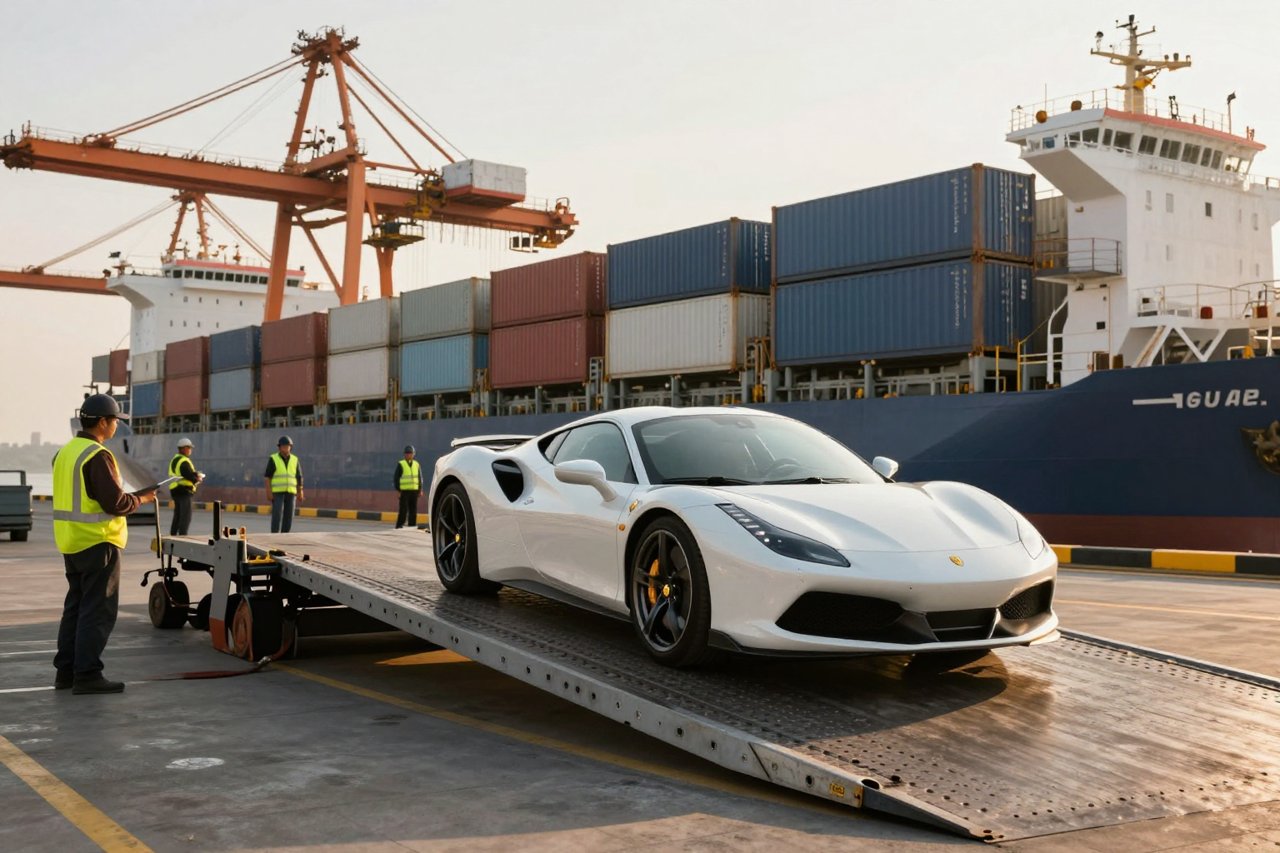
Roll-on/roll-off is the cheapest option and the least gentle. Your car is driven onto a vessel, parked tightly, and driven off at a port like Baltimore, Newark, Savannah, or Long Beach. Container shipping costs more but lets you pack parts and spares around the vehicle, which matters if you are sourcing from one of the fastest-growing automotive markets where parts are cheap and shipping is the expensive part.
If the car arrives by sea, an Importer Security Filing must be lodged 24 hours before the vessel loads, not before it arrives. That filing is the importer’s responsibility, though virtually everyone hands it to their broker. Buy marine insurance. Roughly one in a hundred vehicles picks up damage in transit, and the carrier’s liability is capped at an amount that will make you laugh.
Registered Importers and the Cars They Can Save
For nonconforming vehicles under 25 years old, a Registered Importer is the only route in. These businesses are bonded with NHTSA, must modify the car to meet the relevant standards, and affix a certification label when they are done. The work is real: airbags, lighting, bumpers, tire pressure monitoring, and sometimes structural changes. Even a modest fix list means chasing components through a supply chain built around 30,000 parts, which is why the bill frequently runs into five figures.
Be careful with anyone who offers to register a nonconforming car in a convenient state and sort out the federal side later. Title washing is illegal, and the problem follows the vehicle forever.
Canadian Vehicles Are the Easy Lane
Most Canadian-market cars share their platforms and emissions equipment with U.S. models, which makes them the least painful imports. You still need a manufacturer’s conformity letter, usually free or around $100 from a dealer, plus the HS-7 and EPA declarations.
Check a few details before you buy. Some Canadian vehicles have metric-only speedometers, which will fail inspection in states that require a miles-per-hour scale. Daytime running lights, which Canada mandated years before the U.S., are fine. Rust from road salt is the other thing to inspect closely.
Turning a Stamped Form Into a License Plate
Once the car clears, you need the CBP Form 7501 with the release stamp, the HS-7, the EPA form, the foreign title or registration with a certified translation if it is not in English, and proof of insurance. Most states require a physical VIN inspection, sometimes at a DMV office and sometimes by a sheriff or licensed inspector.
If the seller has no title, which is common in countries where vehicles are tracked by registration rather than ownership documents, ask the DMV about a bonded title before the car arrives. It takes weeks and costs a few hundred dollars, and it is far easier to arrange with the vehicle already in your driveway.
Where First-Time Importers Lose Money
The mistakes are remarkably consistent across forums, auction groups, and broker desks.
- Buying a car a few months short of 25 years and assuming the model year counts.
- Trusting a foreign inspection report as proof of U.S. compliance. They are unrelated things.
- Skipping the Importer Security Filing and paying storage while the vessel waits.
- Hiring the cheapest shipper rather than a bonded one with a U.S. agent.
- Ignoring California, which has its own emissions rules and rejects plenty of otherwise legal imports.
- Forgetting that a car sold as “off-road use only” cannot simply be titled later.
None of these are exotic failures. They happen because the buyer focused on the car and treated the paperwork as an afterthought. Get the HS-7 box right the first time, keep every stamped form in one folder, and confirm your state’s rules before the ship sails. Do that, and the car you bought in another country will end up registered in your name with a lot less drama than the internet would have you believe.


