
Table of Contents
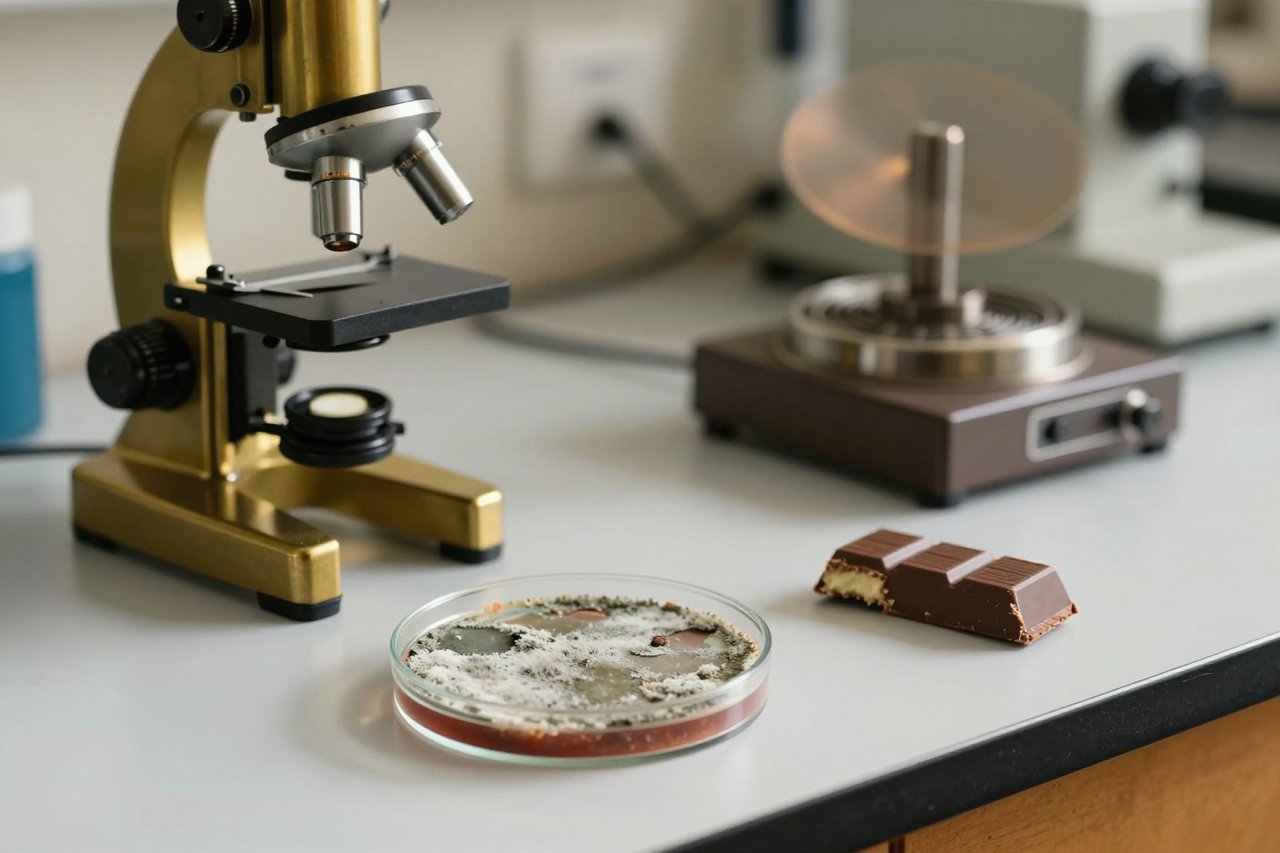
Alexander Fleming came back to his London lab in September 1928 to find a petri dish growing a fuzzy blue-green mould. Around the mould, the staphylococci bacteria had vanished. He was not hunting for a wonder drug. He was sorting old plates. Yet that contaminated dish became penicillin, the first widely used antibiotic and the most famous example of a discovery that arrived sideways.
The top 7 inventions created completely by accident follow the same strange pattern. A researcher notices a melted snack, a failed adhesive, or a sweet taste on a finger. Instead of ignoring it, they ask a better question. Here are seven inventions that were never meant to exist, plus the odd moments that brought them into the world.
- A mistake is spotted before it is cleaned up.
- The first version fails at its intended job.
- Someone else imagines a completely different use.
1. Penicillin: The Mould That Changed Medicine
The contaminated plate
Fleming was studying staphylococci, not antibiotics. The mould likely drifted in from another lab or through a window. When he saw a clear halo around it, he could have thrown the plate away. Instead he grew the mould, tested its bacteria-killing effect, and published his findings in 1929.
Penicillin stayed a laboratory curiosity for a decade. Howard Florey and Ernst Chain at Oxford purified it in 1940 and showed it could treat infections. By D-Day in 1944, Allied troops had enough penicillin for battlefield wounds. Fleming, Florey, and Chain shared the Nobel Prize in 1945. The story still shapes how scientists watch for surprises; the same pattern runs through many medical discoveries and inventions today.

2. The Microwave Oven: A Melted Chocolate Bar
From radar to leftovers
Percy Spencer was testing magnetrons for Raytheon in 1945. These vacuum tubes powered radar sets, and Spencer noticed a chocolate bar in his pocket had turned soft. He tried popcorn kernels. They popped. He tried an egg, which exploded in a colleague’s face, a detail that explains why early microwave instructions were cautious.
Raytheon patented the process and launched the Radarange in 1947. It stood about 1.8 metres tall, weighed 340 kilograms, and cost roughly $5,000. Restaurants and train galleys bought a few. The countertop microwave did not reach ordinary kitchens until the late 1960s, when Amana sold a $495 model. None of it would have happened if Spencer had eaten his chocolate faster.
3. Post-it Notes: The Glue That Failed
In 1968, 3M chemist Spencer Silver tried to make a strong adhesive. He got the opposite: tiny acrylic spheres that stuck lightly and peeled away cleanly. The glue was useless for aviation and construction. It sat in company seminars for years.
Then colleague Art Fry used some on a bookmark so it would stay in his hymnal without tearing the page. He passed samples around. 3M test-marketed the product in 1977 and launched Post-it Notes nationally in 1980. The yellow colour came partly because the lab had scrap yellow paper on hand. A failed adhesive became a $1 billion product line, one sticky square at a time.
4. Teflon: The Gas That Left a Slippery Powder
Roy Plunkett at DuPont was working with tetrafluoroethylene gas in 1938. A cylinder failed to release gas. He cut it open and found a white, waxy powder inside. The gas had polymerised into polytetrafluoroethylene, or PTFE.
The substance resisted heat, acids, and solvents. DuPont used it in gaskets and seals for the Manhattan Project, where uranium hexafluoride would attack ordinary materials. Cookware came later: a French engineer, Marc Grégoire, adapted the coating for frying pans in the 1950s after his wife asked him to try it at home. The non-stick pan is now a kitchen staple, born from a pressurised can that refused to cooperate.
5. Saccharin: The Sweet Taste on a Chemist’s Hand
Constantin Fahlberg was working with coal tar derivatives at Johns Hopkins University in 1879. He forgot to wash his hands before dinner, or at least failed to wash them thoroughly. The bread tasted sweet. He traced the taste to a compound he had made, benzoic sulfimide.
Fahlberg patented saccharin in 1880 and started production with a partner. It became popular with diabetics and dieters long before food regulators had a framework for artificial sweeteners. President Theodore Roosevelt reportedly kept a supply at the White House. The discovery came from bad lab hygiene, not a planned search for sugar substitutes.
6. X-rays: A Glowing Screen in a Dark Room
Wilhelm Röntgen was experimenting with cathode ray tubes in 1895. He covered the tube in black cardboard, yet a fluorescent screen across the room still glowed. Röntgen realised some invisible radiation was passing through the cardboard.
He spent weeks testing the rays. When he placed his wife Anna Bertha’s hand in the beam, the image showed her bones and wedding ring. She reportedly said she had seen her own death. Röntgen called them X-rays because X stood for the unknown. He won the first Nobel Prize in Physics in 1901 and gave away his patent rights, which helped hospitals adopt the technology quickly. Modern imaging grew from that moment, and it remains one of the most productive areas of amazing medical discoveries and inventions.
7. The Slinky: A Spring That Walked
Richard James was a naval engineer in 1943, trying to build springs that would stabilise instruments on ships. One spring fell from a shelf, landed on a stack of books, and kept tumbling end over end. James took it home. His wife Betty suggested a name from a dictionary: slinky, meaning sleek and graceful.
The first demo at Gimbels department store in Philadelphia in 1945 sold 400 units in 90 minutes. The Slinky has since sold hundreds of millions, with no batteries, screens, or moving parts beyond the spring itself. James was not trying to invent a toy. He just watched a dropped spring walk across a desk and saw something worth sharing.


