
Table of Contents
Sage is the herb that makes a kitchen smell like something is being taken care of. A few leaves hit hot butter and the whole room changes: piney, savory, faintly medicinal in the best way. It is also the herb most likely to sit in a fridge drawer until it turns limp, because cooks aren’t sure what to do with it beyond stuffing.
Use it badly and sage tastes like a cough drop. Use it well and it brings a savory, resinous depth to chicken, beans, squash, pasta, and eggs. The trick is understanding how much power the leaf carries, which types to buy, and when to add it. This guide covers the practical side of sage: how to use this aromatic herb in cooking, with ratios, temperatures, and pairings that hold up on a weeknight.
Why sage earns more than a Thanksgiving cameo
Fresh sage has a flavor that sits between rosemary and mint, with notes of camphor, lemon peel, and black pepper. It is assertive. A single leaf can perfume a pan of butter. That intensity is why it works with rich foods: pork fat, browned butter, roasted squash, and cheese all need an herb that can cut through.
In European cooking, sage is often paired with onion and garlic as a base for beans, or with lemon and chicken. Italian saltimbocca wraps veal or chicken with prosciutto and a single sage leaf. British sage and onion stuffing is a fixture. None of these uses requires a heavy hand. One tablespoon of chopped fresh sage goes a long way in a dish serving four.

Know the sage you’re cooking with
Not every sage tastes the same. Some varieties belong in a flower bed rather than a saucepan.
- Common garden sage (Salvia officinalis): The standard culinary type. Gray-green leaves, piney and slightly bitter. Best cooked in fat or chopped into stuffings, beans, and roasts.
- Purple sage: Similar flavor with a softer, sweeter edge. Pretty fried as a garnish or stirred into brown butter.
- Pineapple sage: Fruity and floral, with a real pineapple aroma. Use it raw in salads, fruit, or drinks. Long cooking kills the fruitiness.
- Berggarten sage: Broad, rounded leaves and a milder flavor. Good if you want sage without the medicinal punch.
- Dried sage: More concentrated and mustier than fresh. It needs time in liquid or fat to soften. Use about one-third the volume of fresh.
Prep matters: dry leaves, trim stems, and don’t overchop
Wet sage in hot oil spits and steams instead of crisping. Wash leaves, then dry them thoroughly with a towel or salad spinner. If you plan to fry whole leaves, let them sit on paper towels for ten minutes.
Woody stems are tough and bitter. Strip leaves from the main stem and discard it. The tender tips can stay, especially if you are chopping the herb for stuffing. For raw uses, chop sage very finely. Big raw pieces feel furry on the tongue and deliver a concentrated hit of camphor.
Chop sage close to cooking time. Cut leaves brown at the edges within an hour or so, and the flavor fades.
The two best ways to unlock sage flavor
Fry whole leaves
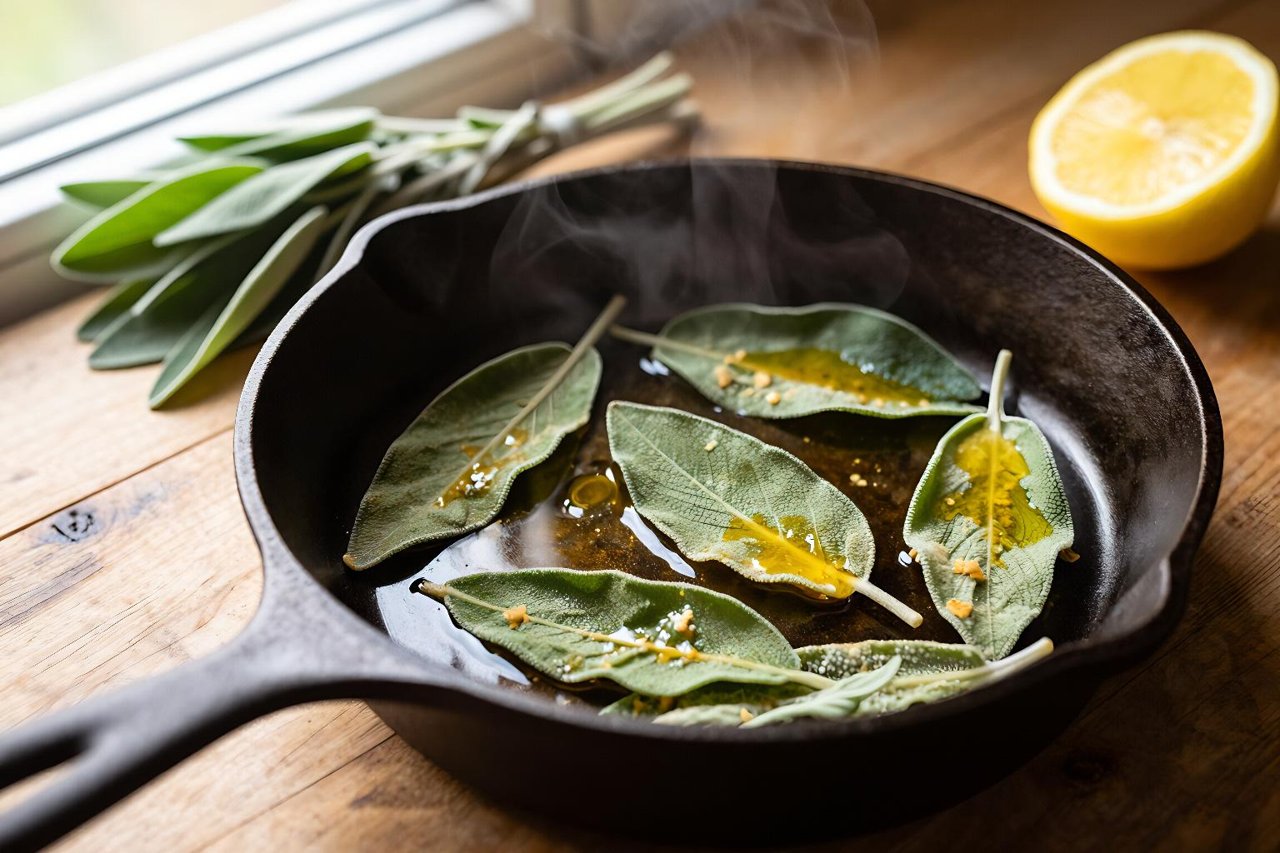
Heat about 1/4 inch of olive oil or butter in a small pan to 350°F (175°C). Add dry whole leaves in a single layer and cook for 20 to 30 seconds, until they darken slightly and turn crisp. Drain on paper towels and salt immediately. These leaves add crunch and a concentrated savory flavor to roasted squash, white bean soup, pasta, or deviled eggs. Do not walk away: sage goes from crisp to burnt in seconds.
Bloom chopped or dried sage in fat
Put chopped fresh sage or crumbled dried sage into warm butter or olive oil over medium-low heat. Stir for 30 to 60 seconds, until the herb smells fragrant, then add onions, garlic, or the main ingredient. This pulls fat-soluble flavor compounds out of the leaves and spreads them through the dish. Keep the heat low. Burnt sage is acrid and will ruin the pan.
Fresh versus dried: how much and when
The general swap is 1 tablespoon of chopped fresh sage for 1 teaspoon of dried. Dried sage needs time to hydrate and mellow, so add it to soups, stews, braises, and bean pots at the start, then taste after 15 minutes. Fresh sage is better added in two stages: some at the beginning for depth, and a little at the end for a bright, resinous top note.
Use dried sage in rubs and spice blends, where it can sit on the surface of meat and toast in the oven. Crush it between your palms before adding it. That simple step breaks up the leaves and releases more aroma than dumping in a spoonful of whole flakes.
Pairings that work, and a few that fight back
Sage likes fat, acid, and sweetness. It also likes other strong herbs, which is why it appears with rosemary and thyme in poultry seasoning.
- Brown butter and lemon: The acid keeps sage from tasting heavy. Toss with gnocchi, ravioli, or roasted cauliflower.
- Pork and apple: Sage cuts through pork fat; apple adds sweetness. Use in meatballs, sausage, or a stuffing for pork chops.
- White beans and garlic: A pot of cannellini beans with onion, garlic, and sage is a complete meal with bread.
- Squash and pumpkin: Sage’s piney edge balances the sugar in roasted squash. Add fried leaves at the end.
- Mushrooms and eggs: A few chopped leaves in a mushroom omelet or frittata add depth without much effort.
Some ingredients flatten sage. Delicate white fish, mild scallops, and fresh peas can be overwhelmed by a heavy hand. If you want sage with fish, use a brown butter sauce and a single leaf per portion, not a handful. Raw sage in a green salad can taste like medicine. Balance it with parsley, mint, or a sharp vinaigrette.
Four reliable ways to use sage tonight
Slide leaves under chicken skin
Loosen the skin on a whole chicken or thick chicken thighs. Tuck 6 to 8 sage leaves and a few thin slices of lemon under the skin. Season the outside with salt and pepper. Roast at 425°F (220°C) until the skin is crisp and the juices run clear. The leaves perfume the meat and the pan drippings make a sharp, savory sauce.
Make a sage salt
Pulse 1/4 cup coarse sea salt, 2 tablespoons fresh sage leaves, and the zest of one lemon in a food processor. Spread the mixture on a plate and leave it to dry for a few hours, then store it in a jar. Use it on roast potatoes, pork chops, or sliced tomatoes. The salt keeps for about a month.
Fold sage into stuffing or meatballs
For a 1-pound batch of meatballs or sausage, use 1 tablespoon chopped fresh sage or 1 teaspoon dried. Add 1/2 cup finely diced apple and 1/4 cup grated Parmesan for a sweet-savory version. Brown the meatballs well; the sage needs contact with hot fat to taste like itself.
Simmer beans with a sage bundle
Tie 6 to 8 sage leaves and a few stems of thyme in a piece of cheesecloth. Drop the bundle into a pot of beans while they simmer. Remove it after 30 minutes. This gives a subtle background flavor without any leafy texture. Finish the beans with olive oil and lemon.
A sage butter to keep in the fridge
Compound butter is the least fussy way to keep sage in your cooking rotation. Soften 1/2 cup (115 g) unsalted butter. Finely chop 2 tablespoons fresh sage and mix it with the butter, 1/2 teaspoon salt, and a squeeze of lemon. Spoon the mixture onto a sheet of parchment, roll it into a log, and chill for at least an hour. Slice off a coin and melt it over steak, fish, potatoes, or pasta. It keeps for a week in the fridge and two months in the freezer.
For a brown butter version, cook 1/2 cup butter in a light-colored pan over medium heat until the milk solids turn golden and smell nutty. Add 10 sage leaves and swirl for 30 seconds. Pour into a bowl and cool. Spoon it over pumpkin ravioli with toasted walnuts and a grating of Parmesan. That is a dinner that tastes like more work than it was.


