
Table of Contents
Dill rarely gets top billing. It shows up in pickle jars, maybe a bowl of tzatziki, then disappears. That’s a shame, because the plant offers two distinct ingredients in one: feathery green leaves and warm, seed-like fruits. Understanding dill’s flavor, nutrition, and culinary applications makes it easier to use the herb with confidence, whether you’re dressing a salmon fillet or stirring a pot of potato soup.
At the market you’ll find three forms: fresh dill weed, dried dill weed, and dill seed. They behave differently in the kitchen. Fresh leaves are delicate and bright. Seeds are sturdy and aromatic. Dill heads, the umbels that hold the seeds, sit somewhere in between and are traditional in fermented pickles. Treat them as separate tools rather than swaps.
What Does Dill Taste Like?
Fresh dill has a clean, grassy flavor with notes of anise, lemon peel, and parsley. It’s softer than fennel and less sweet than tarragon. Raw dill feels cooling, which explains why it works with cucumber, yogurt, and smoked fish. Heat mutes that brightness fast. Add chopped fresh dill at the end of cooking, or fold it into a dish after the pan comes off the stove.
Fresh dill vs. dill seed
Dill seed tastes warmer, rounder, and more resinous, closer to caraway with a hint of citrus. The seeds hold up to heat, so they belong in brines, bread doughs, rice pilafs, and long-simmered cabbage dishes. A rough ratio helps: 1 teaspoon of dill seed can stand in for about 1 tablespoon of chopped fresh dill in cooked dishes, though the flavor will be deeper and less green. For pickles, use both. The heads or seeds provide the backbone; a few sprigs of fresh weed go in at the end for aroma.

Dill Nutrition: Small Leaves, Useful Doses
Fresh dill is mostly water, which keeps it low in calories. A 100-gram pile (far more than most people eat in one sitting) has around 43 calories, 3.5 grams of protein, and 2 grams of fiber. The more relevant point is what those leaves carry: vitamin A, vitamin C, folate, manganese, iron, and calcium. Dill also supplies antioxidant compounds such as flavonoids and monoterpenes, including carvone and limonene, which contribute both aroma and potential antioxidant activity.
A realistic serving matters. One tablespoon of chopped fresh dill weighs about 1 gram, so it won’t transform your daily nutrient intake. Think of dill as a flavor-first ingredient with a useful nutritional nudge. If you use dill generously in salads, soups, or yogurt sauces, those small amounts add up over a week. Dill seed is more concentrated by weight, but you use it in tiny quantities, usually a teaspoon or less per recipe.
Does cooking destroy dill’s nutrients?
Some vitamin C and delicate aromatic compounds are lost with heat, so raw or barely warmed dill gives you more of both. That doesn’t mean cooked dill is pointless. Chopped stems and seed can go into the pot early for depth, while fresh fronds go in at the end for lift. This two-stage approach gets flavor at both ends of the cooking process.
How to Buy, Store, and Prep Dill
Look for fresh dill with upright, springy fronds and no yellowing or slimy patches. The stems should smell clean and sharp. At home, trim the stem ends and stand the bunch in a glass with an inch of water, cover loosely with a plastic bag, and refrigerate. Change the water every couple of days. It keeps about a week this way. Dried dill is convenient but fades quickly; replace it every six months, and store it away from the stove.
- Wash just before use. Wet leaves bruise and decay faster in the fridge.
- Use the stems. They carry plenty of flavor. Chop them finely for soups, stocks, and potato salad.
- Freeze surplus. Pack chopped dill into ice cube trays with melted butter or olive oil, then drop cubes into warm vegetables or fish.
- Toast seeds. Warm them in a dry pan for 30 to 60 seconds before crushing. The aroma jumps from dusty to vivid.
Culinary Applications: Where Dill Earns Its Place
Dill’s strength is contrast. It cuts richness in dairy, smoked fish, and eggs, and it lifts sweet vegetables like beets, carrots, and peas. The classic pairings exist for a reason, but there’s room well beyond pickles.
Yogurt, cucumber, and cold sauces
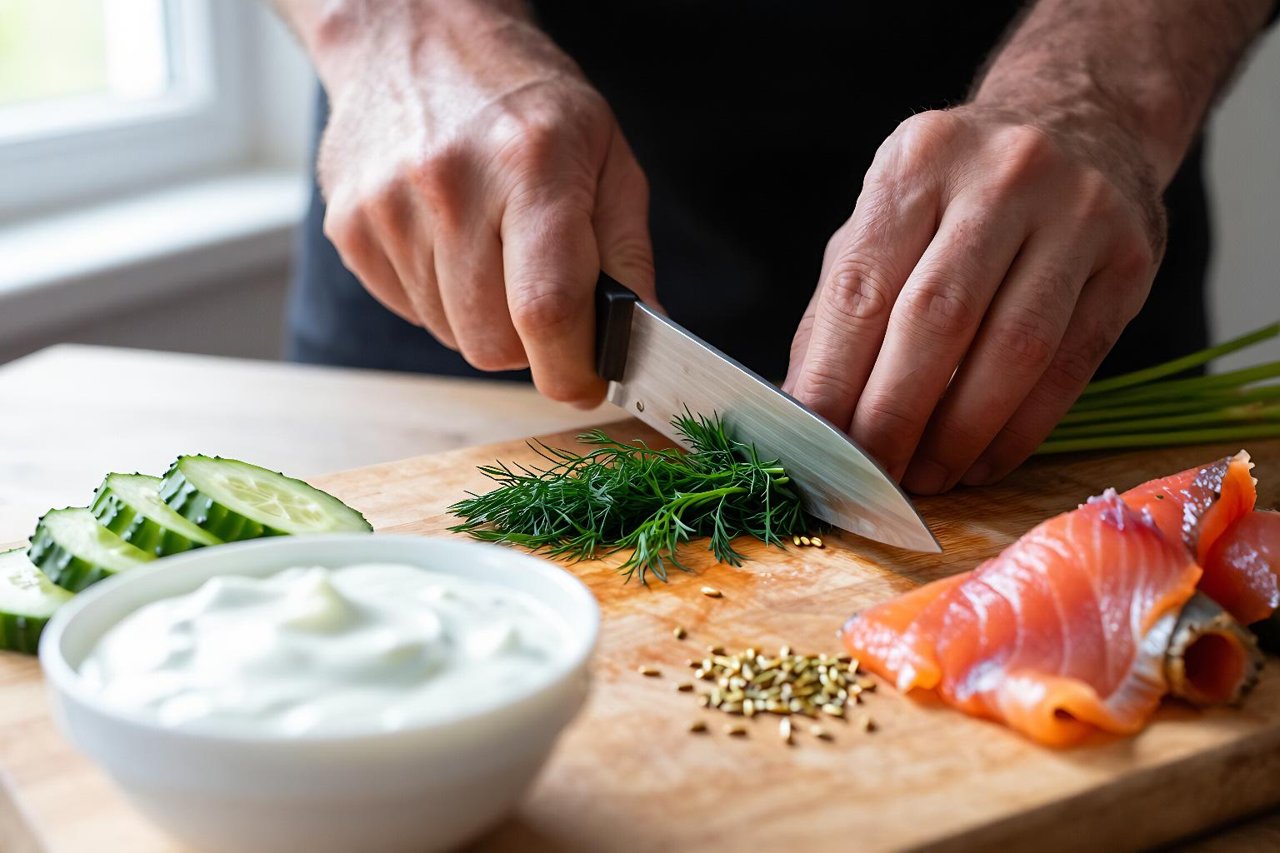
A simple dill yogurt sauce can be made with 1 cup of full-fat yogurt, 2 tablespoons of chopped dill, 1 grated garlic clove, a squeeze of lemon, and salt. Let it sit for 15 minutes before serving so the dill perfumes the dairy. Spoon it over roasted carrots, lamb meatballs, or crisp-skinned salmon. Tzatziki follows the same logic with grated cucumber squeezed dry. Blend dill with mayonnaise, buttermilk, and lemon zest for a sharper sauce.
Seafood and smoked fish
Gravlax, the Scandinavian cured salmon, depends on dill as much as salt and sugar. A standard home cure for a 2-pound fillet uses about 1/4 cup coarse salt, 3 tablespoons sugar, 2 teaspoons crushed white pepper, and a generous handful of chopped dill plus stems. Wrap and weight it in the fridge for 36 to 48 hours, turning once. The dill leaves a green, herbal edge that plain salt cannot. Dill also works with trout, shrimp, and crab cakes. Add fresh dill to crab mixture sparingly; too much turns the cakes wet.
Soups, stews, and vegetables
Dill is a natural fit for potato soup, chicken soup, borscht, and chilled cucumber soup. For an 8-cup pot of potato-leek soup, stir in 2 tablespoons of chopped dill at the end and finish with a little lemon juice. The acid keeps the dill from tasting flat. Roasted beets, steamed green beans, and buttered new potatoes all benefit from a handful of chopped fronds. Dill seed shines in cabbage dishes, sauerkraut, and bean stews, where its warmth can stand up to long cooking.
Eggs, grains, and breads
Fold chopped dill into scrambled eggs with cream cheese, or scatter it over a frittata after baking. Rice pilaf with dill seed, lemon zest, and toasted almonds makes a fast side for roast chicken. In bread, dill seed pairs well with rye flour and caraway. A simple dill compound butter, made by mashing 2 tablespoons of chopped dill into 1/2 cup softened butter with salt and lemon zest, melts beautifully over steamed potatoes or grilled fish.
Pickles and preserving
For refrigerator pickles, bring 1 cup water, 1 cup vinegar, 2 tablespoons salt, and 1 tablespoon sugar to a simmer. Pour it over cucumber spears packed into jars with 2 teaspoons dill seed, 2 garlic cloves, and a few fresh dill sprigs. Refrigerate for at least 24 hours. The seeds give consistent flavor; the fresh dill gives a greener top note. Fermented pickles benefit from dill heads because they release seeds slowly and contain natural microbes on the flowers.
Pairings That Work Without a Recipe
Dill gets along with lemon, garlic, mustard, yogurt, sour cream, cucumber, potato, salmon, trout, shrimp, eggs, beets, cabbage, carrots, peas, green beans, rye, and rice. It also plays well with mint, parsley, chives, and scallions. Use it more cautiously with strong spices like cumin and cinnamon; dill can disappear under them. A few reliable combinations:
- Dill + lemon + olive oil over roasted fish
- Dill + yogurt + garlic + cucumber for dips and marinades
- Dill seed + rye + caraway in bread
- Dill + potato + mustard vinaigrette for warm potato salad
- Dill + beets + sour cream for a cold salad
Practical Ways to Use More Dill This Week
Keep a bunch in the fridge and treat it like parsley: chop a handful into salads, grain bowls, and scrambled eggs. Add stems to chicken stock or the water for boiling potatoes. Make a jar of dill vinaigrette with 3 tablespoons olive oil, 1 tablespoon white wine vinegar, 1 teaspoon Dijon mustard, 1 tablespoon chopped dill, and a pinch of salt. Spoon it over cold shrimp. Toast and crush dill seed into plain rice with butter and lemon zest.
Fresh dill is at its best when it is not babied. Taste as you go, add it late for brightness, and use the seeds when you need staying power. A bunch that might have wilted in the crisper can become a sauce, a cure, or a pot of soup. That is a more useful role than a garnish on the side of the plate.


