
Table of Contents
Most kitchens have one jar of cinnamon, usually bought years ago and never questioned. That jar is almost certainly cassia, not true cinnamon, and it explains a lot: why supermarket cinnamon tastes hot and woody, why some recipes call for a cinnamon so delicate it seems to vanish, and why two cooks following the same instructions can end up with wildly different results.
Cinnamon is not a single spice. It is a handful of related tree barks, each with its own chemistry, price point, and best use. Knowing which one is in your hand changes how you cook with it.
What Cinnamon Actually Is
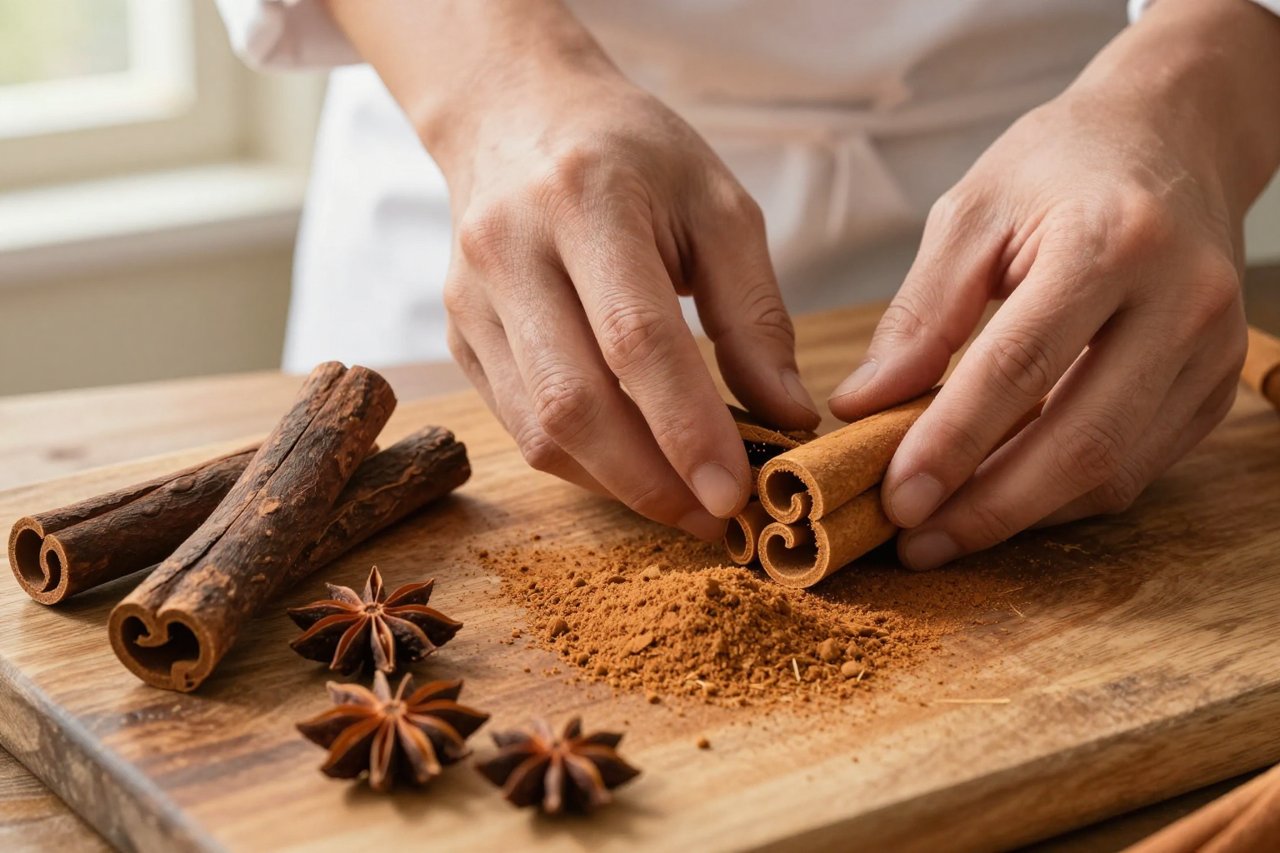
Cinnamon comes from the inner bark of trees in the genus Cinnamomum, part of the laurel family. Growers cut young shoots, strip the outer corky layer, and let the inner bark dry. As it loses moisture it curls into quills — the cinnamon sticks you see in shops, though “stick” undersells the good ones. A fine Ceylon quill is a scroll of paper-thin layers, rolled by hand, that you can snap between two fingers.
Harvesting is largely manual work. In Sri Lanka, peelers still use small brass knives to score branches so the bark lifts in sheets, and the best quills are graded by diameter and length before export.

The Main Types of Cinnamon
Ceylon Cinnamon (Cinnamomum verum)
True cinnamon, native to Sri Lanka. The bark is pale tan, thin, and layered, and the quills look like a cigar made of parchment. It smells sweet and faintly floral, with a citrus lift and a finish that fades quickly. Ceylon carries very little coumarin, a naturally occurring compound that concerns health authorities in large doses — roughly 0.017 g per kilo versus 2–4 g per kilo in some cassia grades. It costs three to five times more than cassia and is worth it when cinnamon is meant to be the star rather than a warm background hum.
Cassia: The Family That Does Most of the Work
Cassia barks are thicker, single-layered, and dark reddish-brown. They resist snapping and need a knife or a good whack. Cassia is what fills most supermarket jars, and it covers several distinct products:
- Saigon (Vietnamese) cassia — the boldest of the group, with cinnamaldehyde levels that can reach 4–5%. Hot, spicy-sweet, almost peppery. Use it for pho broth, braised short ribs, chai, and anything that needs to cut through fat.
- Korintje (Indonesian) cassia — the North American baking standard. Milder, woody-sweet, low bitterness, and forgiving in batters. This is the one most cinnamon roll recipes secretly assume.
- Chinese cassia — sharp and slightly bitter at the edges, common in five-spice blends and long-simmered medicinal broths where its intensity is diluted.
How Cinnamon Tastes, and Why It Varies
Flavor comes down to essential oil. Cinnamaldehyde makes up 70–90% of cassia’s volatile oil and delivers the heat and sweetness people recognize. Ceylon has less cinnamaldehyde and more eugenol and linalool, which is where the clove-like, citrusy, almost perfumed character comes from.
On coumarin, the practical guidance is simple. The European Food Safety Authority sets a tolerable daily intake of 0.1 mg per kilo of body weight. For a 60 kg adult that works out to about 6 mg a day — roughly a generous teaspoon or two of average cassia, less for the strongest Saigon grades. Occasional cinnamon rolls are not a problem. Daily heaped spoons of cassia in your oatmeal, year after year, is where the argument for keeping a bag of Ceylon around begins to make sense.
Sticks or Ground?
Ground cinnamon disperses evenly, which matters in a batter or a dry rub. Whole quills release aroma slowly and are easier to remove from a pot of liquid, which is why braises and mulled wine call for them.
Ground spice is also the more fragile of the two. Volatile oils start fading within six months of grinding, faster if the jar sits above the stove. Buy small quantities, smell before you buy, and replace anything that smells like dusty wood rather than cinnamon. Store it airtight, away from light and heat.
Food Applications
Baking and Pastries
Korintje or a mid-grade cassia is the right call for cinnamon rolls, snickerdoodles, coffee cake, and apple pie, where the spice has to survive 200°C heat and a lot of sugar. A teaspoon or two per 250 g of flour is a sensible starting ratio. Delicate dairy desserts are a different job: custards, panna cotta, rice pudding, and shortbread taste cleaner with Ceylon, because cassia’s heat can read as raw against cream.
Drinks
Chai is the obvious one — a stick or two added to the boil with cardamom, ginger, and clove, then left to steep. Mulled wine, Mexican café de olla, and horchata all lean on cinnamon sticks rather than powder, and a single quill tucked into the coffee grounds before brewing gives a filter pot a subtle warmth. Ceylon sticks make a surprisingly good garnish in a whisky sour.
Savory Cooking
This is where cassia earns its keep. Moroccan tagines and ras el hanout, Indian garam masala and biryani, Mexican mole poblano, Greek stifado, Chinese red-braised pork, Vietnamese pho — all use cinnamon as a structural background note, not a headline flavor. The rule for savory dishes is fat and time. Toast whole sticks briefly in oil before the liquid goes in, then let them simmer for at least 20 minutes and fish them out before serving.
Everyday Uses
Half a teaspoon stirred into a pot of chili, a stick dropped into a batch of tomato sauce for lamb, a pinch in a roast chicken rub, or a dusting over roasted sweet potato with olive oil and salt. Cinnamon also pairs well with cumin, coriander, star anise, and black pepper — a combination that shows up across North African, Indian, and Chinese cooking for good reason.
Pairings Worth Remembering
Sweet: apple, pear, quince, dark chocolate, coffee, orange zest, brown sugar, vanilla. Savory: tomato, lamb, pork, squash, carrot, onion, lentils, and slow-cooked beef. Ceylon leans toward fruit and cream. Cassia leans toward chocolate, coffee, and meat.
Getting More From the Spice You Already Own
Bloom ground cinnamon in butter or oil for 20 seconds before adding liquid — the fat carries the aroma compounds instead of leaving them in the pan. Toast whole quills in a dry skillet until fragrant, about 30 seconds, before dropping them into a braise; the difference is noticeable in the finished sauce. Grind your own from sticks with a microplane or spice grinder for anything uncooked, and add a small pinch of salt alongside, which sharpens the sweet-spicy edge.
One more thing worth testing: taste your current jar next to a fresh one. Most people discover their kitchen cinnamon has been quietly fading for two years, and replacing it costs less than a coffee. Do that, then buy a small bag of Ceylon to keep beside it. Two jars, used deliberately, will improve more dishes than any single upgrade to your spice rack.


