
Table of Contents
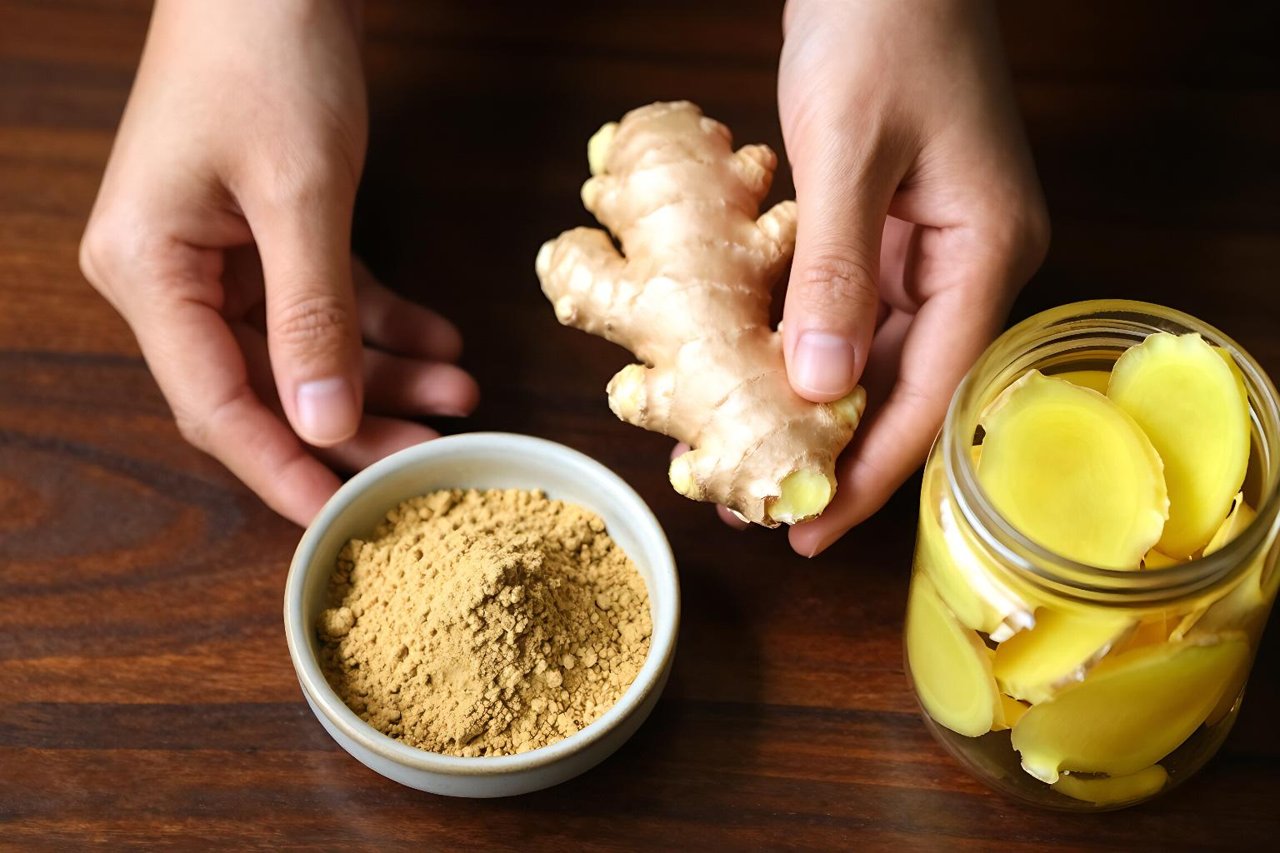
Crack open a knob of fresh ginger and the smell hits you before the knife does: sharp, citrusy, almost peppery. Twist the lid off a jar of ground ginger and you get something softer and sweeter, like warm dust. They come from the same rhizome, but they are not the same ingredient, and swapping one for the other without thinking is how a stir-fry ends up tasting flat or a gingerbread ends up tasting raw.
Ginger shows up in more forms than almost any other spice in the cupboard. Knowing which one to reach for, and how the amounts translate, saves you from guessing.
Fresh Ginger Root: The One With the Bite
A good knob should feel heavy for its size, with tight, smooth skin and no soft patches. Wrinkled skin means it has been drying out on a shelf. The flesh inside should be pale yellow to light tan, and when you cut into it, the juice should smell clean and bright.
There are two ages of ginger worth knowing. Young ginger, sold in spring, has thin skin, pale pink tips and very little fibre. It is mild enough to slice thin and eat raw in salads, or pickle at home. Mature ginger, available year-round, is fibrous, hotter and needs peeling. Most supermarket ginger falls into this second group.

The heat comes from gingerol, the compound responsible for that back-of-the-throat burn. Gingerol is fragile. Heat, drying and long storage convert it into shogaol, which is warmer and sweeter but far less sharp. That single chemical shift explains most of the difference between the forms below.
How to handle it
Skip the peeler for awkward shapes and use the edge of a spoon to scrape the skin off, which wastes less flesh. A microplane turns a knob into a fine, juicy pulp in seconds and works well for dressings and marinades. For stir-fries, cut matchsticks; for braises, smash thick coins with the flat of a knife so the fibres open up and release flavour slowly.
Ground Ginger: Convenience With a Trade-Off
Ground ginger is dried ginger that has been milled to a powder. Drying and grinding cost you the brightness, but they give you a spice that disperses evenly and keeps for months. It belongs in baking, spice rubs, pumpkin pie spice blends, and dry marinades where a fresh pulp would add unwanted moisture.
Use it in much smaller amounts than fresh. Roughly one tablespoon of freshly grated ginger equals a quarter teaspoon of ground, so a recipe calling for two tablespoons needs about half a teaspoon of powder, not two. Overshooting turns baked goods bitter and cough-syrup-sweet.
Freshness matters more than people expect. Ground ginger past its prime smells of nothing much. Buy small jars, keep them away from the stove, and replace them every six months or so. The same logic of form-versus-form applies across the spice shelf, which is why it is worth reading up on how turmeric’s powder, capsules, fresh root and golden milk compare if you cook with both spices regularly.
The Middle Ground: Paste, Juice and Frozen Root
Ginger paste
Blitz fresh ginger with a splash of water or oil until smooth, then keep it in a small jar in the fridge for a week or freeze it in ice-cube trays. In Indian cooking, a ginger-garlic paste is a base for curries and dals, usually equal parts of each by weight. Homemade paste tastes cleaner than the jarred stuff, which often carries a lot of vinegar.
Ginger juice
Grate and squeeze, or run chunks through a juicer. A teaspoon stirred into hot water with honey and lemon is the fastest use, and it also lifts salad dressings, marinades and cocktails. Fresh juice loses its punch within two or three days, so make it in small batches.
Frozen ginger
Freeze whole knobs unpeeled. They keep for around six months and grate straight from frozen with no peeling, because the skin sloughs off as you go. The texture turns slightly softer after thawing, so use frozen ginger for cooking rather than raw applications.
Pickled, Candied and Preserved Ginger
Pickled ginger, the thin pink slices served with sushi, is made from young ginger in rice vinegar and sugar. It is a palate cleanser, not a cooking ingredient. Adding it to a curry gives you a sweet vinegary tang that fresh ginger would never produce.
Crystallised ginger and stem ginger in syrup are different again, boiled in sugar until tender. Chop them into cakes, fold them through ice cream, or use the syrup to sweeten a hot drink. These are confections with a ginger accent, so treat them as sugar first and spice second.
Capsules, Extracts and Tea Bags
Dried ginger in capsules and standardised extracts are aimed at people who want a consistent dose without the prep. Studies on ginger for nausea typically use somewhere between 1 and 2 grams of dried ginger a day, which is a reasonable reference point if you go this route. Anyone on blood thinners or heading into surgery should check with a doctor first, since ginger has a mild blood-thinning effect.
Tea bags are handy, but a few fresh slices simmered in water for ten minutes taste far better. Simmering rather than steeping is the trick with root ginger, because the flavour compounds need heat and time to come out.
Dried Whole Ginger and Dried Slices
Sold in many Asian and Indian grocers as whole dried rhizomes or chunky slices, this form is common in masalas. Grind it at home in small batches and you get an aroma that pre-ground jars cannot match, somewhere between the fresh root and the powder. Keep dried slices airtight, away from light, and toast them briefly before grinding to wake up the oils.
Conversions Worth Sticking to the Fridge Door
- 1 tablespoon freshly grated ginger = about 1/4 teaspoon ground ginger
- 1 inch of fresh root = roughly 1 tablespoon grated
- 1 cup chopped fresh ginger = about 1/4 cup grated pulp
- 1 teaspoon ginger juice = about 1 teaspoon grated ginger, pressed, plus a little water
- Fresh root keeps 3 weeks in the fridge in a paper bag, or 6 months frozen
- Ground ginger keeps about 6 months in a sealed jar in a cool, dark cupboard
One more storage rule: never wrap fresh ginger in cling film and leave it in the vegetable drawer. It sweats and moulds within days. Paper bags or a loosely closed container let it breathe.
Matching the Form to the Job
Some pairings are close to non-negotiable. Julienned fresh ginger in a hot wok with sesame oil and scallions gives you crunch and aroma you can see. Ground ginger goes into the dry mix for gingerbread, where a wet pulp would throw off the crumb. A braised pork belly wants smashed coins of fresh root simmering for an hour. Hollandaise or a salad dressing wants the juice, because pulp makes it grainy. A cup of tea on a cold morning wants three thin slices and ten minutes of gentle heat.
If a recipe calls for a form you do not have, ask what the ginger is doing there. Adding sharpness at the end of cooking? Grate fresh or use juice. Adding warmth through the whole dish? Powder works. Preserving or garnishing? That is pickled or candied territory. Get that question right and the substitution usually sorts itself out.


