
Table of Contents
Open a jar of ground cumin that’s been rattling around the cupboard since 2019 and you get beige dust with the faintest sad echo of the real thing. Bloom a teaspoon of whole seeds in hot ghee and the entire kitchen knows about it within thirty seconds. Same spice, wildly different performances. If you’ve ever stood in the spice aisle wondering whether it actually matters which one you buy, the short answer is yes, and the longer answer depends on what you’re cooking.
Two Forms, One Seed
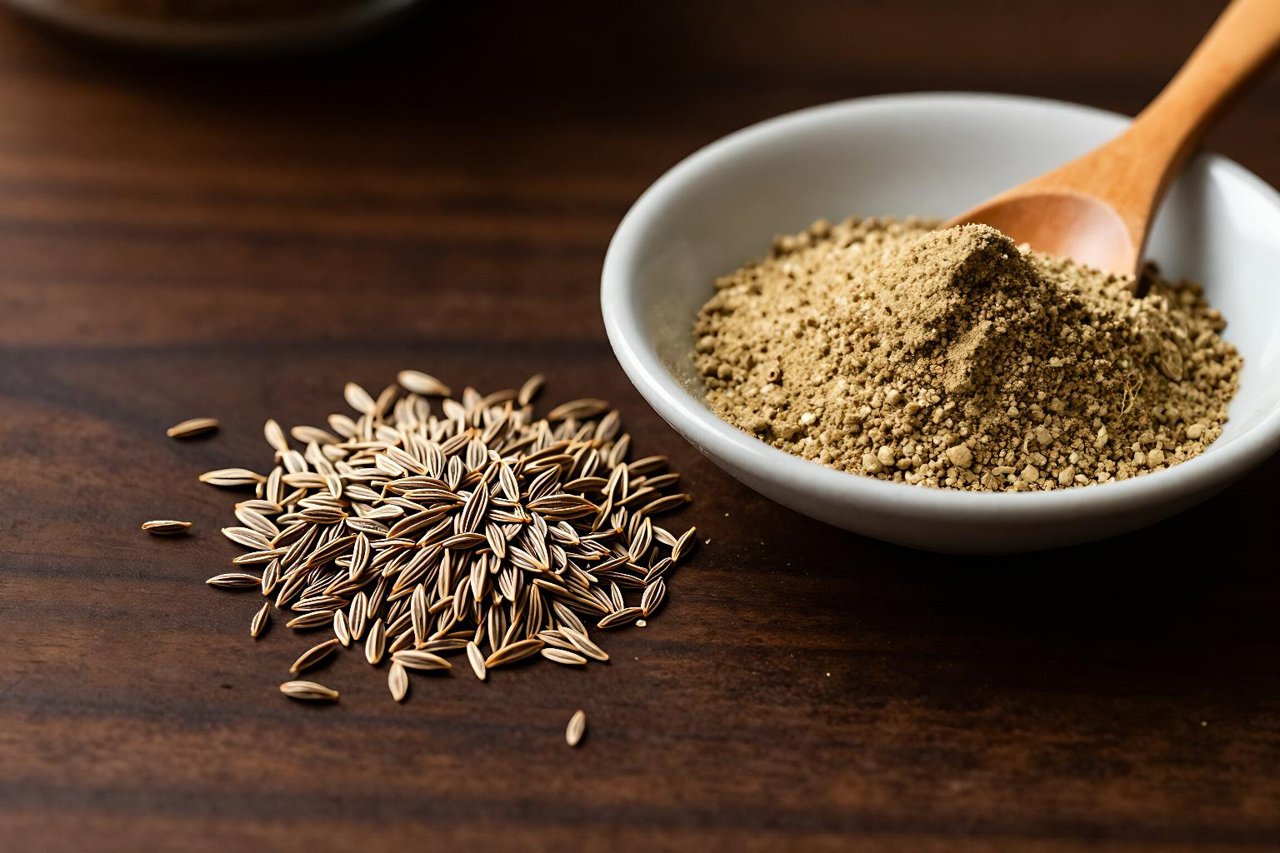
Cumin comes from Cuminum cyminum, a small flowering plant grown across India, Iran, Mexico and the Mediterranean. The seeds you buy are the whole dried fruit: pale brown, ridged lengthways, roughly four to six millimetres long. Ground cumin is nothing more than those seeds pulverised. No additives, no fillers, no difference in origin.
The difference is what happens the moment the seed’s cell walls are broken open. Those cells hold volatile oils, and those oils are the whole point.
How the Flavour Actually Differs
Whole seeds are a slow-release act. Crunched between your teeth or warmed in fat, they give up a warm, nutty, faintly resinous flavour with a whisper of bitterness at the end. Ground cumin hits immediately: sharper, earthier, more insistent, and it fades just as fast once it’s exposed to air.

Why grinding changes the taste so much
Cumin’s signature aroma comes largely from cuminaldehyde, along with a supporting cast of terpenes. Trapped inside an intact seed, those compounds sit quietly for months. Ground them and you’ve created a huge surface area for them to evaporate from. That’s why a freshly ground batch smells almost aggressive and why a jar opened six months ago smells like pencil shavings.
Texture counts too
Whole seeds add crunch, a gentle pop, and visual punctuation. You can’t fake that with powder. In a bowl of jeera rice, the seeds aren’t decoration; they’re part of the eating experience. In hummus, they’d be an unwelcome interruption, which is exactly why the powder exists.
When Whole Seeds Win
Use whole seeds whenever they’ll be heated in fat, noticed in the finished dish, or given enough time to soften. That covers most South Asian, Middle Eastern and North African cooking.
Tempering, the classic move
Heat a pan, add a tablespoon of ghee or oil, and when it shimmers drop in a teaspoon of seeds. They’ll sizzle, darken by a shade, and release their aroma in about 30 to 45 seconds. Two or three may pop. That’s your cue to add onions or pour the whole thing over finished dal. Walk away and you’ll have acrid little black specks that ruin everything.
Other places seeds earn their keep
- Rice and grains: toasted seeds folded through basmati, couscous or bulgur.
- Pickles and preserves: whole seeds hold their flavour for months in vinegar or brine.
- Bread and pastries: cumin seeds scattered over flatbread, khari biscuits or cheese straws.
- Roasted vegetables: tossed with carrots, cauliflower or beetroot before they hit a 220°C oven.
- Grilled meat: pressed into kebabs and skewers, where they char slightly and turn nutty.
When Ground Cumin Earns Its Place
Powder is the right call in any dish that needs even, background cumin flavour without texture, or that cooks too briefly for seeds to soften.
Chili con carne, taco seasoning, dry rubs, garam masala, baharat, adobo, hummus, yogurt marinades, lentil soup, and pretty much any sauce you want smooth. Half a teaspoon stirred into a pot of black beans at the end does more than a full teaspoon added at the start, because you’re not cooking the aroma out of it.
One warning worth repeating: ground cumin scorches in about twenty seconds, versus seconds-turned-minutes for whole seeds. Add it later than you think, and lower the heat before it goes in.
Freshness, Shelf Life and the Sniff Test
This is where the two forms really part company. Whole cumin seeds kept in an airtight jar away from light and heat will hold decent flavour for 12 to 18 months. Ground cumin is closer to three or four months, six at a push. After that it still colours a dish but stops flavouring it.
You don’t need a date on the jar. Rub a pinch between your fingers and smell it. Whole seeds should be sharply aromatic with a slightly oily feel. Ground cumin that smells of almost nothing, or of damp cardboard, is finished. Buy the small jar rather than the catering tub, and buy it whole whenever you can.
Storing ground cumin in the freezer extends its life noticeably. Just let the jar sit on the counter for ten minutes before opening it, so condensation doesn’t form inside.
Grinding Your Own Without the Fuss
You don’t need special equipment. A cheap electric coffee grinder dedicated to spices, or a mortar and pestle with some patience, does the job in under a minute.
Toast first if you want the deeper flavour: dry skillet over medium heat, seeds in, shake the pan every fifteen seconds for 60 to 90 seconds until fragrant and a shade darker. Tip them onto a cold plate and wait five minutes before grinding. Warm seeds steam inside a grinder and clump into a paste. Pulse in short bursts rather than running it continuously, and sieve if you want a finer texture for baking.
One tablespoon of seeds grinds down to roughly two teaspoons of powder. Make small batches, enough for a week or two, and keep them in a tiny jar rather than grinding a whole bag at once.
Substitutions That Won’t Wreck Dinner
Swapping between the two is mostly straightforward, with a couple of practical caveats.
- Recipe calls for ground: a slightly heaped teaspoon of whole seeds, toasted and ground, replaces about three-quarters of a teaspoon of ready-made powder.
- Recipe calls for seeds, but you only have powder: use about a third less by volume and add it near the end of cooking.
- Seeds in a sauce you want silky: tie them in a square of muslin, simmer, then fish the bundle out. Or toast and grind them.
- Powder in a tadka: stir it in with the other ground spices, off the heat, rather than into hot fat at the start.
The Rule of Thumb That Actually Works
Whole seeds for anything where heat, time and crunch are on your side. Ground for speed, smoothness and even distribution. If you only keep one, keep whole seeds and grind them as needed, because a jar of seeds bought today will still be doing its job next winter while the powder beside it quietly expires.
Practical middle ground: a large jar of whole seeds in the cupboard, a small jar of ground cumin you refill from it every couple of weeks, and a coffee grinder that never touches actual coffee. That setup handles every recipe in this article and costs less than two supermarket spice jars.


