
Table of Contents
What Cloves Are and Why a Little Goes a Long Way
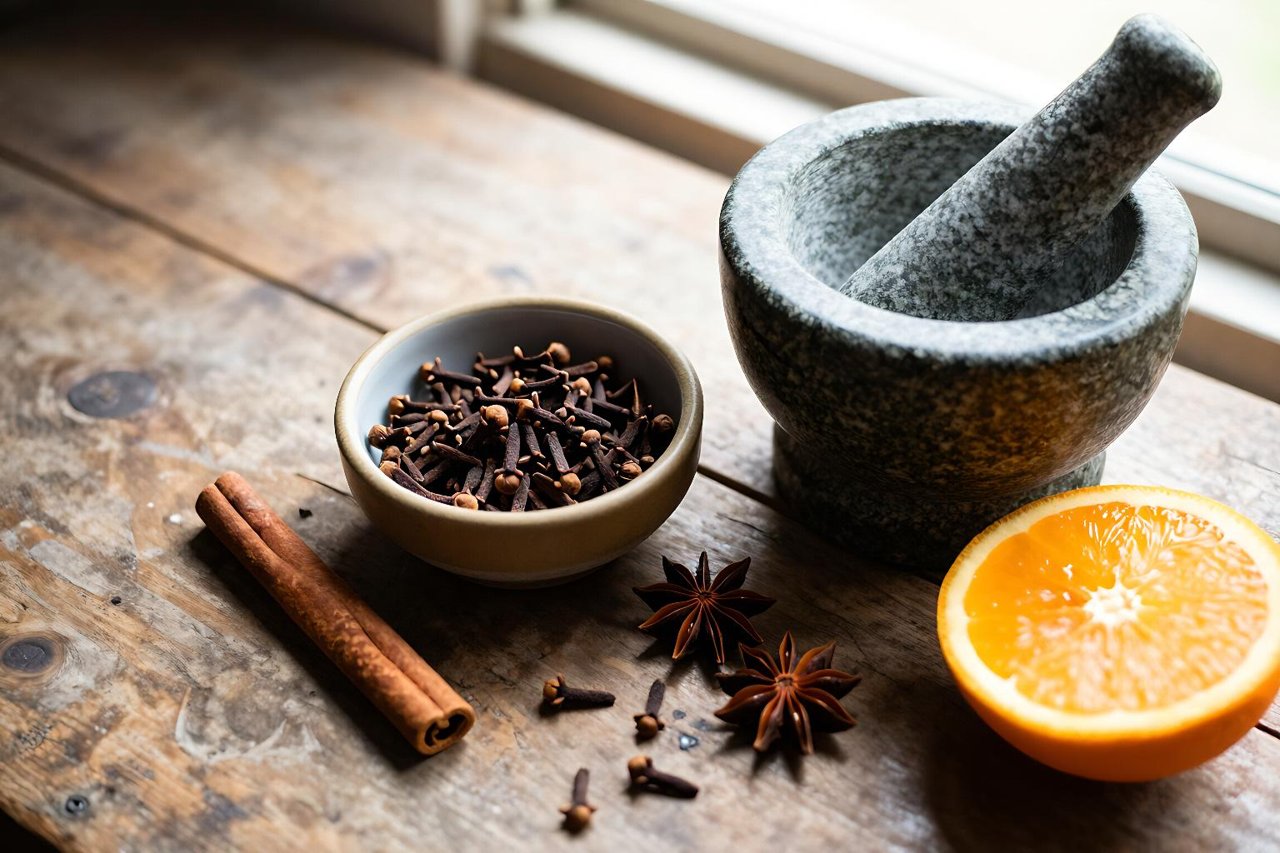
Clove trees are native to the Maluku Islands in Indonesia, and the spice we buy is the dried flower bud of Syzygium aromaticum. Growers pick the buds before they open, then dry them until they turn dark brown and nail-shaped. That shape gives cloves their name, from the Latin clavus, or nail. A good whole clove feels heavy for its size, with an oily, reddish-brown surface and an intact round head. Broken or lightweight buds have usually lost much of their perfume.
Whole cloves hold their volatile oils far better than ground. One clove can scent a pot of rice for four people. A quarter teaspoon of ground cloves can be enough for a pound of meat or a tray of cookies. If you are substituting ground cloves for whole, start small. You can always add more, but pulling back an overpowering clove note is nearly impossible.
Flavor Profile: Sweet, Warm, and Faintly Numbing
Clove’s flavor is often called warm and sweet, yet the detail that matters in the kitchen is its camphor-like edge. Eugenol, the main aromatic compound in cloves, gives the spice a cooling, numbing sensation on the tongue. That quality explains why a clove can feel refreshing in chai and slightly medicinal in a heavy stew. It also explains why cloves work best as a supporting player rather than the star.
Cloves pair naturally with cinnamon, nutmeg, allspice, ginger, black pepper, and citrus peel. In sweet dishes, they fit chocolate, apple, pear, pumpkin, coffee, and molasses. In savory cooking, they show up with lamb, ham, pork, game, lentils, beets, cabbage, and onions. Tomatoes can handle a small amount, but too much clove makes a tomato sauce taste dusty and old-fashioned.

Whole cloves release flavor slowly, which suits braises, stocks, rice, and mulled liquids. Ground cloves release their oils almost immediately, so add them late in cooking and taste as you go. Bruising a whole clove with the flat side of a knife or a quick press with a spoon helps it infuse faster.
How to Use Cloves Without Overpowering a Dish
- Stud half an onion with 6 to 8 whole cloves and simmer it in stock, pot roast, or bean stew. Remove the onion before serving.
- Add two whole cloves to the water for basmati rice or a rice pilaf, then fish them out at the end.
- Infuse milk or cream with one clove for custard or rice pudding, strain, and discard the clove before mixing.
- Use a pinch of ground cloves in a spice rub for pork or lamb, where the sweetness has fat to balance it.
Storage: Keep Cloves Whole, Dark, and Dry
Whole cloves keep well for two to three years in a sealed glass jar stored in a cool, dark cabinet. Ground cloves are far more fragile, and most cooks should plan to replace them every six to nine months. Heat, light, and moisture drive off the aromatic oils that make cloves worth buying. A clear jar on a sunny shelf or a spot above the stove is the worst place for them.
Plastic bags are not ideal for long storage because aroma can migrate through the plastic. Use a small airtight jar with a tight lid, label it with the date you opened it, and keep it away from strong-smelling spices if you can. Cloves are potent enough that they can scent neighboring jars over time.
Signs Your Cloves Have Gone Quiet
- You press a bud between your fingers and smell almost nothing.
- The buds feel brittle, hollow, or unusually pale.
- Ground cloves smell like dust rather than sweet, sharp spice.
- The jar has sat open near heat for months or years.
To test whole cloves, crush one and take a good sniff. Fresh cloves smell sweet, sharp, and slightly medicinal. If the aroma is faint, use them in a stock where quantity matters more than finesse, and buy a fresh jar for baking. Grind only what you need. A small coffee grinder or mortar and pestle works well for a tablespoon or two at a time.
Traditional Uses Around the World
Cloves have been traded for more than 2,000 years, and their history is as much about medicine and scent as it is about food. In Indonesia, cloves flavor food and also appear in kretek clove cigarettes, a tradition that carries serious health risks and should not be confused with a wellness practice. In Chinese medicine and Ayurveda, cloves are used in warming formulas for digestion and in tooth powders. European households once carried pomanders made by studding oranges with cloves, both to perfume a room and to ward off stale air.
In the kitchen, traditional uses range from mulled wine and wassail to pickled peaches, spiced beets, and holiday ham. Middle Eastern spice blends sometimes include cloves for meat and rice, and Mexican moles can use a small amount for depth. A single clove was also chewed as a breath freshener, a practical trick that still works if you like the taste.
Clove Oil and Toothache: Handle With Care
Eugenol is used in modern dentistry, and clove oil has a long folk history for toothache. A drop on a cotton ball held near a sore tooth may numb the area for a short time, but it will not treat an infection. Do not swallow clove essential oil, do not apply it undiluted to the gums repeatedly, and keep it away from children. A dentist should look at any tooth pain that lasts more than a day or two.
Buying Cloves: Small, Oily, and Intact
Buy whole cloves from a shop with steady turnover. Look for plump, reddish-brown buds with intact heads and a noticeable oily sheen. Pale, lightweight buds with broken heads are usually old. If you buy ground cloves, choose a small jar and use it within a season. Bulk bins can be a gamble because the spices sit open to light and air. A 1-ounce jar of whole cloves is plenty for most home kitchens and will stay fresher than a large bag.
Three Everyday Ways to Put Cloves to Work
Cloves do their best work when fat and time can carry the flavor. These three uses are simple enough for a weeknight and specific enough to show what the spice can do.
- Rice and grains: Drop two whole cloves into the cooking water for basmati rice, pilaf, or bulgur. Add a strip of orange zest if you want a brighter edge, then remove both before serving.
- Braises and stocks: Stud half an onion with 6 to 8 cloves and simmer it in beef stock, pot roast, or a pot of white beans. The onion can stay in for the whole cook, but fish it out before the dish reaches the table.
- Poached fruit: Simmer pears or apples with three cloves, a cinnamon stick, and a strip of lemon peel. Keep the cloves in the background; they should season the syrup, not dominate the fruit.
Label the jar with the date you open it. Cloves fade quietly, and a dated jar tells you when the perfume has gone before a recipe falls flat.


