
Table of Contents
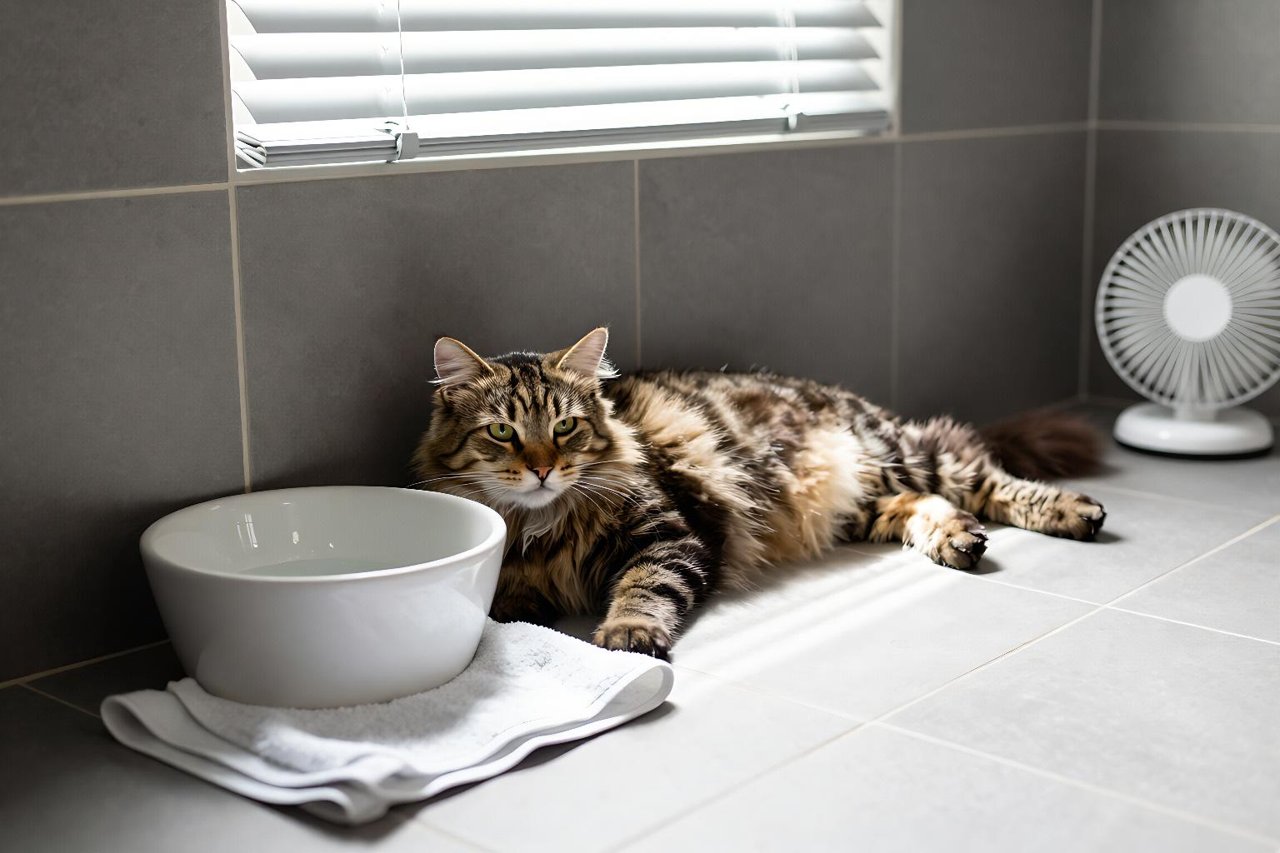
A cat stretched flat on a bathroom tile looks dramatic, but it is often a sensible cooling strategy. Cats do not sweat through their skin the way people do. They lose a little heat through paw pads, rely on shade and cool surfaces, and groom themselves to spread saliva over their fur. On a 32°C afternoon, that system can struggle, especially in a flat with west-facing windows.
Why Cats Struggle More Than You Think
A cat’s normal body temperature sits around 38 to 39.2°C, which is already warmer than ours. Summer heat piles on fast. Panting is not normal for a cat the way it is for a dog; if your cat is open-mouth panting at rest, treat it as a warning. Some cats are more vulnerable: flat-faced breeds such as Persians and British Shorthairs, seniors, overweight cats, long-haired cats, and any cat with heart or breathing problems.
Indoor cats are not automatically safe. A top-floor flat with closed windows can hit 30°C while the forecast says 24°C. Conservatories, box rooms, and uninsulated extensions heat up even faster.
Set Up a Cool Room Before the Heat Peaks
Do not wait until your cat is flopped in the hallway. Pick one room that stays out of direct sun and make it the cool zone. Close curtains or blinds on the sunny side of the house during the day, then open windows at night when the air outside is cooler. A fan on the floor gives cats a breeze to sit near without blasting them directly. If you have air conditioning, keep the room at a comfortable temperature rather than freezing it; cats will move to a warmer spot if they need one.

Cool surfaces matter. Cats will find tile, stone, a ceramic sink, or a marble cutting board left on the floor. You can also place a folded cotton towel in front of a fan or drape a damp towel over a chair back. Never leave a cat shut in a conservatory, shed, car, or small utility room on a warm day. Those spaces heat up like ovens, even with a window cracked.
Offer More Than One Cool Spot
Give your cat options: a shaded windowsill, a cool floor, and a covered cardboard box with the lid off. Cats like to choose. A single cooling mat in the middle of a sunlit living room will not help much if the rest of the room is baking.
Water That Cats Actually Drink
Cats are descended from desert hunters and often run on a low thirst drive. In summer, that can lead to dehydration before you notice. Put out at least three water bowls in different rooms, away from food and litter. Wide ceramic or glass bowls are better than narrow plastic ones because they do not hold as much whisker pressure. Change the water twice a day, more often if it is warm. Some cats drink far more from a fountain; running water can be the difference between a few laps and a proper drink.
Wet food helps. Add a spoonful of water to their usual food, or offer a cat-safe broth with no onion, garlic, or added salt. Avoid giving milk, which can upset digestion, and do not leave wet food sitting in heat for hours. If your cat has kidney disease or is on a prescription diet, ask your vet before changing water or food routines.
Grooming and Fur: What Helps and What Does Not
Brush your cat daily during hot spells. Removing loose undercoat lets air move closer to the skin and cuts down on hairballs. Long-haired cats need extra attention, especially around the belly and back legs where mats form. A slicker brush or a metal comb works better than a soft brush for undercoat.
Skip the clippers. A cat’s coat insulates against heat as well as cold, and shaving it exposes pale skin to sunburn and can damage regrowth. The exceptions are severe matting or a vet-recommended clip for a medical issue. If your cat tolerates it, wipe them down with a damp, cool cloth, focusing on the back, chest, and paws. Do not soak them; a sudden chill is stressful and does not help.
Cooling Products That Are Worth It
A cooling mat can be useful, but read the label and check for leaks. Gel mats should be kept out of direct sun and inspected for punctures, especially in homes with chewers. Elevated mesh beds let air move underneath, and ceramic or stone tiles stay cool for hours. Avoid ice packs placed directly against fur; wrap them in a towel and let the cat choose whether to lie nearby.
Some gear sold for dogs crosses over well. Our roundup of dog products that are everywhere in 2026 includes elevated beds and cooling mats that can work for cats, provided the size and materials suit your household. A small dog bed is often a better fit for a large cat than a flimsy cat-specific mat.
If Your Cat Goes Outside
Shift outdoor time to early morning or after sunset. Hot paving can burn paw pads, and asphalt stays warm long after the air cools. Provide shade in the garden with a dense shrub, a shade sail, or a chair with a breathable cover. Put water stations in shade, not in the sun where the bowl heats up. Check sheds, greenhouses, garages, and log stores before closing them; cats love a warm hiding place and can get trapped.
If your cat uses an outdoor run, cover part of it with shade cloth and make sure there is a cool, dry box to retreat into. A plastic igloo in full sun becomes an oven. For cats that live indoors, screened windows are safer than open ones; a cat on a high ledge can fall when startled by heat or noise.
Multi-Pet Households Need a Little More Planning
Dogs and cats handle heat differently, and a busy multi-pet home can make it harder to spot a cat in trouble. If you work long shifts, set up cool zones and water before you leave, just as you would for a dog. Our guide to best dogs for people who work full-time covers the same principle: plan for the hours you are away, not just the time you are home.
Small dogs, flat-faced breeds, and puppies overheat faster than many people expect. If you share your home with one, our picks for small dog breeds are useful for understanding build and breathing issues that affect heat tolerance. Keep dogs and cats separated if one is frantic or resource-guarding water; stress raises body temperature too.
Warning Signs: When Heat Becomes an Emergency
A hot cat may pant, drool, breathe fast, or lie stretched out. Those are early signs. Get them to a cool room, offer water, and wipe their paws and ears with lukewarm water. Do not use ice-cold water; it can constrict blood vessels and make cooling harder. Call your vet if the panting continues after 10 minutes in a cool room.
Emergency signs include bright red gums, vomiting, wobbling, confusion, a racing heart, or collapse. Heatstroke can cause organ damage within minutes. Wet the fur with cool water, use a fan, and get to a vet immediately. Do not force water into the mouth of a confused cat. If you are unsure, phone the clinic and describe the symptoms while you travel.
The 60-Second Evening Check
A short routine at the end of a hot day catches most problems before they become serious.
- Refill every water bowl with fresh, cool water and check that fountains are running.
- Feel the cool room’s floor and walls; if they are warm, move the cat’s bed to a cooler spot.
- Check your cat’s breathing at rest. Fast, shallow breathing or open-mouth panting needs attention.
- Look at the forecast for the next day and close curtains before the sun hits the windows in the morning.
- Check outdoor cats for ticks, burrs, and signs of sunburn on pale ears and noses.
A cat that is eating, drinking, grooming, and seeking out cool spots is usually coping. A cat that hides, stops eating, or sits in a hot place without moving needs a closer look. Small adjustments, made early in the day, do more than a frantic rescue at 4 p.m.


