
Table of Contents
On the morning of 1 July 1916, British soldiers climbed out of trenches along the Somme River and walked into machine-gun fire. By nightfall, 57,470 of them had been killed, wounded, or reported missing. Nearly 19,240 were dead. It remains the bloodiest single day in the history of the British Army, and it was only day one of a campaign that would grind on for 141 days.
That morning sits inside a much longer list. Across roughly 3,000 years of recorded warfare, a handful of battles stand apart for the sheer scale of the killing. Some lasted an afternoon. Others lasted months. Together they show how technology, logistics, and political will can combine to turn a battlefield into something closer to an industrial process.
What Actually Counts as a Deadly Battle?
Before ranking anything, it helps to be honest about the messiness of the numbers. Historians argue constantly about body counts, and for good reason.
“Casualties” usually means killed, wounded, captured, and missing combined. The dead are often only a third of that figure. Ancient chroniclers inflated enemy losses for propaganda. Twentieth-century records were better kept but frequently lost in the chaos of retreat. Civilian deaths get counted in some conflicts and ignored in others.

So a battle can look deadliest depending on whether you count deaths or casualties, combatants or civilians, a single day or an entire campaign. Keep that in mind as you read the figures below. The estimates are the best available, not settled facts.
Stalingrad: The Deadliest Battle Ever Fought
Most historians place the Battle of Stalingrad at the top of the list. Between August 1942 and February 1943, German and Soviet forces fought for control of a city reduced to rubble, and the combined casualties ran to roughly two million, with deaths estimated at well over a million.
The fighting was intimate and brutal. Soldiers fought for staircases, for apartments, for single rooms. Soviet commander Vasily Chuikov reportedly said his men were fighting for the Volga bank and could not retreat past it. A grain elevator changed hands so many times that troops lost track. Pavlov’s House, a single apartment block, was held for nearly two months.
When Field Marshal Paulus surrendered on 2 February 1943, around 91,000 Axis soldiers went into captivity. Fewer than 6,000 of them ever saw Germany again.
The Somme and the Industrialisation of Slaughter
The Somme campaign of 1916 cost roughly one million casualties across British, French, and German forces. What makes it distinctive is not just the total but the concentration. On the first day alone, the British Army lost more men than it did in the entire Crimean War.
Artillery did most of the killing. The British fired about 1.5 million shells in the opening bombardment, and the Germans answered with gas and heavy guns for months afterward. Tanks appeared for the first time at Flers-Courcelette in September, though they changed very little.
What the Somme revealed was a grim arithmetic: when industrial production meets static trench lines, the dead pile up faster than any commander can adapt.
Cannae, 216 BC: The Ancient World’s Perfect Ambush
Not all mass death requires gunpowder. At Cannae in southern Italy, Hannibal of Carthage surrounded a Roman army roughly twice his size and destroyed it in a single afternoon. Roman losses are usually estimated between 50,000 and 70,000 dead, with Hannibal losing perhaps 6,000 men.
The double envelopment he used there is still taught in military academies. Rome had fielded eight legions, an extraordinary mobilisation for the era, and lost most of them in hours. The defeat was so severe that it shaped Roman strategy for a generation and prompted emergency measures, including the arming of slaves.
It says something about the scale of Rome’s manpower that a catastrophe of that size did not end the war. The republic ultimately drew on the resources of a system built to absorb punishment, which is part of how one city came to rule 60 million people.
Gettysburg and the Cost of a Nation Divided
Over three days in July 1863, Union and Confederate armies fought in and around a small Pennsylvania town and produced roughly 51,000 casualties. That is close to one in three of the soldiers engaged. Pickett’s Charge alone cost the Confederacy around 6,000 men in under an hour.
The battle is often treated as a turning point, but its real significance lies in what it demonstrated about the war as a whole. It was not a war that ended the Civil War, but it was the moment the Confederacy lost any realistic path to victory on Northern soil. The wider conflict, a war that tore a nation apart and rebuilt it, killed somewhere between 620,000 and 750,000 soldiers, more than every other American war combined.
Verdun: Ten Months of Attrition
Verdun was designed to bleed France white. Between February and December 1916, the two armies fired roughly 60 million shells at each other over a front of a few miles. Casualties reached about 700,000, with an estimated 300,000 dead.
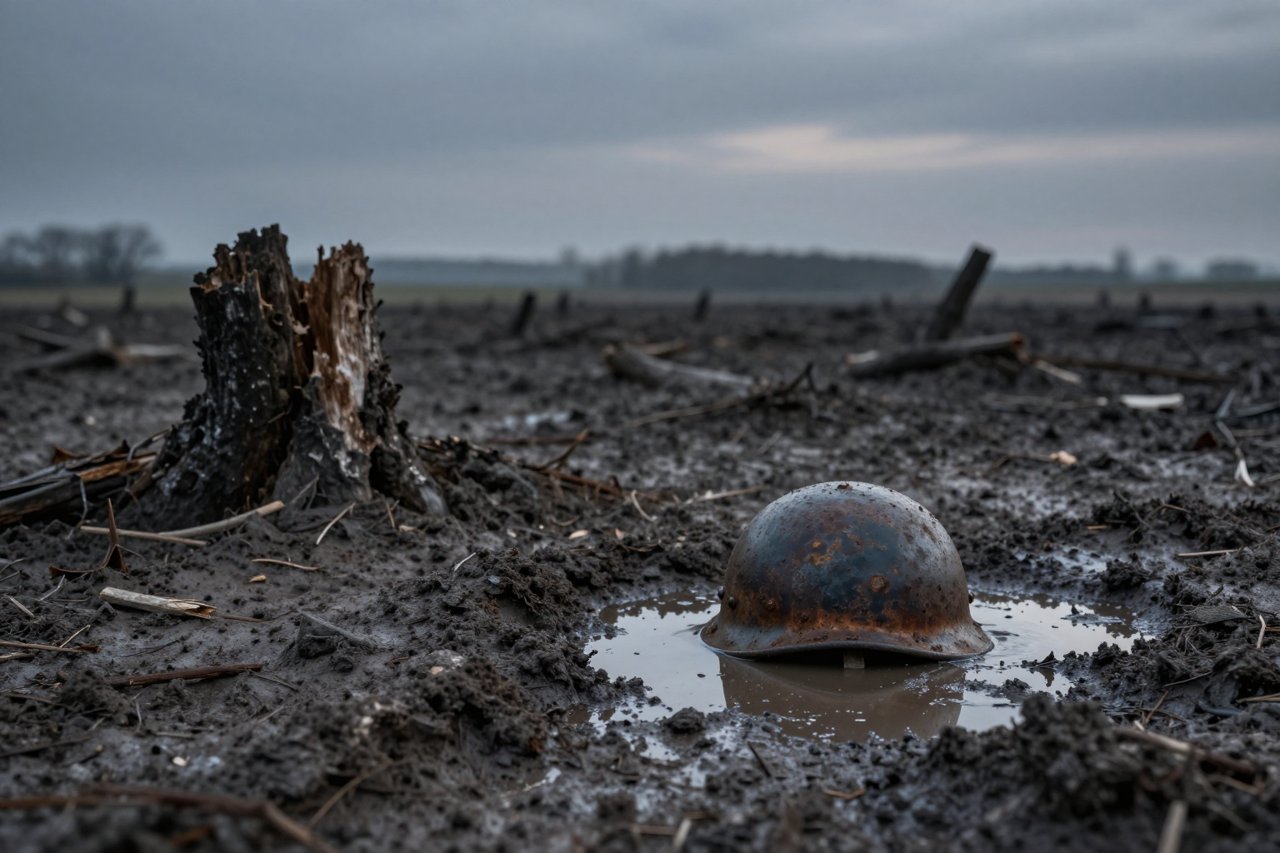
Soldiers on both sides described the landscape as lunar. Nine villages were destroyed so completely that they were never rebuilt, and the Verdun Memorial still lists them as communes that “died for France.” The Douaumont Ossuary holds the bones of around 130,000 unidentified soldiers.
The Ancient World’s Bloodiest Day: Changping
In 260 BC, the armies of Qin and Zhao met at Changping in what is now Shanxi Province. According to the Han dynasty historian Sima Qian, some 400,000 Zhao soldiers were buried alive after surrendering. Total deaths on both sides may have exceeded 600,000.
Treat those numbers with caution. Sima Qian wrote more than a century later, and ancient Chinese figures were often rounded for effect. Even scaled down, Changping represents one of the largest single losses of life in the pre-modern world, and it helped clear the path for Qin’s unification of China.
Battles Ranked by Estimated Casualties
The following figures combine the most widely cited scholarly estimates. Treat them as ranges, not exact tallies.
- Stalingrad (1942–43): roughly 2 million casualties, over 1 million dead
- Brusilov Offensive (1916): 1.5 to 2 million casualties across Russian and Austro-Hungarian forces
- The Somme (1916): around 1 million casualties
- Verdun (1916): roughly 700,000 casualties
- Changping (260 BC): up to 650,000 dead, according to contested ancient sources
- Leipzig (1813): around 100,000 casualties
- Gettysburg (1863): about 51,000 casualties
The Catastrophes That Don’t Fit the Word “Battle”
Some of history’s worst slaughter doesn’t appear on battle lists at all. The Siege of Leningrad lasted 872 days and killed an estimated 800,000 to one million civilians, most of them through starvation and cold. Nanjing in 1937 produced a civilian death toll that scholars still dispute, with figures ranging from tens of thousands to more than 200,000. The German encirclement at Kyiv in September 1941 captured over 600,000 Soviet troops in a single operation.
These events hide in the gap between combat history and civilian suffering, which is precisely why they deserve to be counted alongside the famous battlefields.
Why We Keep Returning to These Numbers
The deadliest battles in history are not just statistics. They are a record of what happens when industrial capacity, political ideology, and inflexible command meet human beings on open ground. Stalingrad tells us something about urban warfare that military planners still study. The Somme tells us what happens when tactics lag behind weaponry. Cannae and Changping tell us that mass destruction is not a modern invention at all.
Perhaps that is why anniversaries of these events still draw attention, and why a single date on a calendar can carry such weight. There is something in us that refuses to look away from the anniversaries that keep pulling us back, whether they mark a morning on the Somme, a surrender in a ruined basement in Stalingrad, or a field in Shanxi whose dead were recorded by a historian writing a hundred years later.
The numbers will keep shifting as archives open and scholarship improves. The human cost behind them will not.


