
Table of Contents
A good cup of peppermint tea should taste clean and cooling, with a sweet green edge and a tingle at the back of your throat. A bad one tastes like toothpaste water or, worse, like the papery dust at the bottom of an old tin. The difference between the two usually comes down to three things: how much leaf you use, how hot the water is, and how long you leave it alone.
None of that is complicated. It’s just that most of us were taught to dunk a tea bag for thirty seconds and hope for the best. Here’s what actually happens in the cup, and how to get it right every time.
Why the brewing method matters more than you’d think
The flavour of peppermint comes from menthol and menthone, oils that live in tiny glands on the leaf surface. Heat releases them, but heat also drives them off into the air. That’s why a cup left uncovered on the counter smells amazing and tastes flat ten minutes later. Everything below is really about extracting those oils quickly and then keeping them in the water, not the air.
Start with the right amount of leaf
For a standard 250ml mug, use about 1 heaped teaspoon of dried peppermint, roughly 1.5 to 2 grams. Loose leaf beats bags here; bagged peppermint is often cut very fine, which releases flavour fast and then turns dull and slightly woody.

Fresh leaves
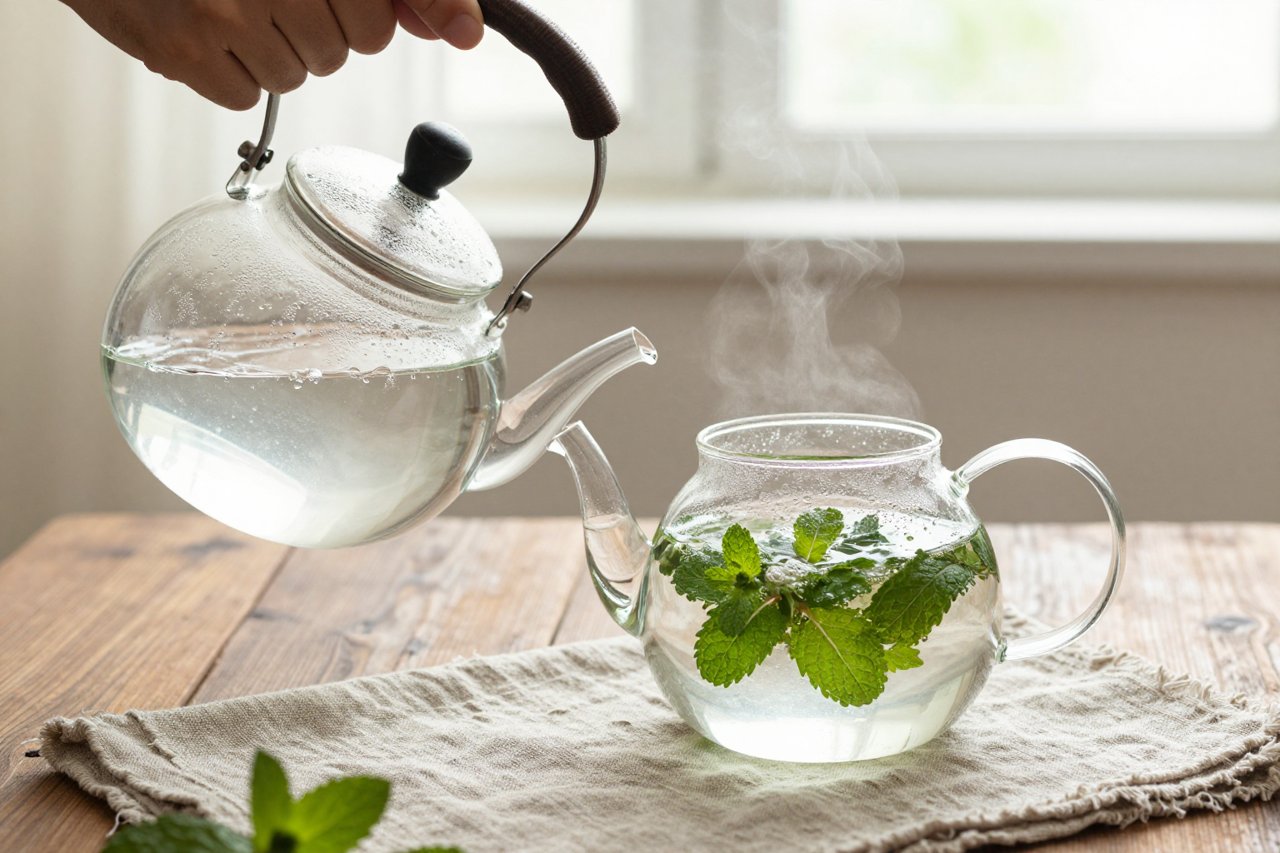
Fresh mint is mostly water, so you need far more of it. Count on 10 to 12 good-sized leaves per mug, and tear or crush them lightly between your fingers first. That bruising breaks the cell walls and lets the oils out. Whole, unbruised leaves floating in hot water will give you something closer to a faint green tisane than a proper mint tea.
Making a pot
Scale up rather than guessing: 1 heaped tablespoon of dried leaf per 500ml of water, or a generous handful of fresh sprigs. Give a pot an extra minute over a single mug, since the larger volume of water holds its heat longer but also dilutes the oils more slowly.
Water temperature: boiling is fine, but not furious
Peppermint is a forgiving herb. Unlike green tea, it doesn’t turn bitter at 100°C, so you don’t need a thermometer and a prayer. Still, water just off the boil, around 95°C, gives a rounder cup than a hard rolling boil, especially with fresh leaves. Let the kettle sit for 30 to 45 seconds after it clicks off and you’re there.
One detail people overlook: the water itself. If your tap water tastes strongly of chlorine, no amount of good leaf will fix the cup. Filtered water makes a noticeable difference with a herb this delicate.
Steep for five minutes, and cover the cup
Dried peppermint needs 5 to 7 minutes. Fresh leaves need 3 to 5. The single biggest upgrade you can make is putting a saucer or a small plate over the mug while it steeps. The lid traps the rising steam, which carries the menthol, and it drops back into the water instead of disappearing into your kitchen. Try it once side by side with an uncovered mug and the difference is obvious.
After steeping, lift the leaves out rather than leaving them in. Peppermint doesn’t go harsh the way black tea does, but past 10 minutes it develops a slightly muddy, hay-like flavour that masks the brightness.
Four mistakes that ruin a cup
- Overfilling the infuser. Leaves need room to circulate. A basket crammed to the lid steeps unevenly, so you get weak patches and bitter patches in the same mug.
- Using stale leaf. Dried peppermint loses its punch after about a year. If the leaves smell like dusty hay instead of sharp mint, they’re done. Crush one between your fingers: it should smell almost aggressive.
- Brewing in unlined metal. Reactive metal can pick up a faint metallic note. Glass, ceramic, or a good stainless infuser all work cleanly.
- Squeezing the bag or pressing the leaves. You’ll push out fine particles that cloud the cup and add a chalky texture. Let gravity do the work.
What to add, and what to leave out
A teaspoon of honey suits peppermint better than sugar; the floral note fills in the gaps where the mint is sharpest. Add it while the tea is still hot enough to dissolve, around 60°C or above. Lemon is more divisive. The acid brightens the aroma for some drinkers but flattens the cooling sensation for others, so try it in a half cup before committing to a whole mug.
Milk is a firm no. Dairy coats the tongue and smothers the menthol completely. If you want something creamier, a splash of oat milk in an iced version works far better than dairy in a hot one.
Blending is where peppermint shines. Ginger adds heat, liquorice root adds sweetness, and a small pinch of dried chamomile rounds off the edges for an evening cup. Keep the peppermint at roughly 70 percent of the blend so it stays the main event.
Iced peppermint tea that doesn’t taste like water
The usual mistake is brewing a normal cup and pouring it over a full glass of ice. The ice melts, and you end up with a pale, sad drink. Two fixes work well:
Cold brew it. Add 15 grams of dried leaf to a litre of cold water, refrigerate for 8 hours, then strain. You get a smoother, sweeter infusion with none of the grassiness that hot brewing can bring out.
Or brew double strength. Use 2 teaspoons per 250ml, steep 6 minutes, then pour over ice made from the same tea rather than tap water. It stays strong to the last sip.
Buying and storing the leaf
Buy dried peppermint in small quantities you’ll finish within six months. Look for whole or roughly cut leaves rather than fine powder, and check the pack date rather than just the best-before stamp. Store it in an airtight jar away from the light and away from the spice drawer, because mint picks up neighbouring smells quickly.
Fresh mint keeps for about a week. Stand the stems in a glass of water on the windowsill, loosely covered with a plastic bag, and change the water every couple of days. It’s the same treatment basil gets, and it works just as well here.
A quick word on heartburn
Peppermint is famously soothing for a gassy stomach, but it relaxes the valve at the top of the stomach too. If you get reflux or acid indigestion, a strong cup can make it worse, sometimes within twenty minutes. Ginger or chamomile is the safer evening choice for anyone in that camp. For everyone else, one mug after dinner is about as pleasant a habit as exists, especially now that it takes five minutes, a saucer, and a teaspoon of leaf to get it exactly right.


