
Table of Contents
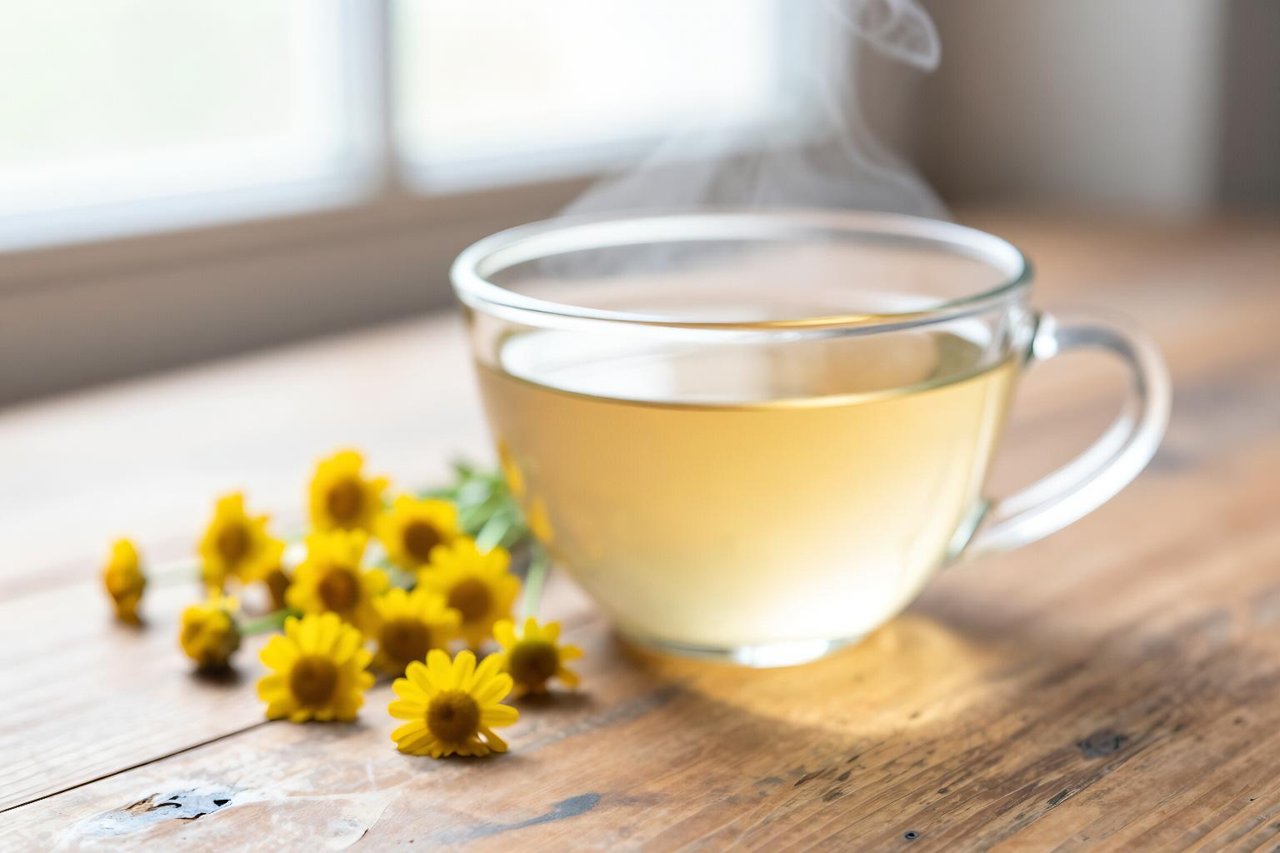
A cup of chamomile tea smells like a hayfield at the end of a hot afternoon: dusty-sweet, faintly of apples, with a green edge underneath. It is one of the most widely drunk herbal infusions in the world, and one of the most routinely brewed badly. People drop a bag into water that is still rolling, wait ninety seconds, and then wonder why the result tastes like warm dishwater.
Three things matter here. What chamomile tea flavor actually is and where it comes from, how to prepare it so those flavours survive the process, and the precautions worth knowing if you drink it often or take prescription medication.
What Chamomile Tea Actually Tastes Like
Good chamomile is soft rather than punchy. You get a rounded honey-apple sweetness up front, a floral middle that reminds people of straw, dried grass or even a light white wine, and a finish that goes slightly bitter and earthy. It contains almost no tannins, so unlike black tea it does not turn harsh and astringent if you leave the bag in. It just gets more intense, then eventually soapy.
The body is light. There is no real acidity to speak of, which is why a squeeze of lemon changes the cup so dramatically.

German versus Roman chamomile
Most supermarket chamomile is German chamomile, Matricaria chamomilla, grown in Egypt, Argentina, Croatia and Hungary. It carries the blue-tinted essential oil, chamazulene, and the compound alpha-bisabolol, which is why a strong cup can look faintly greenish-blue in the right light. Egyptian flowers are large and mild; Croatian and Hungarian crops are usually more aromatic and pricier.
Roman chamomile, Chamaemelum nobile, is a different plant entirely. It tastes sweeter and fruitier, closer to apple skins, and it costs noticeably more. If you have only ever had the bagged stuff and found it dull, Roman is the one worth trying.
Why your cup tastes bitter or soapy
- Water too hot. Boiling water drives off the aromatics and pulls out bitterness. Aim for 90 to 95C, which means letting the kettle sit for 45 seconds after it clicks off.
- Too many flowers. One heaped teaspoon per cup, roughly 2g, is right. Double it and you get a perfumed, soapy cup that tastes like a hotel bathroom.
- Stale stock. Old flowers smell of paper and dust rather than hay and apple. No brewing method rescues them.
- Dust-heavy bags. Cheap bags often contain fannings rather than whole flowers. They go flat within weeks of opening.
How to Brew a Proper Cup
The method is short. The details are what separate a pleasant cup from a disappointing one.
- Use about 200 to 250ml of freshly drawn filtered water. Hard water flattens the floral notes.
- Heat to 90 to 95C, just off the boil.
- Add one heaped teaspoon of dried whole flowers, or one tea bag, to a pre-warmed cup or pot.
- Pour, then cover the cup with a saucer. The volatile oils carrying the aroma evaporate off an open cup within minutes. This single step makes the biggest difference.
- Steep 5 to 6 minutes for a light cup, 8 to 10 for a fuller one with more of that bitter-sweet finish. Strain or lift the bag out.
Getting more flavour without more bitterness
Add flowers, not minutes. Going from one teaspoon to one and a half, steeped for seven minutes, gives a stronger, rounder cup than one teaspoon left for fifteen. If you want real intensity, make a concentrated infusion of 3g per 150ml for ten minutes and dilute it with hot water to taste.
The cold brew method
Two tablespoons of whole flowers in 500ml of cold filtered water, refrigerated for 8 to 12 hours, then strained. Cold extraction pulls almost no bitterness and leaves a sweet, almost juicy infusion that is excellent over ice with a slice of lemon. It keeps for three days in the fridge. This is also the easiest way to use chamomile in cocktails, since the syrup version takes ten minutes of stove time and a lot of sweetener to balance.
Additions Worth Trying
Honey is the classic for a reason, but stir it in after steeping rather than before, so you can taste the infusion before committing to sweetness. A thin slice of lemon brightens the whole cup. A quarter teaspoon of dried lavender adds a perfumed lift, but go carefully: too much and the lavender steamrolls the chamomile. Fresh ginger and lemon makes a decent throat-soothing version in winter, and a cinnamon stick steeped alongside gives a warmer, sweeter profile that suits the evening cup.
Milk is usually a mistake. Dairy coats the palate and mutes the floral top notes. Oat milk behaves better if you want something creamy.
Precautions Worth Knowing
Chamomile is gentle, but gentle is not the same as inert. A few groups should pay attention.
Ragweed and daisy allergies
Chamomile sits in the Asteraceae family alongside ragweed, chrysanthemums, marigolds, echinacea and daisies. If you react to those, there is a real chance of cross-reactivity, ranging from itching and hives to, rarely, breathing difficulty. A simple test: brew a cup, let it cool, dab a little on the inside of your forearm and wait 24 hours. Skip chamomile eye compresses entirely if you have any history of seasonal allergies, since the eye tissue reacts fast.
Medication interactions
- Blood thinners. Chamomile contains coumarin compounds and has been linked to a handful of case reports of bleeding in people taking warfarin. One occasional cup is unlikely to matter; a nightly habit plus a prescription is worth raising with a pharmacist.
- Sedatives. Benzodiazepines, sleep medication, opioids and alcohol all stack with chamomile’s mild calming effect. The result is more drowsiness than you bargained for, sometimes into the next morning.
- Diabetes medication. There is a theoretical additive effect on blood sugar. Monitor if you start drinking it daily.
- Drugs processed by CYP3A4 and CYP1A2. Test-tube studies show chamomile inhibits these enzymes. Human data is thin, so treat it as a flag rather than a rule.
Pregnancy, breastfeeding and children
A cup or two of ordinary tea is generally considered acceptable during pregnancy by most herbal references, but concentrated chamomile extracts and supplements are a different proposition and best avoided, since they carry far higher doses than a steeped cup. Occasional use while breastfeeding is fine. For children, keep the infusion weak and the serving small, and do not give herbal teas to infants under six months at all.
How much is sensible
One to three cups a day is the range most people settle into. Consistently drinking several strong infusions daily is where the occasional reports of nausea, dizziness and contact rash turn up. More is not more effective.
Signs It Is Not Suiting You
Pay attention to your body over the first couple of weeks of regular drinking. An itchy mouth, watery eyes, hives or a rash after a cup suggests a mild allergic reaction, and the sensible move is to stop rather than push through. Unusual bruising, bleeding gums or nosebleeds while taking an anticoagulant deserve a call to your doctor. Lingering grogginess the morning after a bedtime cup usually means the infusion is too strong or too close to sleep.
A small number of people find chamomile relaxes the lower oesophageal sphincter and worsens reflux, which is the opposite of what they were hoping for.
Two grams of whole flowers, water just off the boil, six minutes under a saucer. Strain it, taste it before you sweeten it, and let the hay-and-apple sweetness do the work. Buy whole flowers rather than dust, keep them in a sealed tin away from the stove, and replace them once the smell goes papery. That is the entire trick, and it makes a genuinely good cup out of a plant most people only ever meet in a lacklustre tea bag.


