
Table of Contents
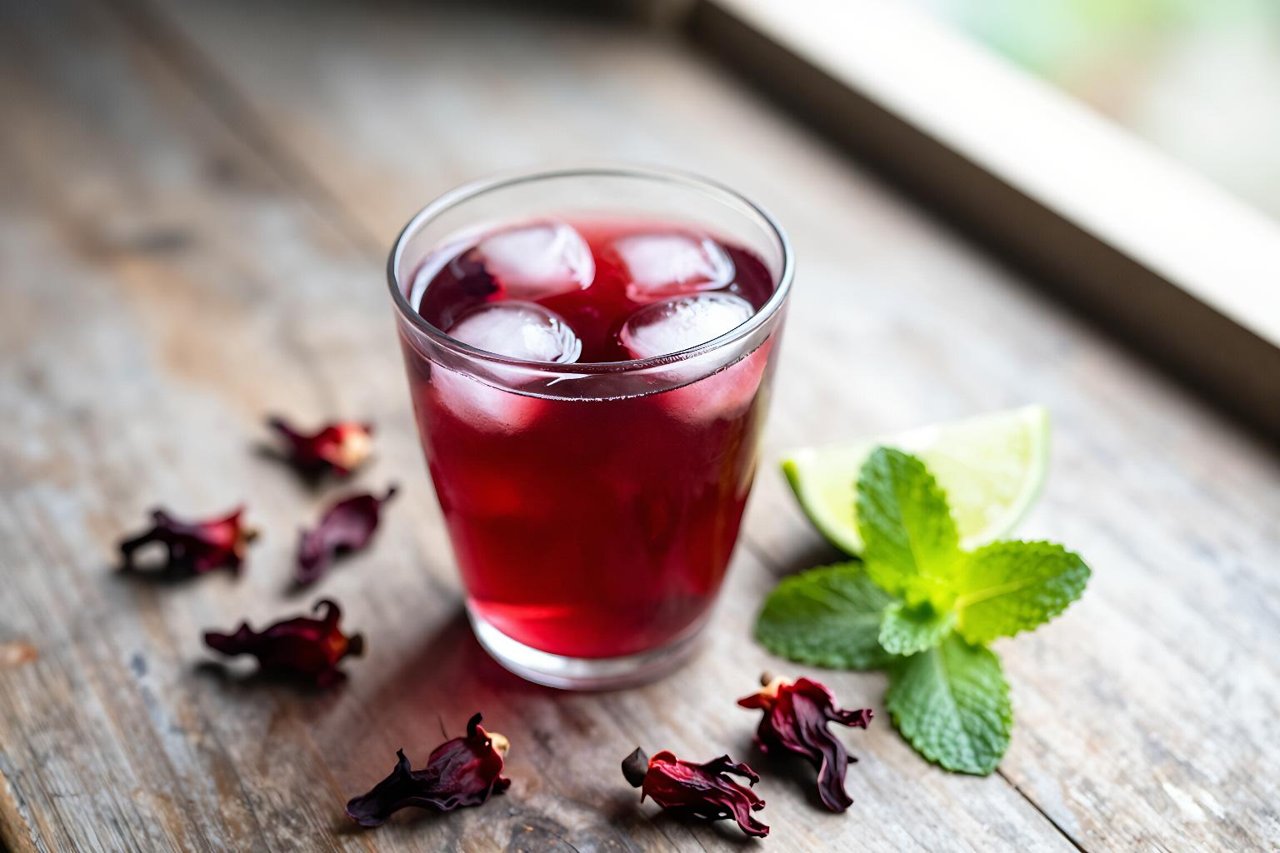
Pour a cup of hibiscus tea and the first thing you notice is the colour: a deep, clear ruby that looks closer to a glass of pinot than to something brewed from a dried flower. The second thing is the tartness. It hits the sides of your tongue before you’ve swallowed, somewhere between cranberry juice and sour cherry.
That double take is why the drink has travelled so far. In Mexico it’s agua de Jamaica, sold cold by the jug. In Nigeria it’s zobo, often sharpened with ginger and pineapple. In Senegal it’s bissap, in Egypt karkadé, in the Caribbean simply sorrel. Same plant, dozens of local accents.
One clarification worth having up front: the hibiscus used for tea is Hibiscus sabdariffa, and what you brew are the fleshy red calyces, the cup-shaped collar that sits beneath the flower. Garden hibiscus petals are a different thing entirely. If a bag smells sweet-sour and stains your mug, you’ve got the right plant.
What Hibiscus Tea Actually Tastes Like
Tart is the headline, but it isn’t a simple sourness. A good cup has a bright, juicy front edge, a faint berry-and-rhubarb middle, and a dry, slightly grippy finish rather like strong black tea. The astringency comes from the same acids and polyphenols that give the drink its colour, so a fresh, vivid cup and a mouth-drying cup are often the same liquid at different strengths.

Hot versus iced
Served hot, the tea reads sharper and more tannic. Chilled and diluted, the acidity softens into something closer to fruit juice, which is why a strong batch poured over ice tastes sweeter than the same liquid from a teapot. Temperature changes how much we notice acidity, and hibiscus responds to that more than most herbal infusions.
What shifts the flavour
- Steep time. Five minutes gives a light, floral cup. Fifteen gives a dark, drying one that needs sweetening.
- Water temperature. Boiling water pulls out more tannin. Water just off the boil, around 90–95°C, keeps the fruit character forward.
- Water quality. Very hard water mutes the brightness. Filtered water makes a noticeably cleaner cup.
- Whole calyces versus bags. Whole dried calyces give a clearer, more layered drink. Dust in cheap bags brews fast but tastes flatter.
- Add-ins. A teaspoon of honey rounds the edge. A small pinch of salt does the same job faster, without sweetness.
How to Brew It: Hot, Cold, and Iced
The everyday hot method
Use about one tablespoon of dried calyces (roughly 7g) per 250ml of water. Bring the water to a boil, take it off the heat, add the hibiscus, cover, and steep for 6 to 8 minutes. Strain it off rather than leaving the calyces in the pot, or the second half of the drink will be harsher than the first.
Cold brew
Cold extraction is the underrated method. Add 30g of calyces to a litre of cold water, refrigerate for 12 to 18 hours, then strain. What you get is softer, rounder, and more full-bodied than the hot version, with almost none of the drying finish. It also keeps in the fridge for four or five days without going flat.
Iced and batch brewing
For a jug that survives melting ice, brew at double strength: 60g of calyces per litre, steep ten minutes, strain, and cool completely before pouring over ice. The meltwater brings it back to the right concentration instead of watering it down. A squeeze of lime at the end keeps it tasting fresh rather than stewed.
The Nutritional Profile of a Cup
Hibiscus tea is caffeine-free and effectively calorie-free on its own, at roughly 2 kcal per cup. No fat, no protein, and no carbohydrate until you add sweetener. What it does contain is a useful spread of plant compounds:
- Organic acids including hibiscus acid, citric acid and malic acid, which account for the sourness.
- Anthocyanins, the pigments responsible for the red colour and much of the antioxidant activity.
- Flavonoids such as quercetin and kaempferol, present in modest but measurable amounts.
- Minerals including calcium, magnesium, potassium and small amounts of iron.
- Vitamin C, though dried calyces lose much of it during storage and heat, so treat fresh or recently dried material as the better source.
What the research says about blood pressure
This is the most studied claim, and the honest summary is “promising, not settled.” Several small randomised trials and a few meta-analyses have reported modest drops in systolic blood pressure, often in the region of 4 to 7 mmHg, in people drinking two or three cups daily for a few weeks. The studies are short, sample sizes are small, and results vary. Hibiscus is a reasonable addition to a sensible diet. It is not a replacement for prescribed medication.
Who might want to go easy
Hibiscus has a mild diuretic effect and can lower blood pressure, so anyone already on antihypertensives or diuretics should mention it to their doctor rather than drinking it by the litre. There are documented interactions with hydrochlorothiazide and with some diabetes medication. Pregnancy is another case for caution, since safety data is thin and the plant has a traditional history of stimulating menstruation. The acidity is also tough on tooth enamel if you sip it all day, so drink it with meals and rinse afterwards.
Buying, Storing, and the Staining Problem
Good dried calyces are deep crimson, plump, and sharply sour-smelling. Faded brown or dusty-looking material has usually lost its colour and most of its character. Buy whole calyces where you can and keep a bag of tea bags for convenience. Store either in an airtight jar away from light and heat, and use within about a year, since the aroma fades long before the tea becomes unsafe.
Then there’s the staining. That pigment is water-soluble and binds enthusiastically to porous surfaces. Rinse cups and teapots promptly, use glass or ceramic rather than plastic, and keep it away from pale tablecloths. A paste of bicarbonate of soda lifts stains from mugs without much scrubbing.
Practical Ways to Drink More of It
Plain hot hibiscus is only the starting point. Cold-brewed concentrate makes an excellent mixer with sparkling water and a strip of orange peel. Simmered briefly with ginger, cloves and a little brown sugar, it turns into the spiced version served across West Africa. Freeze leftovers into ice cubes and drop them into lemonade. The same strong brew works as a poaching liquid for pears or as a base for mulled wine, where its acidity balances the sweetness of the fruit.
Start with a single batch at 7g per 250ml, taste it at six minutes, and adjust from there. Too sharp? Steep for less time rather than adding more sugar. Too thin? Use more calyces, not a longer steep. Once you’ve dialled in your own ratio, the rest is just choosing whether you want it steaming or over ice.


