
Table of Contents
A skydive is short. The plane ride, the safety brief, the 50 to 60 seconds of freefall, then the quiet under canopy. What makes a jump memorable is where it happens: the lake below your feet, the desert rushing up, the coastline you spot from 13,000 feet. The best destinations for skydiving combine reliable weather, licensed operators, and scenery that makes the cost feel reasonable. They also tend to be places worth exploring after your feet are back on the ground, which is why so many jumpers build whole trips around a single drop zone. If you’re mapping a bigger itinerary, this guide to the best countries to visit is a useful place to start.
How to choose a skydiving destination
Not every famous view makes a great jump. A drop zone needs dependable weather, an aircraft that can climb quickly, and a landing area that isn’t a postage stamp. The best skydiving destinations also have a deep local scene: instructors who jump daily, riggers on site, and enough traffic that you’re not waiting all morning for a plane to fill.
First-timers usually book a tandem, so the priorities are simple: a reputable operator, a scenic ascent, and a generous weather window. Experienced jumpers care more about turbine aircraft, altitude, packing services, and whether the drop zone hosts events. Your travel style matters too. A dedicated skydiving trip looks different from a family holiday with one adventure day penciled in, and this guide to vacation destinations for every travel style can help you match the trip to the jump.
Queenstown, New Zealand: Lakes, Mountains, and 60 Seconds of Silence
Queenstown has become almost synonymous with adventure travel, and the skydiving lives up to the billing. Operators such as NZONE run tandem jumps from 15,000 feet, with about 60 seconds of freefall over Lake Wakatipu and the Remarkables. On a clear day you can see the lakes, the mountains, and a patchwork of farmland that looks unreal from altitude.

The catch is weather. Queenstown’s mountains create their own conditions, so smart travelers book their jump for the start of the trip and keep a spare day. If the wind cancels your slot, you still have hikes, wineries, and the kind of scenery that makes a backup plan easy.
Interlaken, Switzerland: A Postcard From 15,000 Feet
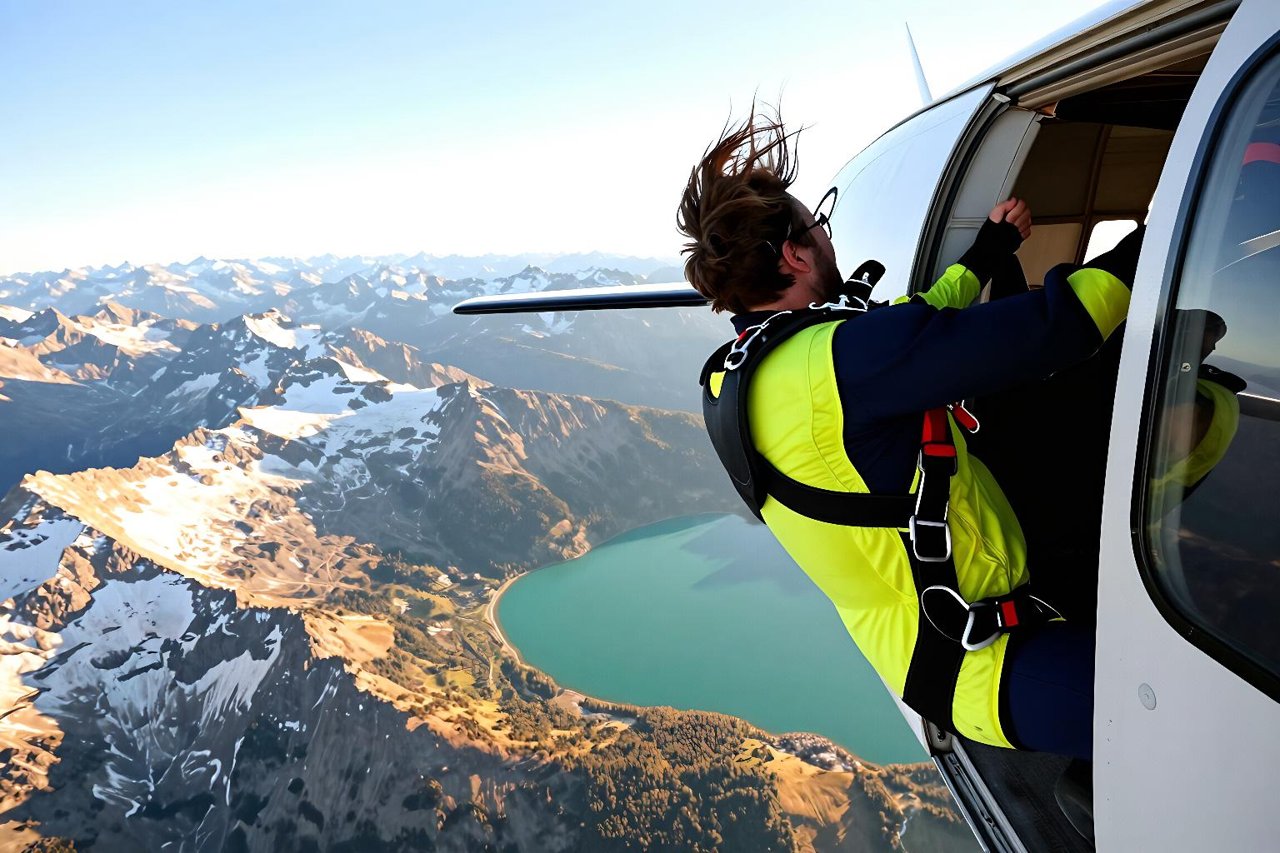
Interlaken sits between two lakes with the Eiger, Mönch, and Jungfrau stacked behind it. Tandem jumps typically launch from 13,000 to 15,000 feet, and the helicopter option trades a longer plane ride for a faster climb and a different view. The freefall is cold, fast, and loud; the canopy ride is the part that surprises people, with snowfields and green valleys sliding past in silence.
Switzerland isn’t a budget destination. Expect to pay CHF 400 or more for a tandem, plus video. Summer offers the most reliable windows, but spring and autumn bring crisp air and smaller crowds. Book directly with an established drop zone and confirm whether your slot includes a weather backup day.
Dubai, UAE: The Palm From Above
Skydive Dubai’s Palm Dropzone is one of the most photographed in the world for a reason. You climb to roughly 13,000 feet, then fall toward the Palm Jumeirah with the Dubai Marina skyline on one side and the Burj Al Arab on the other. The landing area is close to the water, and the whole experience feels more like a theme park ride than a rural skydive.
Time your trip for the cooler months, roughly October through April. Summer heat and humidity can limit operations, and wind can shut the drop zone without much notice. It’s not cheap, but few jumps combine a city break, beach time, and a bucket-list view so neatly. If you like pairing urban travel with coastal downtime, this guide to beach paradises and cultural gems is worth a look before you book flights.
Empuriabrava, Spain: Costa Brava With a Side of Adrenaline
Empuriabrava, on Spain’s Costa Brava, is one of Europe’s busiest drop zones. Jumps go to around 13,000 feet, with views of the Mediterranean, the Pyrenees, and the odd medieval village. The operation is slick, the aircraft fleet is large, and the nearby beaches and Barcelona make it an easy add-on to a longer trip.
Spring and autumn are sweet spots: warm enough for shorts, quiet enough that you’re not queuing all afternoon. Summer works too, but book ahead and expect a full day at the drop zone. Non-jumping friends can hit the beach or explore Girona while you’re in the air.
Swakopmund, Namibia: Desert Meets Atlantic
Namibia’s coast is an unlikely skydiving hub, which is exactly why it belongs on this list. A jump over Swakopmund puts the Namib Desert on one side and the Atlantic on the other, with dunes that shift from orange to rust depending on the light. Operators run tandem jumps from around 10,000 to 12,000 feet, and coastal fog can delay flights, so build in flexibility.
This is a destination for travelers who want more than a drop zone. Self-drive safaris, sandboarding, and the haunting Skeleton Coast are all within reach. Book with a local operator that’s clear about weather policy, and don’t schedule your jump for the last morning of the trip.
Eloy, Arizona: The Drop Zone That Takes Skydiving Seriously
Skydive Arizona in Eloy, between Phoenix and Tucson, is less about the view and more about the machine. It’s one of the largest drop zones in the world, with a huge fleet, on-site rigging, and a calendar of events that draws jumpers from across the globe. Tandem jumps go to around 13,000 feet over flat desert, with distant mountains on the horizon.
The town itself won’t win a beauty contest, but the operation is world-class. Winter and spring are the best seasons; summer heat is brutal. If you’re a licensed jumper chasing altitude, formation loads, and a serious community, Eloy delivers. First-timers get the same professional setup, minus the resort scenery.
What to check before you book a skydive
Weather and timing
Skydiving is weather-dependent, full stop. Book your jump early in the trip and leave a buffer day. Ask the drop zone about its cancellation and rebooking policy before you pay, especially if you’re traveling a long way.
Weight, age, and medical checks
Most drop zones set upper weight limits around 220 to 250 pounds, and many require jumpers to be at least 18. Rules vary by country, so confirm before you book. For older jumpers, a tandem skydive is often less physically demanding than people expect, but it’s still worth checking with a doctor if you have heart, neck, or back issues. If you’re planning a solo bucket-list trip, these tips for traveling solo after you retire cover the practical side of booking adventures on your own.
Equipment and reputation
Look for a drop zone affiliated with a national governing body, current reserve parachutes, and an automatic activation device on every rig. Ask how many instructors they have, how long they’ve operated, and what happens if the weather turns. A cheap jump with vague answers is not a bargain.
- Budget: tandem jumps commonly run from about $200 to $400, with video packages extra.
- Time: plan for half a day, even if your actual jump takes minutes.
- Clothing: wear trainers and comfortable layers; avoid loose shoes and anything you’d hate to lose.
- Insurance: check whether your travel policy covers adventure sports, including skydiving.
The jump may last less than a minute, but the planning decides whether it happens at all. Build in a spare day, ask direct questions about weather and refunds, and pick a destination you’d be happy to explore if the wind picks up. That’s the difference between a rushed checkbox and a trip you’ll talk about for years.


