
Table of Contents
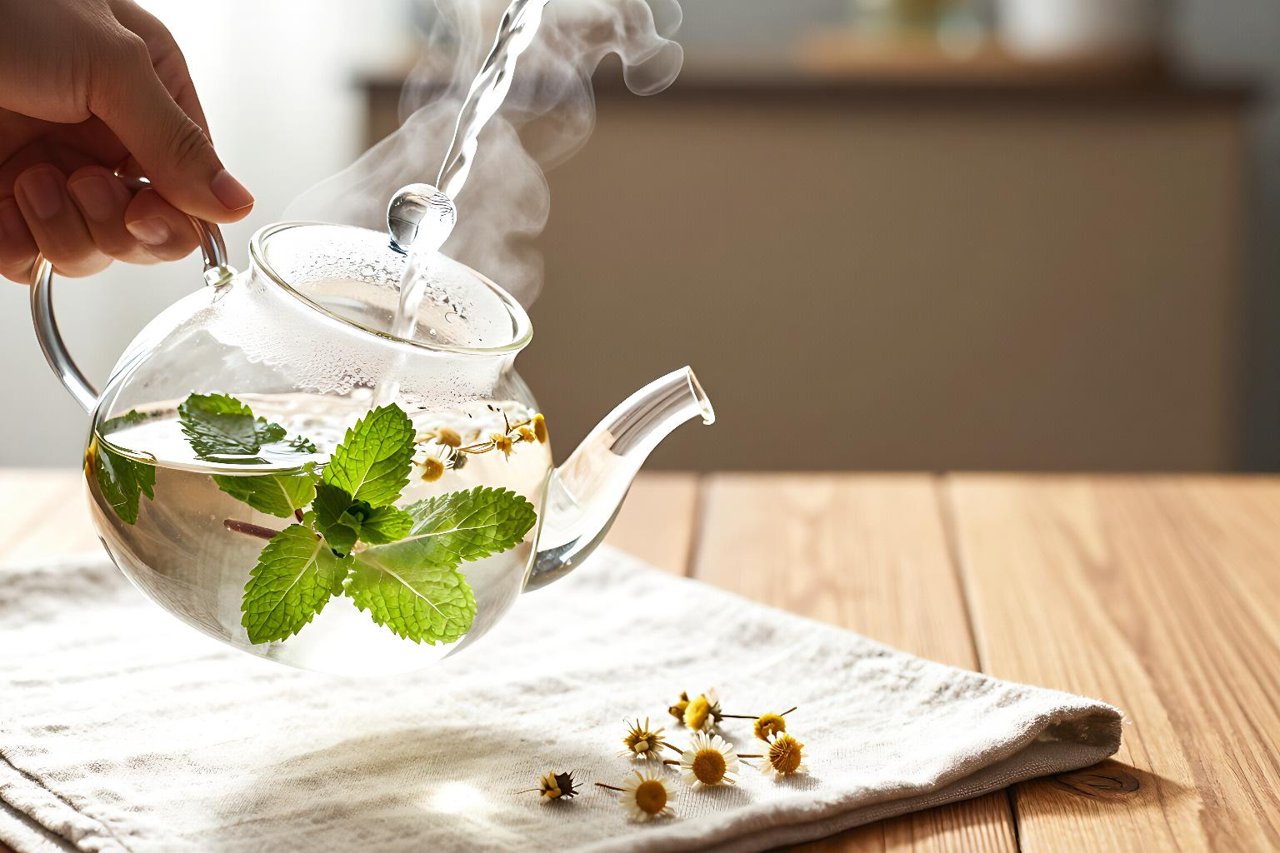
An herbal infusion is what you get when you pour hot water over leaves, flowers, seeds, or soft stems and let them steep. The water pulls out colour, aroma, and water-soluble plant compounds. Think of a mug of peppermint tea after dinner, a floral chamomile blend before bed, or a tart hibiscus drink served over ice. Those are all infusions. The term sounds clinical, but the process is about as simple as brewing gets.
One useful distinction: an herbal infusion is not tea in the strict sense. True tea comes from Camellia sinensis, the plant behind black, green, white, and oolong tea. Herbal infusions use other plants, so they are often called herbal teas, tisanes, or infusions. Most are caffeine-free, though a few ingredients such as yerba maté and guayusa contain caffeine. The flavour can be grassy, sweet, bitter, spicy, or floral depending on what goes in the cup.
Herbal infusion vs. tea vs. decoction
All three involve water and plant material, but the technique changes what you extract. An infusion is a steep. Hot water is poured over delicate plant parts and left to sit, usually for 5 to 10 minutes. A decoction is a simmer. Roots, bark, berries, and tough seeds need sustained heat, so they are boiled gently for 15 to 30 minutes. A standard cup of tea is an infusion too, just made from the tea plant.
The practical difference matters. If you treat a woody piece of ginger root like a delicate mint leaf, you will get a pale, weak drink. If you boil fragile chamomile flowers for half an hour, you will lose the delicate aroma and end up with something bitter. Match the method to the plant part and the cup improves immediately.

What goes into an herbal infusion
Almost any edible or medicinal plant can be infused, but the part used determines the best approach. Leaves and flowers are the classic infusion ingredients: peppermint, lemon balm, chamomile, elderflower, linden, and violet. Seeds and spices such as fennel, cumin, and coriander can be infused after a light crush. Roots and bark, including ginger, licorice, and cinnamon, usually benefit from a short simmer or a long, covered steep.
Dried herbs are concentrated, so a little goes a long way. A common ratio is 1 to 2 teaspoons of dried leaves or flowers per 250 ml cup. Fresh herbs are bulkier and milder, so you might need 1 to 2 tablespoons. Start on the lower side, taste after five minutes, and add more if the cup tastes thin. You can always steep longer; you cannot remove bitterness once it is in the water.
How to make an herbal infusion at home
The basic hot method
Use a teapot, a French press, or a mug with a fine strainer. Heat water to just below boiling, around 90 to 95°C for most herbs. Pour it over the plant material, cover the vessel to keep volatile oils from escaping, and steep for 5 to 10 minutes. Strain and drink. For a stronger cup, increase the amount of herb rather than steeping for an hour.
- Leaves and flowers: 1 to 2 teaspoons dried per 250 ml, steep 5 to 10 minutes.
- Seeds and spices: 1 teaspoon lightly crushed per 250 ml, steep 10 to 15 minutes.
- Roots and bark: 1 to 2 teaspoons per 250 ml, simmer 15 to 20 minutes.
- Fresh herbs: 1 to 2 tablespoons per 250 ml, steep 5 to 8 minutes.
Water quality matters more than most people expect. Tap water that tastes strongly of chlorine will flatten the flavour of delicate flowers. Filtered water gives you a cleaner cup, especially with subtle herbs like linden or lemon verbena.
Cold infusions and overnight steeping
A cold infusion is made with room-temperature or cold water and time. Put 1 tablespoon of dried herb in a jar, add 500 ml cold water, cover, and refrigerate for 6 to 12 hours. Strain before drinking. This method suits mucilaginous herbs such as marshmallow leaf and linden, and it makes a gentle, smooth drink for hot weather. Keep it refrigerated and use it within 24 to 48 hours.
When to use a decoction instead
If you are working with cinnamon sticks, dried ginger, burdock root, or dandelion root, make a decoction. Add the plant material to cold water, bring it to a simmer, cover, and cook gently for 15 to 20 minutes. Strain and drink. You can combine methods: simmer the roots first, then turn off the heat and add flowers or leaves for the last five minutes.
Popular herbs and what they are used for
Herbal infusions have a long history in home medicine and food culture. Modern research supports some traditional uses and leaves others uncertain. These are some of the most common choices, with a realistic note on what each is good for.
- Peppermint: Cooling and digestive. A strong cup after a heavy meal can ease bloating, and the flavour covers less pleasant herbs well.
- Chamomile: Soft, apple-like, and calming. It is a popular evening infusion, though the evidence for sleep is modest and more consistent for mild anxiety.
- Ginger: Warming and pungent. Ginger infusion or decoction is traditionally used for nausea, including motion sickness and morning sickness, with reasonable clinical support.
- Fennel: Sweet and anise-like. Often combined with peppermint for digestive complaints; crush the seeds first to release the oils.
- Nettle: Earthy and mineral-rich. Dried nettle leaf makes a green-tasting infusion that some people drink as a spring tonic.
- Hibiscus: Tart, ruby-red, and rich in vitamin C and plant acids. Served hot or iced, it makes a vivid, refreshing drink.
What the science says, and what it does not
An infusion is a dilute preparation. A cup of peppermint tea does not contain the same dose of peppermint oil used in clinical trials for irritable bowel syndrome. A chamomile infusion is not a sedative drug. That does not make the cup useless. Hydration, warmth, aroma, and a few minutes of pause have real value, and some herbs do deliver active compounds in measurable amounts.
The strongest evidence for common infusion herbs tends to involve ginger for nausea, peppermint for digestive discomfort, and chamomile for mild anxiety or sleep quality. Results are often modest. Herbal infusions are not a substitute for medical treatment, and anyone with a persistent symptom should get proper advice rather than self-treating with stronger and stronger brews.
Safety, quality, and sensible daily use
Plants are chemistry, not magic. Some herbs interact with medication, affect blood pressure, or are unsuitable in pregnancy. Licorice root can raise blood pressure when used heavily. St John’s wort is well known for drug interactions, though it is more often taken as an extract than a casual infusion. Comfrey and coltsfoot contain pyrrolizidine alkaloids and are not herbs to brew freely at home.
Buy from suppliers who label the botanical name, plant part, batch, and harvest date. Avoid anonymous bags of digestive blend with no ingredient list. A typical serving is one cup, once or twice a day, unless a qualified practitioner advises otherwise. Children, pregnant or breastfeeding women, and people on prescription drugs should check with a pharmacist or doctor before using medicinal herbs regularly.
Making a cup that actually tastes good
Flavour balance is the difference between a health chore and a drink you look forward to. Build a blend around one main note, then add a supporting herb and a small amount of something sweet or bright. Try these combinations:
- Peppermint, fennel seed, and a pinch of licorice root for a sweet digestive cup.
- Chamomile, lemon balm, and linden flower for a soft evening infusion.
- Hibiscus, rosehip, and orange peel for a tart, vitamin-rich drink served over ice.
- Ginger, cinnamon, and a slice of fresh lemon for a warming winter decoction.
Keep the total amount of dried herb to about 1 to 2 teaspoons per cup when you are experimenting. Too many ingredients in one pot muddle the flavour and make it harder to know what suits you. If a blend tastes bitter, shorten the steep or reduce the amount of tannin-rich leaves. If it tastes weak, add herb rather than time.
A simple first infusion to try tonight
Put 1 teaspoon of dried peppermint, 1 teaspoon of dried chamomile, and 2 crushed fennel seeds in a mug. Pour over 250 ml of water heated to about 90°C, cover with a saucer, and wait seven minutes. Strain, taste, and add a little honey if you want sweetness. Drink it after dinner or an hour before bed. The result is light, aromatic, and forgiving of a beginner’s hand. From there, change one ingredient at a time and you will learn what your own cupboard can do.


