
Table of Contents
Choosing a dog usually starts with a wish list: size, coat type, trainability, maybe how cute they look on Instagram. But many people overlook the one trait that shapes daily life the most—energy level. If you’re someone who enjoys quiet weekends, works from home, or lives in a cozy apartment, a high-octane herding breed probably isn’t the right match. That’s where calm dog breeds come in.
These are the dogs that are happy to nap for most of the day, greet visitors with a polite tail wag, and don’t treat every passing squirrel like a mission. Of course, “calm” isn’t a guarantee—every dog has a personality—but certain breeds are known for being mellow. Below are the top 7 calm dog breeds worth considering for a peaceful household.
What Actually Makes a Dog Calm?
A calm temperament comes from a mix of genetics, breeding purpose, and individual personality. Many calm breeds were developed to be companions, not workers. Others are sporting or working dogs that simply have a naturally relaxed off-switch. A few key things to look for:
- Low to moderate exercise needs (30–60 minutes a day)
- A tendency to prefer lounging over constant play
- Even, patient responses to children and other pets
- A lower prey drive or less intense alertness
- Comfort with being alone for reasonable periods
It’s also worth remembering that the smartest dogs aren’t always the calmest. Some of the top 7 smartest dog breeds are brilliant but need constant mental stimulation, which can translate into restlessness. Calm dogs often have a more laid-back approach to life.

The Top 7 Calm Dog Breeds
Now let’s look at the breeds that consistently show up on lists of calm dogs.
1. Cavalier King Charles Spaniel
Cavalier King Charles Spaniels are the ultimate lap dogs. They were bred to warm laps and hearts, so their ideal day involves curling up beside you while you read or watch TV. They’re small, usually 13 to 18 pounds, and get along famously with kids and other pets. They do need a daily walk and enough play to stay fit, but they’re rarely frantic. One thing to note: they can be prone to heart and joint issues, so regular checkups are essential.
2. Greyhound
This one surprises plenty of people. On the track, greyhounds are speed machines, but retired greyhounds—or even those raised as pets—are famous for being couch potatoes. Known as “45-mph couch potatoes,” they sprint for short bursts and then sleep for hours. They’re gentle, quiet, and tend to be very clean indoors. They also have low grooming needs. A fenced yard helps, but they adapt well to apartment life as long as they get regular runs.
3. Shih Tzu
Shih Tzus were bred as companions for Chinese royalty, and they’ve never forgotten how to be pampered. They’re affectionate, happy to sit in your lap, and don’t need a ton of exercise. A short daily walk and some indoor play will usually keep them satisfied. Their long, silky coats need regular grooming, though. If you’re looking for a breed that’s calm and low-maintenance on the exercise side, just be ready for brush sessions. Some people think they’re allergy-friendly, but the truth about hypoallergenic dog breeds is more complicated than just picking a “hairless” or “long-haired” dog.
4. English Bulldog
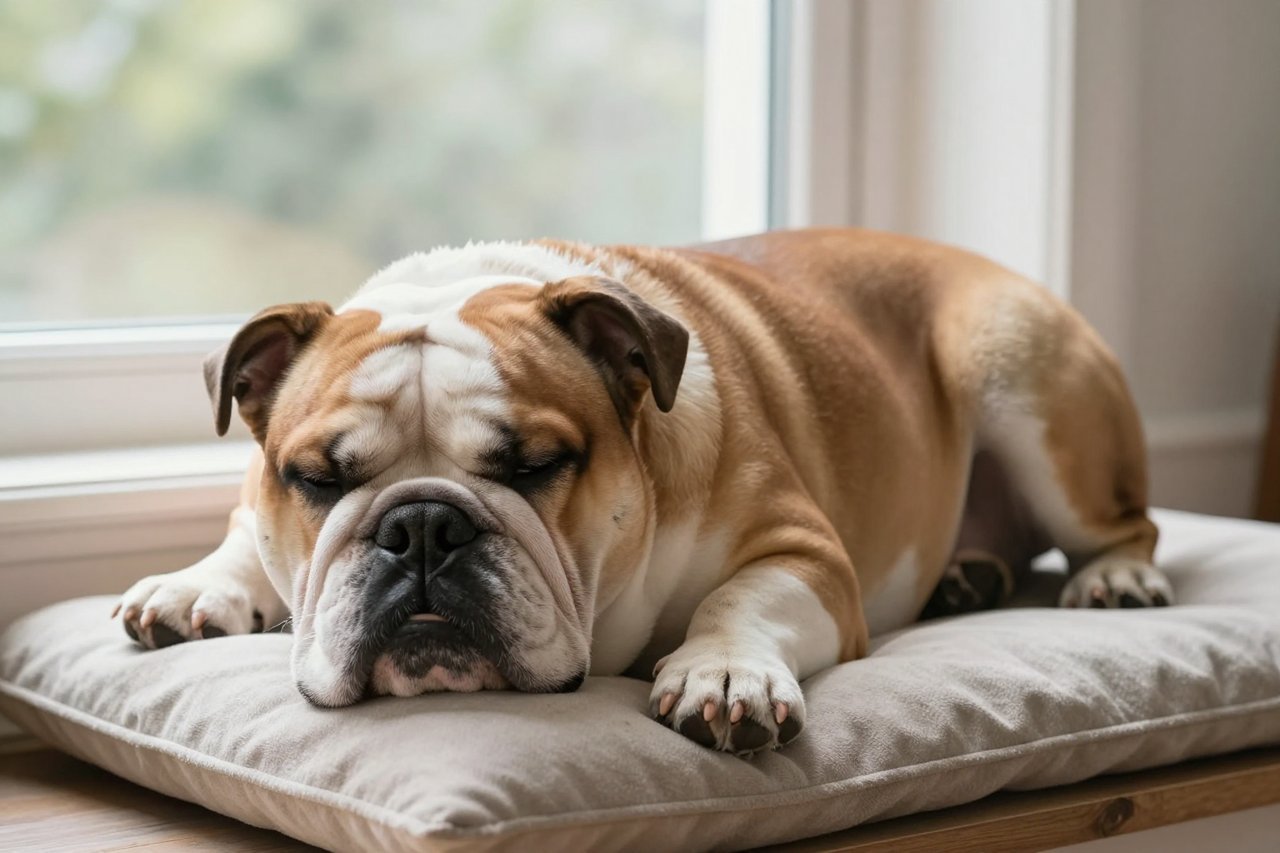
English Bulldogs might be the poster dogs for calm. They’re moderate-energy, love naps, and are generally very tolerant with children. They don’t require much exercise—a short stroll is enough for many. However, they do come with significant health needs: breathing problems, skin fold infections, and a tendency toward obesity. Their digestive systems can be sensitive, too, which is why some owners turn to supplements. If you’re interested, this guide to probiotics for dogs explains what to look for.
5. Basset Hound
Basset hounds are calm, low-key, and famously stubborn. They were bred to trail scents, but once they’re home, they’re happy to collapse on a dog bed. They’re excellent with families and other pets, though they can be a bit heavy to lift if you need to move them. Their short legs mean a half-hour walk is plenty, and they don’t jump or climb much. Just be aware that they drool and shed more than you’d expect.
6. Great Dane
Despite their size, Great Danes are sometimes called “gentle giants” and are known for being naturally calm. They’re not hyperactive, and many are content to stretch out on the floor while you work. They do need some space and a soft spot to lie down, plus a bit of daily exercise, but a walk and some playtime is about it. Their big hearts and mellow attitude make them great for calm households, even in apartments—if you have the room. For more small-space options, you might also want to see this list of the best pets for apartments.
7. Newfoundland
Newfoundlands are giant, sweet-natured dogs that are famously calm and patient. They’re natural water rescue dogs, but on land they’re happy to be couch companions. They’re wonderful with kids and have a protective streak, though they’re more likely to lean on you than bark at strangers. Their heavy coats require regular grooming, and they need moderate exercise—just be sure the temperature doesn’t get too hot for them. Because they’re large, they’re better suited to houses with some space.
Is a Calm Dog Right for You?
Calm dogs are wonderful, but they’re not the perfect fit for every situation. They generally need less exercise, which is a plus if you have a busy schedule or limited mobility. However, they still need daily walks, mental enrichment, and social time. Many calm breeds also have independent streaks—basset hounds and greyhounds, for example, may ignore commands if they catch an interesting smell.
Grooming and health can also vary widely among these breeds. A Shih Tzu needs frequent brushing, while a Great Dane doesn’t shed as much as you’d think, but they eat a lot. If you’re prone to allergies, you’ll want to research each breed carefully.
And if you’re hoping for a dog that will also serve as a watchdog, a calm breed might not give you that. Most of these dogs are friendly to strangers and won’t put up much of a fuss if someone knocks. If that’s important to you, you might want to look at the 7 best guard dog breeds for home protection instead.
Ultimately, the best calm dog breed for you comes down to your living situation, your schedule, and how much grooming you’re willing to take on. Visiting a rescue or breeder and spending time with the individual dog matters more than the breed label. Calm doesn’t mean boring—it means you can enjoy a relaxed, comfortable life together, one slow walk and cozy evening at a time.


