
Table of Contents
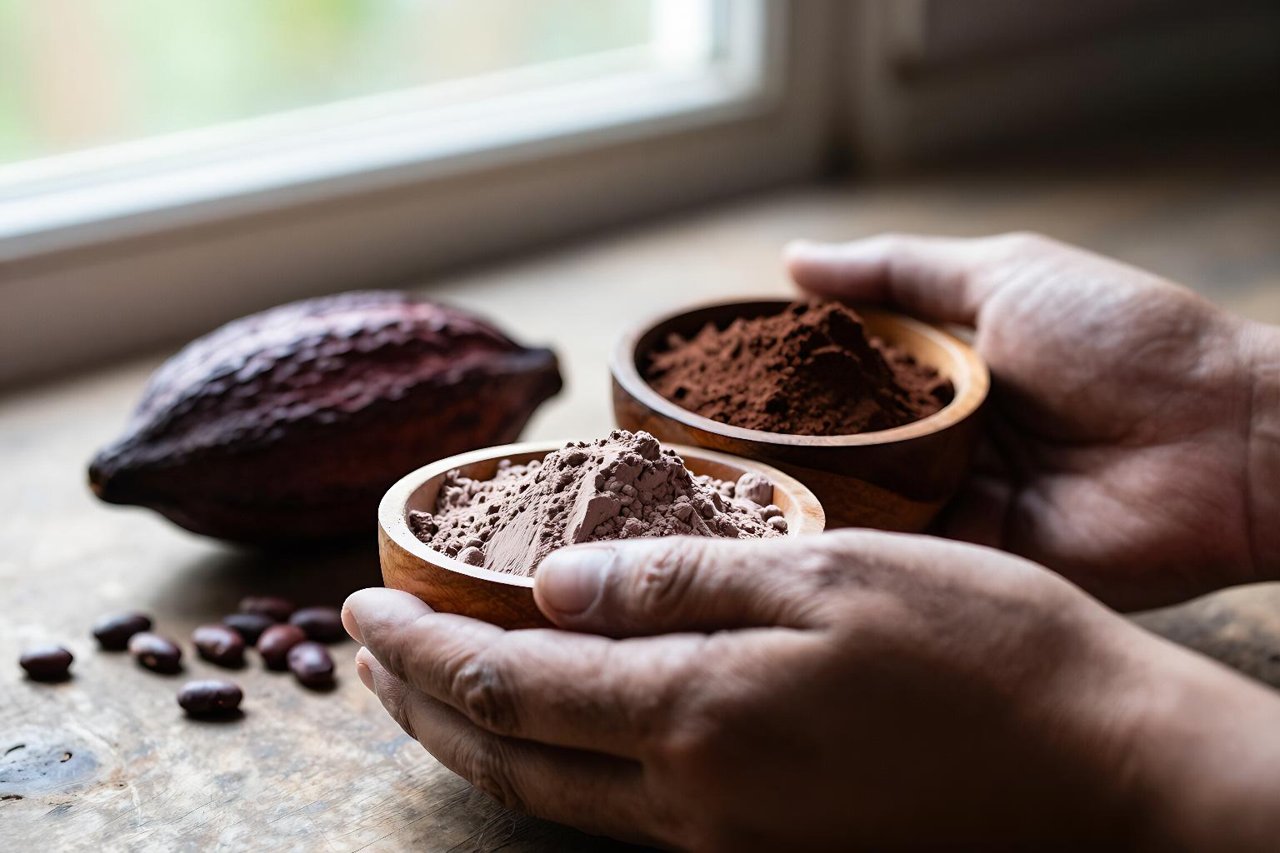
Two jars sit on the same shelf, a few centimetres apart. One holds pale, matte cacao powder and costs roughly twice as much. The other holds cocoa: darker, glossier, far cheaper. Both came from the same species of tree, Theobroma cacao, and in plenty of cases from the same regions of West Africa, Ecuador or Indonesia.
What separates them is everything that happens after the pods are split open. Roasting temperatures, pressing pressure, and whether the solids get treated with an alkali decide the colour, the flavour and a good chunk of the nutritional profile. Knowing where the fork in the road appears makes it much easier to spend your money sensibly.
Cacao or Cocoa? The Words Are Messier Than the Science
In the United States, cacao has drifted into meaning the minimally processed version, while cocoa implies roasting and alkalising. That is a marketing convention, not a legal one. British and European labels use cocoa for everything, roasted or not, and you will find cacao used for the tree, the pod, the bean and the finished powder within a single paragraph of food writing.
A useful way to read it: cacao names the raw material, cocoa usually names what has been through heat and often alkali. Neither term guarantees anything about quality.

The Processing Chain, Step by Step
Fermentation and drying
Harvested beans are heaped into wooden boxes or wrapped in banana leaves and left for five to seven days. Temperatures climb to around 45 to 50C, sugars convert to acids, and the compounds that will later read as chocolate, fruit or floral notes begin to form. Nothing about this stage is raw in any meaningful sense, which is worth remembering the next time you see the word on a packet. Beans are then sun-dried for about a week until moisture drops to roughly 7%.
Roasting
Here is the big fork. Standard cocoa production roasts winnowed beans at roughly 120 to 150C for anywhere from 15 to 40 minutes, depending on the bean and the flavour the maker is chasing. Maillard reactions brown the beans and build the toasted, nutty, caramel notes most people recognise as chocolate. Heat also degrades flavanols, the antioxidant compounds cocoa is famous for. Longer and hotter means more flavour complexity and fewer of those compounds.
So-called raw cacao is dried and milled at low temperatures, typically kept under 45 to 50C. The flavour is sharper, more sour, sometimes grassy. There is no legal definition of raw for cacao, so the claim rests on the honesty of the processor.
Pressing and milling
Ground beans become cocoa liquor, which is really just finely milled solids plus fat. Hydraulic presses squeeze out cocoa butter, leaving a cake that gets pulverised into powder. How hard the cake is pressed determines fat content. Supermarket cocoa powder typically lands around 10 to 12% fat, while some cacao powders are pressed more lightly and retain more.
Dutch processing
Coenraad van Houten’s 1828 press made cocoa powder possible in the first place. His successors also worked out that treating the cake with potassium carbonate or sodium hydroxide darkens the colour, mellows the acidity and helps the powder dissolve. The pH shifts from roughly 5.5 to 6 up to about 7 to 8. That alkalisation is the single biggest nutritional difference between a natural cocoa and a Dutch-processed one.
What the Numbers Actually Show
Per 100g of unsweetened powder, a typical natural cocoa contains roughly 230 kcal, 20g protein, 14g fat, 58g carbohydrate and around 33g fibre, plus a serious mineral load: about 14mg iron and 500mg magnesium. Raw cacao powder brands often list more fat and more calories, because less butter has been pressed out of the cake. Check the panel rather than the front of the pack, since the ranges between brands are wide.
Flavanols take the biggest hit
Cocoa flavanols (epicatechin, catechin, procyanidins) are what most of the cardiovascular research has focused on. Alkalisation can strip out the majority of them, with studies showing losses anywhere from about 60% to nearly 90% depending on how aggressive the treatment is. Roasting removes another slice. If flavanol content is your reason for buying, natural or lightly roasted powder wins and Dutch-processed is the wrong choice.
Fat, fibre and the mineral picture
- Fat: natural cocoa sits around 10 to 14%, Dutch-processed is broadly similar, and lightly pressed cacao powder can run higher.
- Fibre: cocoa powder is roughly a third fibre by weight, mostly insoluble, which is why a spoonful thickens a smoothie.
- Iron and magnesium: both powders are dense sources, though plant iron absorbs poorly alongside phytates. Pair with vitamin C and you claw some of it back.
- Cadmium: cacao plants take up cadmium from soil, and a 2022 Consumer Reports investigation found measurable levels in dark chocolate and cocoa powders. Rotating brands and origins is a reasonable hedge.
Sugar is the real variable
Most cocoa sold in tins for drinking is 60 to 80% sugar, with the cocoa solids rounded down. A 100% cacao powder and a drinking chocolate can sit a metre apart on the shelf and differ by 700 calories per 100g. Read the ingredient list before the nutrition panel.
Choosing Between Them in the Kitchen
Baking
Natural cocoa is acidic. Pair it with baking soda and the reaction produces lift and a reddish-brown crumb, which is why old devil’s food cakes look the way they do. Dutch-processed cocoa is neutral, so it needs baking powder for lift; team it with buttermilk or brown sugar if you want the batter to stay tender. Swapping one for the other without adjusting leaveners is the most common reason a chocolate cake falls flat.
Drinking and desserts
Dutch-processed cocoa makes a smoother, rounder hot chocolate and behaves better in ice cream and pastry cream, where acidity reads as sourness. Natural cocoa gives a brighter edge that suits brownies, rubs and anything with a lot of dark sugar.
Savoury cooking
Unroasted cacao nibs and powder hold up in mole, chilli and dry spice blends. The bitter, fruity notes sit closer to coffee than to candy, and a teaspoon in a braise adds depth without announcing itself.
No-bake and cold applications
Smoothies, energy balls and overnight oats are where raw cacao earns its keep. No Maillard flavour has developed, so you get a sharper, more fermented taste and, in theory, a higher flavanol load. In practice the difference between brands varies enormously, and a dark, grassy powder can overwhelm a delicate recipe.
Reading Labels Without Getting Fooled
Start with the ingredient list. Cocoa processed with alkali means Dutch; plain cocoa or cacao means natural. Anything listing sugar, cocoa butter or milk solids ahead of the powder is a confection, not a cocoa.
Percentages on dark chocolate refer to total cocoa solids and butter combined, not to flavanol content. A 90% bar built from heavily alkalised cocoa can carry fewer beneficial compounds than a 70% bar made from lightly roasted beans. Origin matters too, since cadmium levels tend to run higher in beans from parts of South America and lower in West African crops.
Price is a rough signal. Lightly processed, single-origin powder costs more because yields are lower and the supply chain is shorter. If you are using cocoa mostly for flavour in baking, a decent natural cocoa at a mid-range price will do everything you need. If you are chasing flavanols, buy natural, note the fat content on the panel, and store the jar somewhere dark and cool, because those compounds fade with heat and time.


